
What Does a Functional Medicine Registered Dietitian Nutritionist Do? Why RDNs Are the Experts in Nutrition Care
What Does a Functional Medicine Registered Dietitian Nutritionist Do? Why RDNs Are the Experts in Nutrition Care
Written by Kerri Rachelle, PhD c., RDN, CSSD, FMP-AC
Founder & CEO, REV0lution | Doctor of Integrative & Natural Medicine Candidate
Reviewed for scientific accuracy: July 2026
Quick Answer
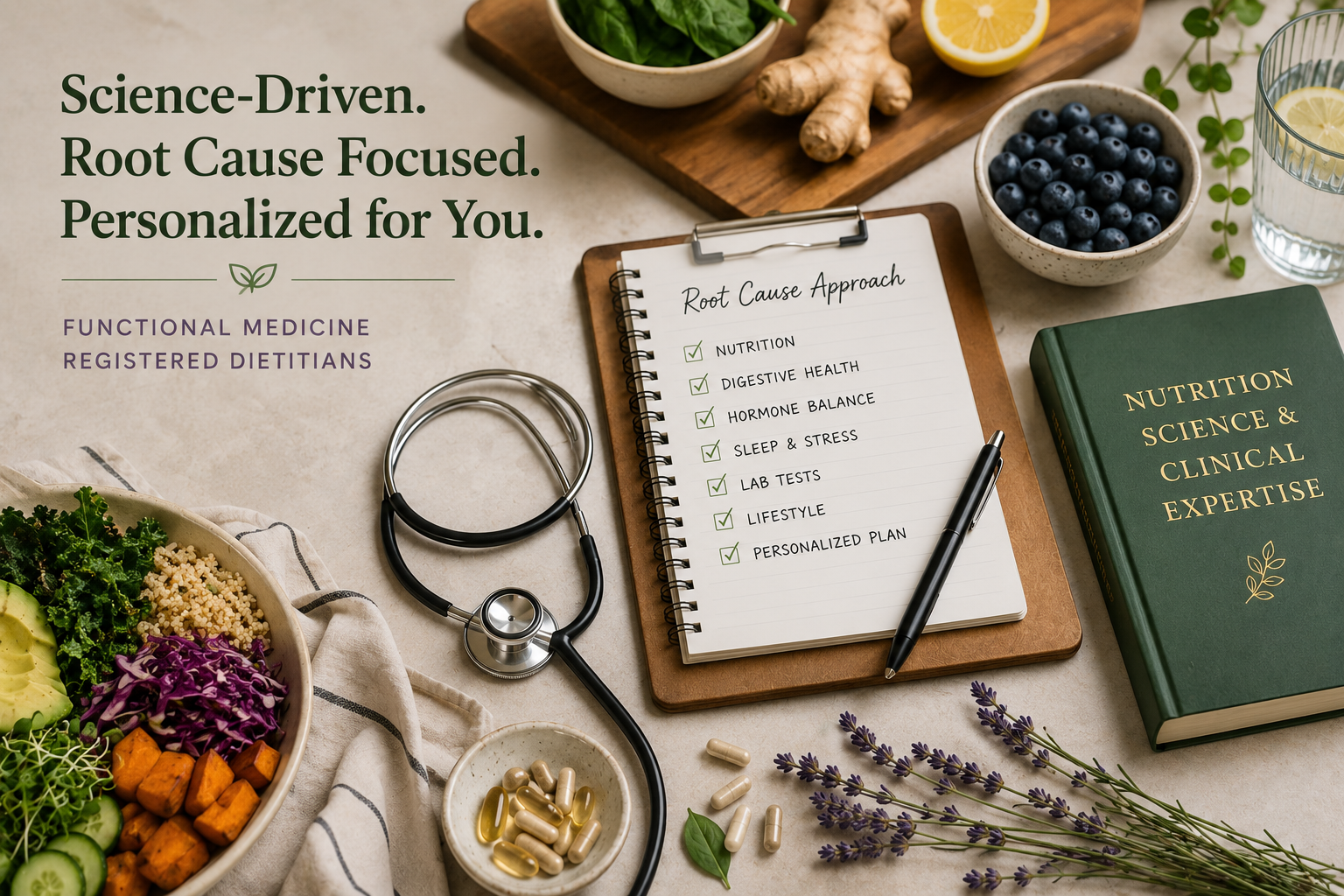
A Functional Medicine Registered Dietitian Nutritionist (RDN) is a licensed healthcare professional with graduate-level education, extensive supervised clinical training, national credentialing, and continuing education requirements who combines evidence-based nutrition science with a personalized, root-cause approach to health. Functional Medicine Registered Dietitian Nutritionists (RDN) evaluate how nutrition, metabolism, digestion, hormones, sleep, stress, physical activity, medications, laboratory data, and lifestyle interact to influence health and use that information to develop individualized care plans.
Key Takeaways
Registered Dietitian Nutritionists are the nation's clinical nutrition experts.
Every new RDN completes graduate-level education, extensive supervised clinical training, passes a national examination, and maintains continuing education throughout their career.
Functional medicine builds upon this foundation by incorporating systems biology, personalized nutrition, and root-cause thinking.
Nutrition influences every organ system and nearly every chronic disease.
The best nutrition care combines evidence, clinical expertise, and individualized recommendations.
Who Is Qualified to Give Nutrition Advice?
Nutrition has never been more popular.
Social media is filled with nutrition influencers. Podcasts feature conversations about gut health, hormones, longevity, and supplements. Countless certification programs promise to turn someone into a nutrition expert in a matter of weeks or months.
At the same time, chronic disease continues to rise, and many people struggle to know who they can trust.
The reality is that nutrition advice is everywhere.
Clinical nutrition expertise is much harder to find.
That's where Registered Dietitian Nutritionists (RDNs) are different.
An RDN is not simply someone who enjoys nutrition or has improved their own health through dietary changes. Registered Dietitian Nutritionists are healthcare professionals who complete rigorous graduate education, extensive supervised clinical training, pass a national credentialing examination, and participate in lifelong continuing education to maintain their credentials.
Their education prepares them to care for healthy individuals seeking prevention and performance—but also patients with complex medical conditions whose nutrition needs can literally become life-saving.
Nutrition is not simply about meal plans.
It is a medical science.
What Makes a Registered Dietitian Nutritionist Different?
Registered Dietitian Nutritionists are trained across the entire spectrum of healthcare.
Many people associate dietitians with weight management or healthy eating, but the profession extends far beyond those areas.
During clinical training, dietitians learn to care for critically ill patients in hospitals, including individuals recovering from severe burns, traumatic injuries, cancer, gastrointestinal disease, kidney failure, organ transplantation, and intensive care.
They learn how to calculate precise nutrition prescriptions for patients who cannot eat by mouth, including enteral nutrition (tube feeding) and parenteral nutrition, where nutrients are delivered directly into the bloodstream when the digestive system cannot be used.
Dietitians also help care for some of the most medically fragile patients in healthcare, including premature infants in neonatal intensive care units, where carefully calculated nutrition supports growth, development, and survival.
This depth of training provides an understanding of human metabolism that extends far beyond calories and meal plans.
It requires understanding physiology, biochemistry, pathophysiology, pharmacology, nutrient metabolism, and how nutrition changes throughout every stage of life and every state of health and disease.
Why Does This Level of Training Matter?
Nutrition influences nearly every system in the body.
Understanding how food affects health requires much more than knowing which foods are considered "healthy."
Registered Dietitian Nutritionists study how carbohydrates, fats, proteins, vitamins, minerals, amino acids, fatty acids, and phytonutrients are absorbed, transported, metabolized, stored, and utilized within the body.
They learn how nutrients function as enzyme cofactors, how medications interact with nutrients, how digestive disorders affect absorption, how hormones influence metabolism, and how nutritional needs change with different diseases.
They understand energy metabolism at the cellular level.
They study neurotransmitter production and the role nutrition plays in brain health.
They learn how inflammation influences chronic disease.
They understand how liver function, kidney function, gastrointestinal physiology, endocrine health, cardiovascular disease, and immune function intersect with nutrition.
This scientific foundation allows Registered Dietitian Nutritionists to translate complex physiology into practical recommendations that patients can realistically implement.
What Makes a Functional Medicine Registered Dietitian Nutritionist Different?
Functional medicine builds upon—not replaces—the rigorous scientific foundation of dietetics.
Rather than focusing only on managing nutrition after disease develops, Functional Medicine Registered Dietitian Nutritionists also seek to understand the factors that may have contributed to a person's health over time.
That includes evaluating nutrition quality, digestive health, sleep, stress, movement, laboratory findings, environmental exposures, medications, medical history, and lifestyle habits together rather than independently.
The goal is not to treat laboratory values in isolation.
It is to understand the whole person.
Functional medicine asks questions like:
Why is inflammation elevated?
Why has blood sugar regulation changed?
Why are digestive symptoms occurring?
Why is fatigue persisting?
Those questions help guide personalized nutrition and lifestyle recommendations that complement conventional medical care.
Why Are Registered Dietitians Uniquely Positioned to Deliver Functional Medicine Nutrition?
Functional medicine relies heavily on nutrition.
Nutrition is the language Registered Dietitian Nutritionists speak every day.
Because of their clinical training, RDNs are uniquely positioned to interpret scientific research, evaluate laboratory data, understand medical diagnoses, recognize medication-nutrient interactions, identify nutrition-related risks, and develop individualized nutrition strategies based on evidence rather than trends.
At REV0lution, our Functional Medicine Registered Dietitian Nutritionists build upon this clinical foundation through an additional year-long fellowship focused on functional medicine, systems biology, laboratory interpretation, root-cause thinking, behavior change, and mentorship.
This advanced training strengthens—not replaces—the education and clinical expertise that already exists within the dietetics profession.
What Conditions Can a Functional Medicine Registered Dietitian Nutritionist Help Support?
Because nutrition affects virtually every organ system, Functional Medicine Registered Dietitian Nutritionists work with a wide range of health concerns. The goal is not to give every person the same food plan. It is to understand how nutrition, digestion, metabolism, hormones, inflammation, medications, labs, lifestyle, stress, sleep, movement, and health history interact in that specific person.
A Functional Medicine Registered Dietitian Nutritionist (RDN) may help support:
Digestive health: IBS, bloating, constipation, diarrhea, reflux, GERD, food intolerance, gut health concerns, and post-antibiotic digestive changes
Metabolic health: insulin resistance, prediabetes, type 2 diabetes, metabolic syndrome, blood sugar dysregulation, weight loss resistance, and fatty liver
Cardiovascular health: high cholesterol, high triglycerides, blood pressure support, ApoB, inflammation, and cardiometabolic risk reduction
Thyroid health: Hashimoto’s, hypothyroidism, thyroid-supportive nutrition, nutrient adequacy, and lab pattern review
Hormone health: PCOS, perimenopause, menopause, PMS, cycle changes, fertility nutrition support, and hormone-related symptoms
Autoimmune conditions: nutrition support for inflammatory and autoimmune patterns while working alongside appropriate medical care
Nutrient deficiencies: iron deficiency, low ferritin, B12, folate, magnesium, zinc, vitamin D, omega-3 intake, and overall micronutrient adequacy
Sports and performance nutrition: fueling, recovery, body composition, strength training support, endurance nutrition, hydration, electrolytes, RED-S risk, and performance optimization
Energy and fatigue: low energy, poor recovery, under-fueling, blood sugar swings, nutrient gaps, sleep-related nutrition patterns, and stress-related depletion
Weight and body composition: sustainable fat loss, muscle maintenance, GLP-1 nutrition support, appetite changes, protein adequacy, and long-term maintenance
Women’s health: cycle health, pregnancy/postpartum nutrition support, perimenopause, menopause, bone health, and metabolic changes across life stages
Gut-brain and mental health support: nutrition patterns that may influence mood, stress resilience, sleep, inflammation, and the gut-brain axis
Lab-guided nutrition care: blood chemistry review, fasting insulin, A1c, lipids, ferritin, vitamin D, thyroid markers, inflammatory markers, stool testing, hormone testing, and specialty labs when appropriate
Complex or unclear symptoms: patients who feel like “something is off,” have multiple symptoms across body systems, or have been told their labs are “normal” but still do not feel well
Prevention and longevity: healthy aging, strength and muscle preservation, metabolic resilience, cardiovascular prevention, cognitive health support, and long-term wellness
And more: if nutrition, metabolism, digestion, hormones, inflammation, or lifestyle may be part of the picture, a Functional Medicine Registered Dietitian Nutritionist can likely help you understand where to start.
The common thread is personalization. No two care plans are exactly alike because no two people have the same history, physiology, symptoms, labs, lifestyle, and goals.
Why Should Patients Seek a Registered Dietitian Nutritionist?
Choosing a healthcare professional is ultimately about trust.
Nutrition recommendations should not be based on the latest social media trend, a single personal success story, or anecdotal advice.
They should be grounded in science, informed by clinical experience, and tailored to the individual.
Registered Dietitian Nutritionists are trained to evaluate the whole clinical picture, communicate with other healthcare providers, interpret nutrition science responsibly, and translate evidence into practical recommendations that improve health.
That combination of scientific rigor, clinical experience, and personalized care is what makes Registered Dietitian Nutritionists the gold standard in nutrition care.
Bottom Line
Nutrition is one of the most powerful tools available to improve health—but it is also one of the most misunderstood.
Functional Medicine Registered Dietitian Nutritionists combine the highest level of nutrition education with a systems-based, evidence-informed approach that recognizes every person's health story is unique.
At REV0lution, we believe nutrition deserves the same scientific rigor as every other area of healthcare. Our Registered Dietitian Nutritionists combine advanced clinical training with functional medicine principles to help patients understand their health, make informed decisions, and build sustainable habits that support lifelong wellness.
Medical Disclaimer: This article is for general educational and informational purposes only and does not provide individualized medical or nutrition advice. It is not intended to diagnose, treat, cure, or prevent disease or replace care from a qualified healthcare professional. Do not change your medications, supplements, diet, fasting schedule, or healthcare plan based solely on this content. [Read the full Medical Disclaimer and Terms & Conditions.]
Frequently Asked Questions
What is a Functional Medicine Registered Dietitian Nutritionist?
A Functional Medicine Registered Dietitian Nutritionist (RDN) is a credentialed healthcare professional who combines evidence-based nutrition science with a personalized, systems-based approach to health. Functional medicine RDNs evaluate nutrition, digestion, metabolism, hormones, sleep, stress, movement, laboratory findings, medications, and lifestyle factors to develop individualized care plans that complement conventional medical care.
What is the difference between a Registered Dietitian Nutritionist and a nutritionist?
A Registered Dietitian Nutritionist (RDN) is a nationally credentialed healthcare professional who has completed graduate-level education, extensive supervised clinical training, passed a national registration examination, and maintains continuing professional education. Title protection varies by state, but in many states—including Virginia, where REV0lution is headquartered—the title "nutritionist" is also legally protected and may only be used by individuals who meet state licensure or certification requirements. Regardless of state regulations, patients should understand that education, clinical training, and credentials can vary significantly among individuals offering nutrition services.
How are Functional Medicine Registered Dietitian Nutritionists trained?
Today's Registered Dietitian Nutritionists complete graduate-level education, extensive supervised practice in a variety of clinical settings, pass a national credentialing examination administered by the Commission on Dietetic Registration (CDR), and participate in ongoing continuing education throughout their careers. At REV0lution, our Functional Medicine Registered Dietitian Nutritionists also complete an additional year-long fellowship focused on functional medicine, systems biology, laboratory interpretation, personalized nutrition, and root-cause care.
Can a Functional Medicine Registered Dietitian Nutritionist order and interpret laboratory tests?
Depending on state laws and practice regulations, many Functional Medicine Registered Dietitian Nutritionists can recommend, order, or interpret laboratory testing within their scope of practice. Laboratory results are never viewed in isolation but are considered alongside symptoms, medical history, medications, nutrition, and lifestyle to help guide personalized care.
What conditions can a Functional Medicine Registered Dietitian Nutritionist help with?
Functional Medicine Registered Dietitian Nutritionists commonly work with digestive disorders, insulin resistance and type 2 diabetes, cardiometabolic health, thyroid conditions, PCOS, perimenopause and menopause, sports nutrition, food allergies and intolerances, autoimmune diseases, weight management, and many other chronic health concerns. Care is always individualized based on each person's health history, symptoms, laboratory findings, and goals.
Do Functional Medicine Registered Dietitian Nutritionists prescribe supplements?
Registered Dietitian Nutritionists can recommend dietary supplements when they are clinically appropriate. Recommendations are based on the individual's nutrition status, medical history, medications, laboratory findings, and current evidence—not on trends or routine protocols. Whenever possible, nutrition from whole foods remains the foundation of care.
Do I need a referral to see a Functional Medicine Registered Dietitian Nutritionist?
Many patients can schedule directly with a Registered Dietitian Nutritionist without a referral, although insurance requirements vary by plan. Some insurance companies require a referral or specific diagnosis for coverage, while others allow direct access.
Is working with a Functional Medicine Registered Dietitian Nutritionist covered by insurance?
Many commercial insurance plans cover medical nutrition therapy provided by Registered Dietitian Nutritionists. Coverage depends on your insurance plan, benefits, diagnosis, and network participation. At REV0lution, we verify benefits whenever possible before your first appointment so you understand your coverage.
References
Academy of Nutrition and Dietetics. Scope of Practice for the Registered Dietitian Nutritionist. Chicago, IL: Academy of Nutrition and Dietetics.
Academy of Nutrition and Dietetics. Standards of Practice and Standards of Professional Performance for Registered Dietitian Nutritionists. Journal of the Academy of Nutrition and Dietetics.
Commission on Dietetic Registration. Eligibility Requirements and Registration Examination for Dietitian Nutritionists.
Frates EP, Bonnet JP, Joseph R, Peterson JA. Lifestyle medicine: A brief review of its dramatic impact on health and survival. The Permanente Journal. 2024;28(1):23.144.
Hyman MA. Systems biology, personalized medicine, and functional medicine. Alternative Therapies in Health and Medicine. 2010;16(3):28–33.
May CR, Montori VM, Mair FS. We need minimally disruptive medicine. BMJ. 2009;339:b2803.
Phillips EM, Frates EP, Park DJ. Lifestyle medicine. Physical Medicine and Rehabilitation Clinics of North America. 2020;31(4):515–526.
Sackett DL, Rosenberg WMC, Gray JAM, Haynes RB, Richardson WS. Evidence based medicine: What it is and what it isn't. BMJ. 1996;312(7023):71–72.