What Should You Eat During Perimenopause?
What to Eat During Perimenopause: Protein, Carbohydrates, Fiber, and Hydration
Written by Kerri Rachelle, PhD(c), RDN, CSSD, FMP-AC
Founder & CEO, REV0lution | Doctor of Integrative & Natural Medicine Candidate
Quick Answer
The best perimenopause diet is built around meaningful real-food protein, fiber-rich vegetables and other whole plants, naturally occurring fats, individualized whole-food carbohydrates and adequate hydration. Perimenopause does not automatically require fasting, eliminating carbohydrates or eating less.
Nutrition cannot prevent normal hormonal changes, but it can support muscle, bone, glucose regulation, digestion, energy and sleep. The goal is not to eat as little as possible. It is to give the body what it needs while adjusting the plan to the woman’s symptoms, activity, metabolic health and changing physiology.
Key Takeaways
Include meaningful real-food protein at every meal.
Eat enough total food to support muscle, energy, sleep and recovery.
Build most meals around protein, vegetables or other whole plants, whole-food carbohydrates and naturally occurring fats.
Adjust carbohydrate quality, quantity and distribution individually rather than automatically eliminating carbohydrates.
Increase fiber gradually and drink enough fluid to support digestion.
Strength training and nutrition should work together to protect muscle and bone.
Alcohol may worsen sleep, hot flashes, recovery and metabolic health.
Intermittent fasting is optional. Do not force a fasting window that leaves you ravenous, under-fueled or sleeping poorly.
Artificially sweetened shakes, meal-replacement bars and packaged “menopause foods” should not become the foundation of the diet.
Why Nutrition Matters During Perimenopause
Perimenopause is the transition leading to menopause. Estrogen and progesterone do not simply decline in a smooth, predictable line. Ovulation becomes less consistent, hormone concentrations fluctuate and symptoms may change from one month to the next.
At the same time, women may notice changes in sleep, appetite, glucose regulation, body-fat distribution, training recovery and the ability to preserve muscle. These changes are real, but they do not mean the metabolism suddenly stops working at 40.
Perimenopause also tends to arrive during a demanding stage of life. Women may be caring for children and parents, managing careers, sleeping poorly and exercising without adequately fueling themselves. Hormonal changes matter, but they are occurring within that larger physiological environment.
Nutrition should therefore do more than chase weight loss. It should help protect the tissues and functions that become increasingly important with age.
Start With Meaningful Protein at Every Meal
Protein supports muscle repair, immune function, enzymes, connective tissue, satiety and numerous metabolic processes. It becomes especially important as women work to preserve lean tissue through midlife.
That does not mean every woman needs a bodybuilder’s diet or a protein supplement with every meal. It means that a few nuts, a spoonful of hummus or the small amount of protein in oatmeal should not automatically be counted as a complete protein serving.
Meaningful real-food protein may include:
Eggs with additional egg whites if needed
Fish and seafood
Poultry
Lean or appropriately portioned red meat
Plain Greek yogurt or cottage cheese when tolerated
Minimally processed soy foods such as tofu, tempeh or edamame
Beans or lentils combined with other protein sources when needed
A practical starting point for many women is approximately 25 to 35 grams of protein at each primary meal. Individual needs vary with body size, activity, health status, appetite and total energy intake. Women with kidney disease or other conditions affecting protein needs should receive individualized guidance.
Protein distribution matters, too. Eating very little protein throughout the day and consuming nearly all of it at dinner may make it harder to consistently support muscle-protein synthesis.
Protein bars and shakes can occasionally be useful when real food is unavailable, but they are not nutritionally identical to a meal. REV0lution recommends building the plan around recognizable foods rather than relying on artificially sweetened powders, bars and manufactured meal replacements.
Do Not Respond to Perimenopause by Eating Less and Less
When weight or body composition begins to change, many women instinctively reduce food and add more exercise. Sometimes total intake does need adjustment. But repeatedly cutting food can also reduce training quality, compromise recovery and make it difficult to consume enough protein, fiber, calcium, iron and other nutrients.
Under-fueling may appear as:
Constant food thoughts or intense evening hunger
Loss of strength
Poor exercise recovery
Fatigue or irritability
Difficulty sleeping
Feeling cold
Hair changes
Recurrent injuries
Constipation
Increasing reliance on caffeine
Restricting throughout the day and overeating at night
These symptoms are not proof that someone is under-fueling, but they deserve investigation. Fatigue, hair loss and weight-regulation difficulty can also overlap with iron deficiency, thyroid dysfunction, insulin resistance, medication effects and sleep disorders. Read more in Is It Perimenopause—or Something Else?.
The answer is not always “eat less.” Sometimes it is to eat more intentionally, distribute food differently and support the muscle-building stimulus that helps determine how nutrients are used.
Choose Fiber-Rich Vegetables and Other Whole Plants
Vegetables, fruit, legumes, nuts, seeds, herbs and appropriately selected intact grains or starchy vegetables provide fiber and a wide range of micronutrients and phytochemicals.
Fiber supports bowel regularity, satiety, glucose regulation and the intestinal environment. But dramatically increasing fiber without sufficient fluid—or adding concentrated fiber powders to an already irritated digestive system—can worsen bloating and constipation.
Increase fiber progressively. Rotate plant foods rather than forcing an enormous raw salad every day. Cooked vegetables, soups, berries, chia, ground flax, beans, lentils and root vegetables may be easier for some women to tolerate than large amounts of raw roughage.
Women with significant bloating, pain, reflux or altered bowel habits may need an individualized digestive evaluation rather than another generic instruction to “eat more fiber.”
Perimenopause Does Not Automatically Require a Low-Carbohydrate Diet
Carbohydrates are frequently blamed for midlife weight gain, but the category is too broad to be useful. Lentils, berries, sweet potatoes and a brightly packaged “keto” dessert do not have equivalent effects on nourishment, fullness or eating behavior simply because someone can manipulate the serving sizes to match the carbohydrates.
Whole-food carbohydrate options include:
Fruit
Beans and lentils
Potatoes and sweet potatoes
Winter squash
Quinoa, oats or rice when appropriate
Minimally processed whole grains when tolerated
Root vegetables
Carbohydrate intake may need to be adjusted when insulin resistance, prediabetes or large post-meal glucose excursions are present. The amount, type and placement of carbohydrate can matter. Combining carbohydrate with protein, fiber and fat will generally produce a different meal response than eating a refined carbohydrate by itself.
That still does not mean every woman should eliminate carbohydrates. Women who strength train, perform higher-intensity exercise or remain highly active may need more carbohydrate than sedentary women. Excessive restriction can impair training, recovery, mood or sleep for some people.
Women concerned about their metabolic health can begin with What Is Insulin Resistance? and What Is Metabolic Health?.
Include Naturally Occurring Fats
Dietary fat supports cell membranes, nutrient absorption, meal satisfaction and the intake of essential fatty acids. Useful sources include extra-virgin olive oil, avocado, nuts, seeds, olives, eggs and oily fish.
Omega-3-rich seafood can contribute EPA and DHA while also supplying protein and other nutrients. A supplement may be appropriate in some circumstances, but supplementation should not automatically replace eating fish or addressing the overall quality of the diet.
Adding large amounts of oils, butter or nut products to every meal is not necessary simply because the ingredients are considered “healthy.” Naturally occurring fats are valuable, but their portions still need to fit the individual.
Hydration Needs a Plan
Many women recognize that they are thirsty only after fatigue, headache or poor concentration appears. Others drink very little during the day and attempt to catch up in the evening, which can contribute to repeated nighttime bathroom trips.
Rather than using a rigid formula such as 0.75 ounces per pound of body weight—which can produce an unnecessarily high target for some women—a reasonable starting point for many adults is approximately 70 to 90 ounces of fluid daily. Needs vary with body size, climate, activity, sweating, medications, pregnancy and health conditions. Water from food also contributes to total intake.
Practical strategies include:
Drinking water soon after waking
Keeping water visible during the workday
Pairing fluids with meals and transitions between activities
Hydrating before and after exercise
Drinking more earlier in the day if nighttime urination is disruptive
Using pale-yellow urine as one practical hydration indicator
Electrolytes are not automatically required every day. They may be useful during prolonged exercise, heavy sweating, hot-weather training, gastrointestinal fluid loss or when recommended by a clinician.
Choose a product with clearly listed sodium and potassium and without artificial sweeteners, artificial colors or unnecessary additives. Many flavored electrolyte products—including some marketed as “healthy”—do not meet that standard. One serving may be sufficient on a high-sweat day; more is not inherently better.
People with kidney disease, heart failure, uncontrolled hypertension or medications affecting sodium or potassium should receive individualized guidance before using concentrated electrolytes.
Alcohol Is Not Metabolically Invisible
Women deserve information about alcohol without moral judgment. Alcohol may temporarily feel relaxing, but it can disrupt sleep architecture, increase nighttime awakenings and worsen hot flashes for some women. It can also affect appetite, recovery, blood pressure, triglycerides and breast-cancer risk.
The question is not whether someone is “allowed” to drink. The useful question is whether alcohol is interfering with what she says she wants: deeper sleep, more stable energy, improved body composition, fewer symptoms or better training recovery.
A drink that repeatedly worsens sleep is not functioning as stress management, even if it initially creates sedation.
Should You Use Intermittent Fasting During Perimenopause?
Intermittent fasting is an eating schedule—not a requirement for metabolic health. Some women feel better with a consistent overnight break from eating and fewer late-night eating occasions. Others become preoccupied with food, under-eat during the day or feel intensely hungry in the morning.
If you wake genuinely hungry, shaky, nauseated, unusually fatigued or unable to concentrate, eating a nourishing meal may be more appropriate than suffering through a fasting window. That is particularly important when sleep was poor, training demands are high or yesterday’s intake was inadequate.
A 12-hour overnight fast may be sufficient structure for many women. There is no prize for reaching 16 hours. Read How to Start Intermittent Fasting Without Making It Miserable for a more individualized approach.
A Practical Perimenopause Meal Formula
Most meals can be constructed from four components:
Meaningful protein: eggs, fish, poultry, meat, Greek yogurt, tofu, tempeh, beans or lentils in an appropriate combination
Fiber-rich plants: vegetables, fruit, legumes, herbs, nuts or seeds
Individualized whole-food carbohydrate: fruit, potatoes, beans, squash, rice, quinoa or another tolerated source
Naturally occurring fat: olive oil, avocado, nuts, seeds, eggs or fatty fish
For example:
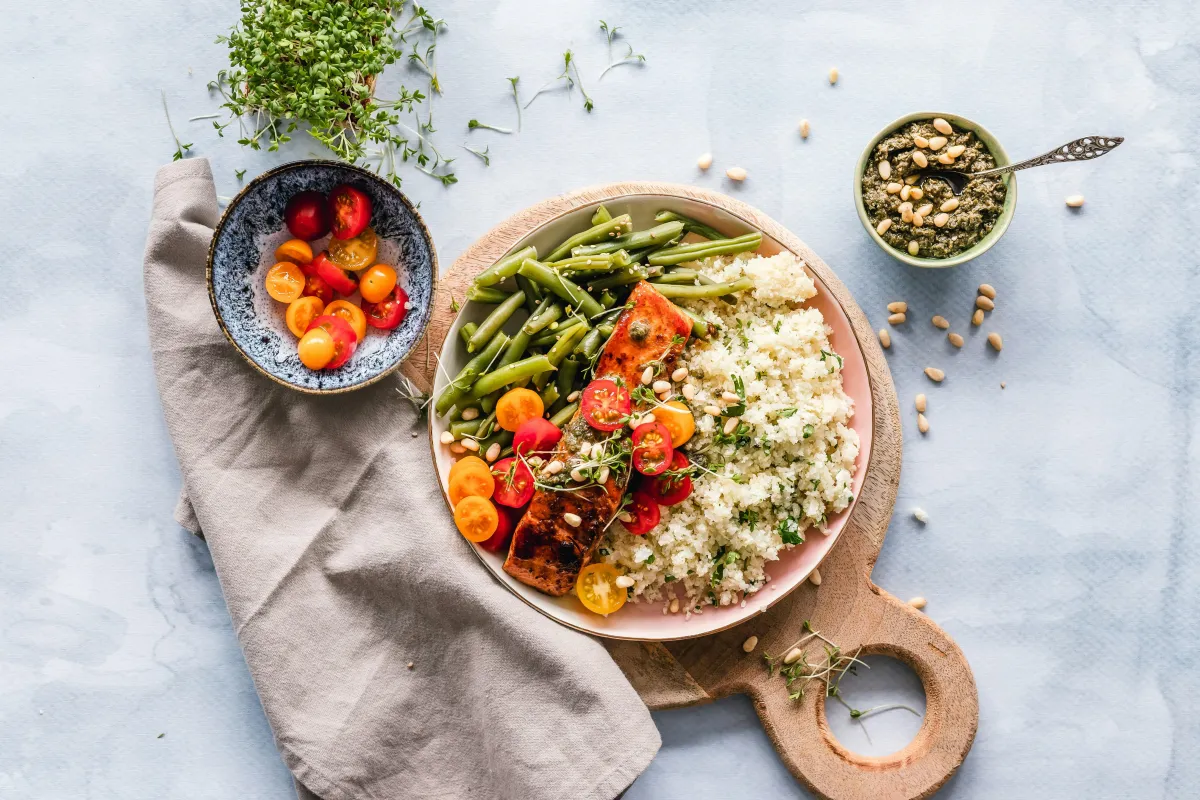
Eggs with sautéed vegetables, berries and avocado
Salmon with roasted vegetables and sweet potato
Chicken with a large mixed-vegetable bowl, quinoa and olive-oil dressing
Plain Greek yogurt with berries, chia, walnuts and an additional protein source if needed
Beef or turkey lettuce bowls with vegetables, black beans, salsa and avocado
The formula stays consistent while the portions change according to the woman.
How REV0lution Can Help
There is no single “hormone-balancing diet” that fits every woman. A registered dietitian can assess protein and energy intake, meal timing, digestive tolerance, metabolic markers, iron status, training demands, sleep patterns and the relationship between symptoms and food.
At REV0lution, the goal is not to hand every woman the same restrictive menopause menu. It is to identify the factors that matter in her body and build a real-food plan she can sustain.
The Bottom Line
Perimenopause nutrition should help women remain strong, nourished and metabolically supported—not make them afraid of food.
Start with meaningful real-food protein, fiber-rich plants, naturally occurring fats, individualized whole-food carbohydrates and a realistic hydration plan. Pair nutrition with resistance training, recovery and protected sleep.
Perimenopause may change the context, but it does not eliminate the fundamentals. The right plan simply applies those fundamentals more intelligently.
Medical Disclaimer: This article is for general educational and informational purposes only and does not provide individualized medical or nutrition advice. It is not intended to diagnose, treat, cure, or prevent disease or replace care from a qualified healthcare professional. Do not change your medications, supplements, diet, fasting schedule, or healthcare plan based solely on this content. [Read the full Medical Disclaimer and Terms & Conditions.]
Frequently Asked Questions
What is the best diet for perimenopause?
The best perimenopause diet emphasizes adequate real-food protein, vegetables and other whole plants, naturally occurring fats, whole-food carbohydrates and sufficient total nourishment. Portions and carbohydrate distribution should be individualized to activity, symptoms and metabolic health.
How much protein should a woman eat during perimenopause?
Many women benefit from approximately 25 to 35 grams at each primary meal, but total needs depend on body size, training, energy intake, age and health. Women with kidney disease or other relevant medical conditions need individualized guidance.
Should I stop eating carbohydrates during perimenopause?
Not automatically. Carbohydrate quality, amount and meal placement may need adjustment, particularly with insulin resistance, but fruit, legumes, root vegetables and other whole-food carbohydrates can remain part of a healthy plan.
Does intermittent fasting help during perimenopause?
It may help some women reduce chaotic evening eating or create a consistent schedule. It is not required, and it should not be forced when it causes morning misery, under-fueling, poor training or worsening sleep.
How much water should I drink during perimenopause?
Approximately 70 to 90 ounces of fluid daily is a reasonable starting range for many adults, but needs vary considerably. Exercise, heat, sweating, medications and medical conditions should be considered.
Do I need electrolytes every day?
Most women do not require a commercial electrolyte product for an ordinary day. Electrolytes may be useful with substantial sweating, prolonged exercise, heat exposure, gastrointestinal losses or individualized medical guidance.
References
Yelland S, Steenson S, Creedon A, et al. The role of diet in managing menopausal symptoms: A narrative review. Nutr Bull. 2023;48(1):43-65. PMID: 36792552.
Ko SH, Kim HS. Menopause-associated lipid metabolic disorders and foods beneficial for postmenopausal women. Nutrients. 2020;12(1):202. PMID: 31941004.
JafariNasabian P, Inglis JE, Reilly W, Kelly OJ, Ilich JZ. Aging human body: Changes in bone, muscle and body fat with consequent changes in nutrient intake. J Endocrinol. 2017;234(1):R37-R51. PMID: 28442508.
Phillips SM, Chevalier S, Leidy HJ. Protein “requirements” beyond the RDA: Implications for optimizing health. Appl Physiol Nutr Metab. 2016;41(5):565-572. PMID: 26960445.
Tieland M, Borgonjen-Van den Berg KJ, van Loon LJC, de Groot LCPGM. Dietary protein intake in community-dwelling, frail and institutionalized elderly people: Scope for improvement. Eur J Nutr. 2012;51(2):173-179. PMID: 21562883.
Godos J, Currenti W, Angelino D, et al. Diet and mental health during the menopausal transition. Nutrients. 2020;12(10):2998. PMID: 33003390.
Gavaler JS, Rosenblum ER. Predictors of postmenopausal hot flashes. J Clin Epidemiol. 1993;46(4):285-293. PMID: 8455053.