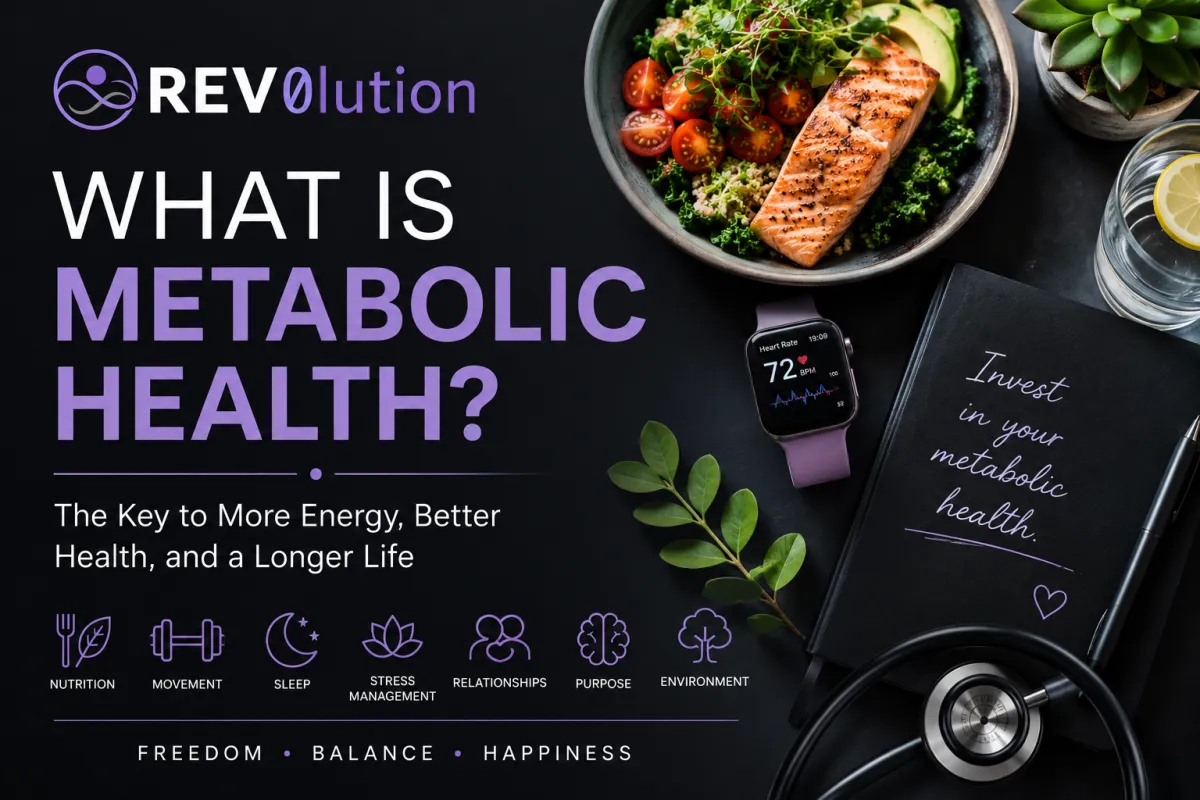
What Is Metabolic Health? How to Improve Your Metabolism Naturally
What Is Metabolic Health?
Written by Kerri Rachelle, PhD c., RDN, CSSD, FMP-AC
Quick Answer
Metabolic health is your body's ability to efficiently create, store, and use energy. It influences far more than your blood sugar. Every cell in your body depends on healthy metabolism to power movement, support your brain, regulate hormones, fight inflammation, recover from exercise, maintain muscle, and help you feel your best.
Most people don't think about metabolic health until they're told they have prediabetes, high cholesterol, fatty liver disease, or type 2 diabetes. The truth is, those diagnoses are often the result of years of gradual changes occurring beneath the surface.
Metabolic health isn't about waiting until something goes wrong. It's about building a body that functions well for decades.
Key Facts About Metabolic Health
Metabolic health affects nearly every organ system in the body.
It is about much more than blood sugar or body weight.
Healthy metabolism supports energy, hormones, brain function, heart health, muscle, and longevity.
Small habits repeated consistently create greater long-term benefits than short periods of perfection.
There isn't one laboratory test that defines metabolic health. We look for patterns.
Everyone can improve their metabolic health, regardless of where they're starting.
What Does Metabolic Health Really Mean?
Think of your metabolism as your body’s energy management system. Every second of every day, trillions of cells are producing energy that allows your heart to beat, your brain to think, your muscles to move, your hormones to communicate, your immune system to protect you, and your body to recover from everyday life.
When those systems are functioning efficiently, people often describe themselves as feeling energetic, resilient, mentally clear, and strong. When they are not, symptoms often appear long before disease does.
Fatigue, brain fog, stubborn weight changes, afternoon energy crashes, poor recovery from exercise, difficulty concentrating, cravings, and poor sleep are often dismissed as “just getting older.” But many of these symptoms may reflect how well—or how poorly—your metabolism is functioning.
Metabolic health is not simply about avoiding disease. It is about creating the biological foundation that allows you to live the life you want. But, one of the most common things we hear is, "My doctor said everything looked normal,” but I don’t feel like I used to.
Feeling "Okay" Isn't the Same as Feeling Well
People will continue to live with fatigue, brain fog, bloating, reflux, headaches, poor sleep, stubborn weight, chronic aches, eczema, anxiety, painful menstrual cycles, or simply feeling like they're functioning at 60% of their potential. Those symptoms may be common, but they aren't optimal.
At REV0lution, we believe health is more than the absence of disease. Our goal isn't simply helping people avoid diagnoses. It's helping them feel energetic, resilient, mentally clear, and capable of fully participating in their lives. We help people say, “Wow! I finally feel like ME again!”
Related reading: Why Am I Always Tired? → https://rev0lution.com/post/why-am-i-always-tired
Why Should You Care About Your Metabolic Health?
Most people begin paying attention to their health after something happens: a diagnosis, a concerning lab result, a new medication, an injury, or a family member becoming sick. But what if we approached health the way elite athletes approach performance?
Professional athletes do not wait until they are injured before they begin training. They fuel their bodies intentionally, prioritize recovery, protect their sleep, monitor progress, and make adjustments before small problems become major setbacks. They do this not because they are sick, but because they want to perform at their highest level.
Metabolic health deserves the same mindset. The goal is not simply avoiding diabetes. The goal is having the energy to travel, keep up with your children or grandchildren, enjoy retirement, recover from workouts, think clearly during important meetings, and continue doing the things you love throughout your life.
Why Metabolic Health Is Like Investing
One of the best ways to think about metabolic health is to think about investing. When someone begins investing early in life, even small contributions have years to grow through the power of compound interest. The earlier they start, the greater the return.
Your health works remarkably the same way. Every nutritious meal, walk, strength-training workout, night of quality sleep, moment spent managing stress, meaningful relationship, and hour spent playing, learning, laughing, or moving becomes a deposit into your future.
Individually, those choices may seem small. Together, they compound into something extraordinary.
If you are starting later in life, that does not mean you have missed your opportunity. Just as someone can begin investing later and still build wealth, you can begin improving your health today. Your starting point may be different, but your body still has an incredible capacity to adapt.
The biggest mistake is not starting late. It is never starting.
What Are the Pillars of Metabolic Health?
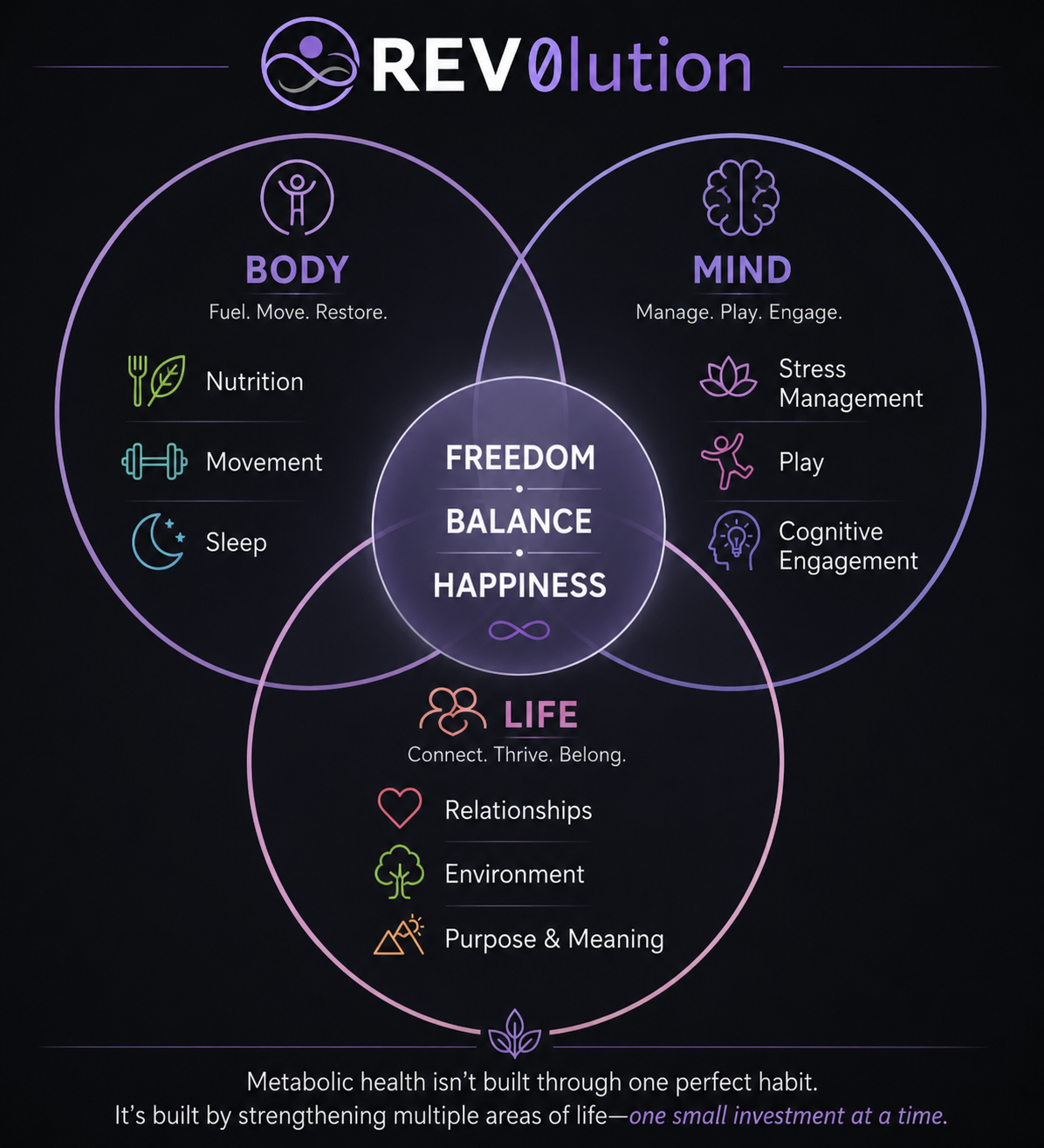
At REV0lution, we believe metabolic health is built from consistent attention to multiple areas of life—not just nutrition.
The pillars we focus on include:
Nutrition
Movement
Sleep
Stress Management
Environment
Relationships
Purpose & Meaning
Play
Cognitive Engagement
These pillars do not exist independently. They influence one another every day. Poor sleep affects nutrition choices. Chronic stress changes hormone function. Relationships influence habits. Movement improves sleep. Purpose supports motivation. Play reduces stress.
The healthiest people rarely excel in only one pillar. Instead, they build small improvements across many areas over time. Rather than trying to master all nine at once, we encourage people to choose one habit, practice it consistently for a week or two, and then gradually build another. Sustainable change almost always beats dramatic change. And change starts at the cellular level.
Healthy Cells Build Healthy People
Change starts at the cellular level. Every thought you think, every movement you make, every hormone signal your body sends, every immune response you take on, and every moment of recovery depends on cells that can produce energy and communicate effectively.
That is why metabolic health is not just about blood sugar or body weight. It is about whether your cells have the nutrients, oxygen, movement, rest, and supportive environment they need to do their jobs well. When cellular health is supported, people often experience steadier energy, clearer thinking, better recovery, and greater resilience.
When cellular health is strained by poor sleep, chronic stress, nutrient-poor food, inflammation, environmental exposures, long periods of sitting, or lack of recovery, people often feel the effects long before a diagnosis appears. Fatigue, brain fog, cravings, poor recovery, hormone changes, inflammation, and feeling like you are running on empty can all be signs that the body needs deeper support.
Healthy cells help build healthier people. Healthier people show up differently in their families, workplaces, and communities. They have more energy to lead, create, care for others, solve problems, and enjoy their lives.
That is why workplace wellness has to go deeper than another generic challenge or wellness email. Organizations become healthier when the people inside them become healthier. At REV0lution, our corporate wellness programs help employees build sustainable habits that improve energy, resilience, metabolic health, and quality of life—because healthier people create stronger teams.
How Is Metabolic Health Measured?
Metabolic health is not measured by a single laboratory value. At REV0lution, we look for patterns rather than relying on one number in isolation. Blood sugar is certainly part of the picture, but it represents only one piece of how your metabolism is functioning.
Depending on your health history, symptoms, goals, and risk factors, we may evaluate markers such as fasting glucose, fasting insulin, hemoglobin A1c, HOMA-IR, leptin, uric acid, triglycerides, HDL cholesterol, and, when appropriate, iron studies. Each marker tells us something different. Together, they help us understand the bigger picture to make more personalized recommendations.
Wearable Technology Helps Personalize Care
Laboratory testing gives us valuable information, but it's only one part of understanding metabolism. We also love data beyond the laboratory. Body composition, heart rate training zones, continuous glucose monitors (CGMs), smart watches, fitness trackers, and wearable rings provide valuable information about how your body responds to daily life—not just during a blood draw.
These wearables can provide meaningful insights into movement, recovery, sleep, heart rate variability, glucose patterns, and overall lifestyle habits. Wearables remind us that movement throughout the day matters. A single workout is wonderful, but remaining sedentary for the rest of the day doesn't provide the same metabolic benefits as moving consistently throughout your waking hours.
Technology doesn't replace healthy habits. It helps us personalize them.
Related reading: Fasting Insulin: The Metabolic Marker Most People Have Never Checked → https://rev0lution.com/post/fasting-insulin
Can You Be Thin and Metabolically Unhealthy?
Absolutely.
One of the biggest myths in healthcare is that body size tells us everything we need to know about health. While body composition matters, it doesn't tell the whole story.
We've all known someone who appears thin but has elevated blood sugar, high cholesterol, fatty liver disease, low muscle mass, or chronic inflammation. We've also worked with people in larger bodies whose metabolic markers are healthier than expected.
This is why we avoid making assumptions based solely on appearance. Metabolic health is about how your body functions, not simply what it looks like.
What Habits Improve Metabolic Health the Most?
People often ask us what the single best thing they can do to improve their metabolism. The honest answer is that there isn't just one. The best habit for improving metabolic health is the one that addresses your biggest gap and is realistic enough for you to keep doing. For one person, that may be walking after dinner. For another, it may be strength training twice a week, improving sleep, eating more protein, reducing alcohol, or creating better stress-management tools.
This is why we do not give every person the same starting point. Healthy metabolism is built through consistent habits that support the body over time, and the habits that look “too small” are often the ones that create the greatest change because they are the ones people actually maintain.
Rather than trying to change everything overnight, choose one habit. Practice it consistently for a week or two until it begins to feel natural. Then add another. Health compounds exactly the way investing does.
One of the biggest areas we often start with is food quality. Not because nutrition is the only pillar of metabolic health, but because ultra-processed foods make it harder for the body to regulate energy, appetite, cravings, inflammation, and blood sugar.
Why Are Ultra-Processed Foods So Hard to Resist?
One reason healthier eating can feel difficult isn't a lack of willpower. Many ultra-processed foods are intentionally designed to be highly rewarding, encouraging us to eat beyond hunger and making it more difficult to recognize our body's natural fullness signals.
Rather than striving for perfection, we help people gradually replace heavily processed foods with more nutrient-dense, minimally processed options that naturally support energy, satiety, gut health, and metabolic function. The goal isn't restriction—it's creating an eating pattern your body recognizes and thrives on.
Depending on your health history and goals, some people may benefit from a short-term therapeutic nutrition approach, such as a Paleo-style eating pattern, before gradually expanding food variety over time.
Related reading: What Is Insulin Resistance? → https://rev0lution.com/post/what-is-insulin-resistance
Why Personalized Care Matters
If there were one perfect nutrition plan, one ideal workout, or one supplement that worked for everyone, chronic disease wouldn't continue to rise.
Every person comes to our virtual practice with a different story. Your genetics, laboratory findings, medications, sleep, stress, relationships, work schedule, previous dieting experiences, goals, and medical history all influence what recommendations are most appropriate for you.
That's why we don't believe in one-size-fits-all meal plans or generic advice from social media. Personalized nutrition isn't a luxury—it's the foundation of effective healthcare.
Whether we're reviewing conventional laboratory work, interpreting functional testing, analyzing wearable data, or helping you build sustainable habits, every recommendation should fit the person—not the trend.
Related reading: What Is Nutrition Counseling with a Functional Medicine Dietitian? → https://rev0lution.com/post/nutrition-coaching-with-purpose
Metabolic Health Is Your Road to Freedom
We often think about health as preventing disease.
But perhaps a better way to think about it is creating freedom.
Freedom to wake up with energy.
Freedom to travel.
Freedom to hike.
Freedom to chase your children or grandchildren.
Freedom to think clearly during an important meeting.
Freedom to continue doing the hobbies you love as you grow older.
Freedom to enjoy retirement rather than simply reach it.
Those freedoms aren't built overnight. They're built through thousands of small investments that compound over time. Every healthy meal, every walk, every workout, every good night's sleep, every meaningful conversation, every opportunity to laugh, learn, and play becomes another investment in your future.
Our Approach to Metabolic Health
At REV0lution, we don't wait until someone develops a chronic disease before helping them improve their health. We believe the greatest opportunity exists long before a diagnosis.
Our approach combines evidence-informed nutrition, functional medicine principles, conventional and specialty laboratory testing when appropriate, wearable technology, movement, coaching, and personalized care. Every recommendation is designed to fit the individual sitting in front of us—not a generic protocol.
Our goal isn't simply to help you live longer.
It's to help you feel stronger, think more clearly, recover better, and enjoy the years you're working so hard to build.
Medical Disclaimer: This article is for general educational and informational purposes only and does not provide individualized medical or nutrition advice. It is not intended to diagnose, treat, cure, or prevent disease or replace care from a qualified healthcare professional. Do not change your medications, supplements, diet, fasting schedule, or healthcare plan based solely on this content. [Read the full Medical Disclaimer and Terms & Conditions.]
Ready to Invest in Your Future Health?
Every day, you're making investments in your future.
The question isn't whether you're investing.
It's whether you're investing intentionally.
Working with a Functional Medicine Registered Dietitian Nutritionist is one of the greatest investments you can make because your plan is designed specifically for you. We take the time to understand your health history, laboratory work, lifestyle, goals, and the many factors influencing your metabolism so your recommendations are both evidence-informed and realistic.
You don't have to figure it all out on your own. We'll help you identify the habits that matter most, build them one at a time, and create meaningful changes that continue paying dividends for years to come.
Your future health starts with the decisions you make today.
Book your Registered Dietitian and start investing in yourself.
Frequently Asked Questions
What is metabolic health?
Metabolic health is your body's ability to efficiently create, store, and use energy. Healthy metabolism supports stable blood sugar, healthy hormones, brain function, muscle, heart health, recovery, and long-term wellness. It's much more than simply maintaining a healthy weight.
Why is metabolic health important?
Metabolic health influences nearly every system in the body. Poor metabolic health is associated with insulin resistance, prediabetes, type 2 diabetes, fatty liver disease, cardiovascular disease, and many other chronic conditions. Improving metabolic health often improves energy, resilience, recovery, and overall quality of life.
What are the signs of poor metabolic health?
Some people have no symptoms at all. Others may experience:
Low energy
Brain fog
Afternoon energy crashes
Resistant weight loss
Increased waist circumference
Elevated blood sugar
Poor sleep
Frequent cravings
High triglycerides
Fatty liver disease
Many of these symptoms are common—but they shouldn't simply be accepted as "normal."
Related reading: Why am I always tired?
Can you be thin and metabolically unhealthy?
Yes. Body weight is only one measurement of health. Someone can have a normal body weight while still experiencing insulin resistance, elevated blood sugar, chronic inflammation, fatty liver disease, or other signs of metabolic dysfunction. Likewise, someone in a larger body may have healthier metabolic markers than expected.
What laboratory tests evaluate metabolic health?
No single laboratory test defines metabolic health. Depending on your health history, your Registered Dietitian Nutritionist may recommend evaluating markers such as fasting glucose, fasting insulin, hemoglobin A1c, HOMA-IR, leptin, uric acid, triglycerides, HDL cholesterol, iron studies, and other laboratory markers as clinically appropriate.
Related reading: Functional Medicine Lab Testing: What It Is, What It Isn't, and When It's Helpful
What is the best diet for metabolic health?
There isn't one diet that's right for everyone. Most people benefit from eating more minimally processed, nutrient-dense foods while reducing ultra-processed foods and added sugars. The best nutrition plan depends on your goals, laboratory findings, medical history, medications, activity level, and lifestyle.
Can wearable technology improve metabolic health?
Wearables don't improve health by themselves, but they provide valuable feedback. Continuous glucose monitors, smart watches, heart rate monitors, wearable rings, and body composition assessments can help personalize recommendations by showing how your body responds to food, exercise, sleep, and stress.
How long does it take to improve metabolic health?
Every person is different. Some people notice improvements in energy, sleep, or glucose patterns within weeks, while laboratory markers often take several months to meaningfully change. Consistency matters far more than perfection.
Can metabolic health improve without losing weight?
Absolutely. While body composition can influence metabolic health, improvements in nutrition, sleep, movement, stress management, muscle mass, and blood sugar regulation often occur before significant weight changes.
Is working with a Registered Dietitian covered by insurance?
Many nutrition counseling appointments with Registered Dietitian Nutritionists are covered by health insurance. Coverage depends on your insurance plan and medical benefits.
Related reading: Is Functional Medicine Covered by Insurance?
Continue Learning About Metabolic Health
Then list the related articles in order:
References
American Diabetes Association. Standards of Care in Diabetes—2025. Diabetes Care. 2025;48(Suppl 1).
Lloyd-Jones DM, Allen NB, Anderson CAM, et al. Life's Essential 8: Updating and Enhancing the American Heart Association's Construct of Cardiovascular Health. Circulation. 2022.
Evert AB, Dennison M, Gardner CD, et al. Nutrition Therapy for Adults With Diabetes or Prediabetes: A Consensus Report. Diabetes Care. 2019.
Hall KD, Ayuketah A, Brychta R, et al. Ultra-Processed Diets Cause Excess Calorie Intake and Weight Gain: An Inpatient Randomized Controlled Trial. Cell Metab. 2019.
Booth FW, Roberts CK, Thyfault JP. Role of Inactivity in Chronic Diseases: Evolutionary Insight and Pathophysiological Mechanisms. Physiol Rev. 2017.
Katzmarzyk PT, Powell KE, Jakicic JM, et al. Sedentary Behavior and Health: Update from the 2018 Physical Activity Guidelines Advisory Committee. Med Sci Sports Exerc. 2019.
Knowler WC, Barrett-Connor E, Fowler SE, et al. Reduction in the Incidence of Type 2 Diabetes with Lifestyle Intervention or Metformin. N Engl J Med. 2002.
Tuomilehto J, Lindström J, Eriksson JG, et al. Prevention of Type 2 Diabetes Mellitus by Changes in Lifestyle among Subjects with Impaired Glucose Tolerance. N Engl J Med. 2001.
Saeedi P, et al. Global and regional diabetes prevalence estimates. Diabetes Research and Clinical Practice. 2021.
Lustig RH. Metabolical: The Lure and the Lies of Processed Food, Nutrition, and Modern Medicine. Harper Wave; 2021.