What Is Functional Medicine? A Whole-Person Approach to Health
What Is Functional Medicine? A Whole-Person Approach to Health
Written by Kerri Rachelle, PhD c., RDN, CSSD, FMP-AC
Founder & CEO, REV0lution | Doctor of Integrative & Natural Medicine Candidate
Reviewed for scientific accuracy: July 2026
Quick Answer
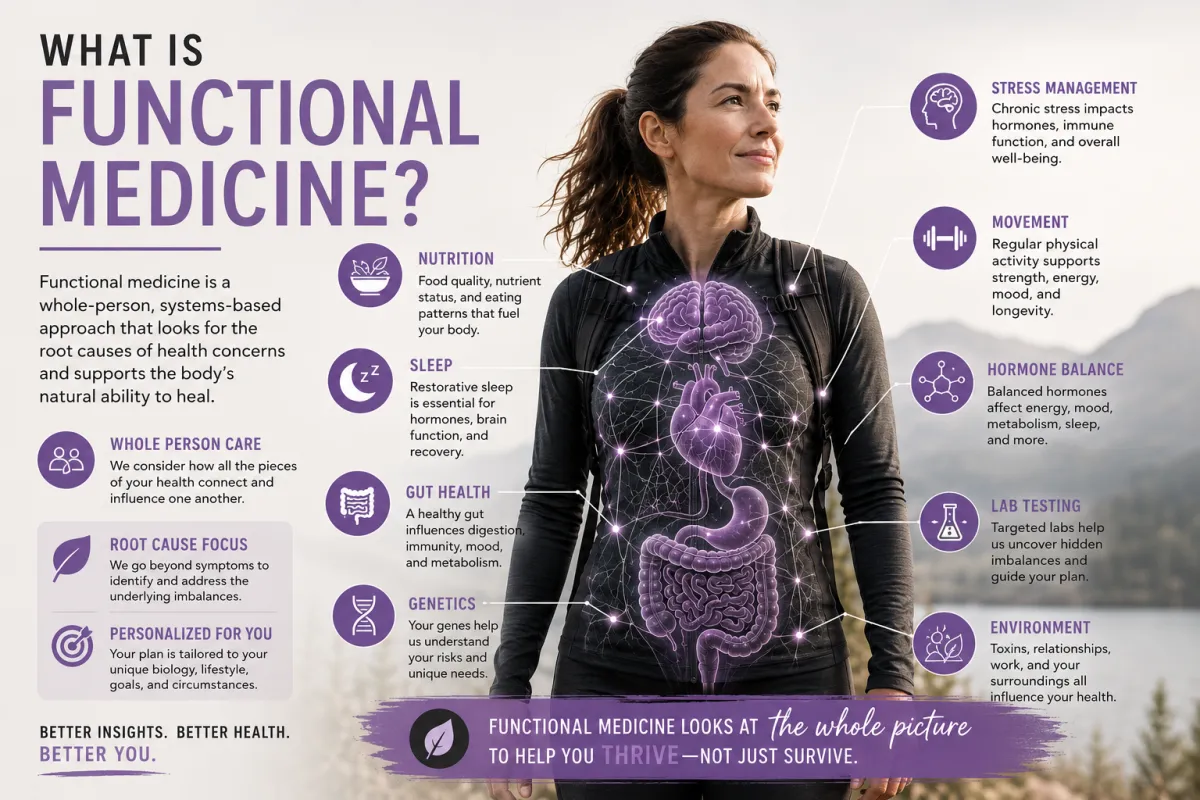
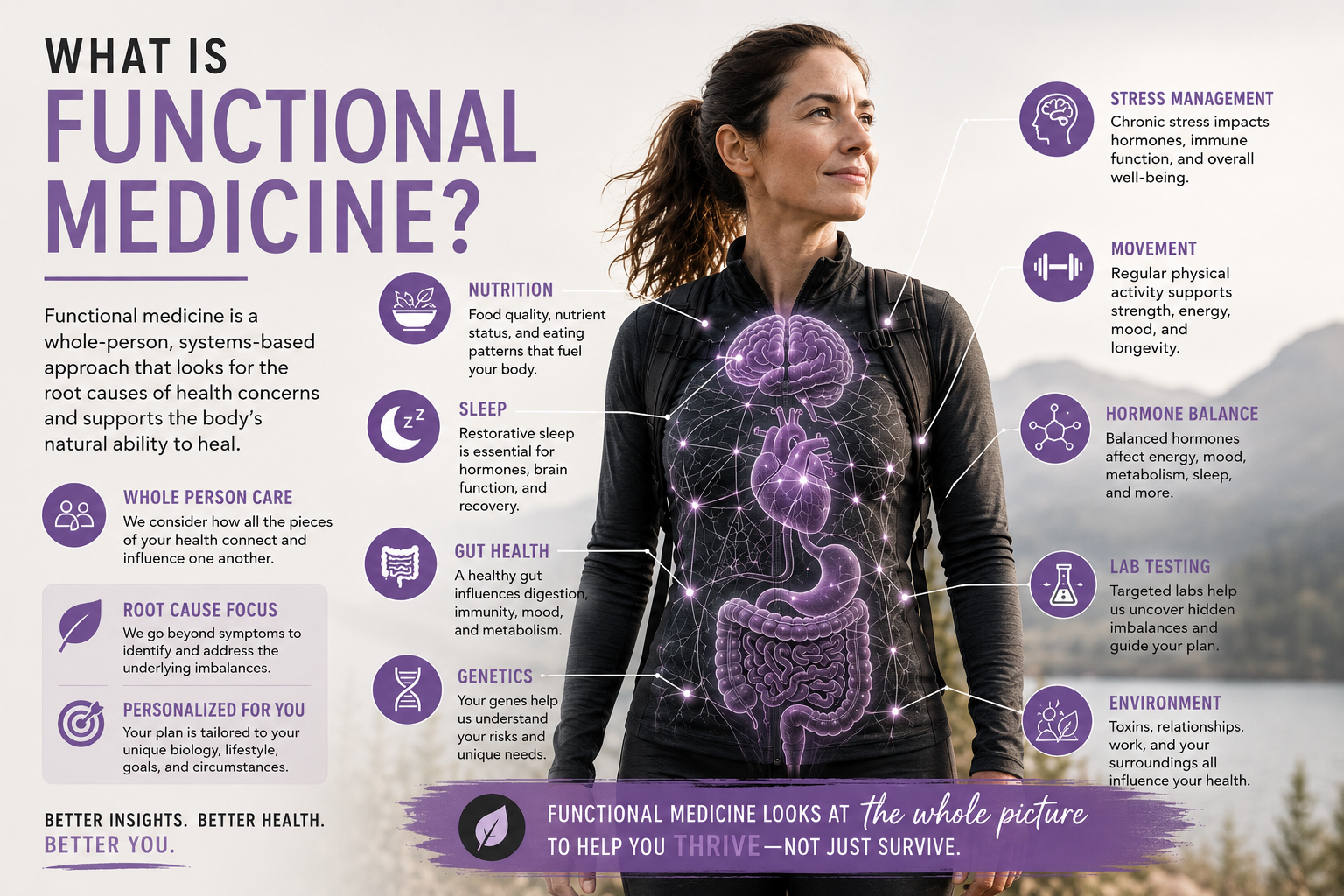
Functional medicine is a personalized, whole-person approach to healthcare that looks at how nutrition, lifestyle, environment, genetics, stress, sleep, movement, digestion, hormones, metabolism, and medical history interact over time. Rather than focusing only on a diagnosis or symptom, functional medicine asks why the problem may be happening and what foundations can be supported to improve health.
Key Takeaways
Functional medicine is not meant to replace conventional medicine.
It works best when integrated with appropriate medical diagnosis, medications, labs, imaging, and specialist care.
The goal is to understand patterns, root contributors, and the whole person.
Nutrition, lifestyle, behavior change, and targeted testing are often central tools.
Functional medicine is especially relevant for chronic symptoms and long-term health concerns.
What Is Functional Medicine?
If you've heard the term "functional medicine" but aren't sure what it means, you're not alone. As more people look for answers beyond symptom management, functional medicine has become one of the fastest-growing approaches to chronic disease prevention and whole-person healthcare.
The timing isn't surprising. According to the CDC, nearly 3 in 4 U.S. adults live with at least one chronic disease, and more than half have two or more. Chronic diseases are also responsible for the majority of the nation's healthcare spending, with annual health expenditures reaching $5.3 trillion in 2024, or 18% of the U.S. economy. These numbers highlight why many patients and healthcare providers are looking for more comprehensive approaches to long-term health.
That's where functional medicine comes in. Functional medicine is a systems-based approach to health. Instead of looking at the body as separate parts, it looks at the connections between different systems: digestion, metabolism, hormones, immune function, nervous system health, cardiovascular risk, detoxification pathways, sleep, stress, nutrition, movement, and environment.
This does not mean every symptom has one simple “root cause.” In real life, most chronic health concerns develop from multiple overlapping factors. A person with fatigue may be dealing with low iron, poor sleep, blood sugar instability, chronic stress, under-fueling, thyroid changes, inflammation, or a combination of several factors. Functional medicine aims to organize those clues into a clearer clinical picture.
At its best, functional medicine is not anti-medication, anti-doctor, or anti-conventional care. It is an expanded lens. Conventional medicine is essential for diagnosis, acute care, medications, imaging, surgery, emergency medicine, and disease monitoring. Functional medicine adds more time and attention to the foundations that often influence chronic symptoms: food, sleep, stress, movement, nutrient status, gut health, environment, and behavior.
Why Is Functional Medicine Becoming More Popular?
Chronic disease is one of the biggest health challenges in the United States. Many people are not dealing with one isolated issue. They may have fatigue, digestive symptoms, weight changes, insulin resistance, high cholesterol, autoimmune symptoms, poor sleep, anxiety, hormone changes, or inflammation at the same time.
That is why a whole-person model matters.
A diagnosis can be important, but it does not always explain the full story. Two people can both have prediabetes, but one may be under-sleeping, over-stressed, and sedentary, while another may have PCOS, a family history of diabetes, low muscle mass, and years of inconsistent eating. The diagnosis is the same. The plan should not be identical.
Functional medicine helps ask better questions:
What changed before symptoms started?
What systems are involved?
What patterns show up in labs, food intake, stress, sleep, movement, digestion, and symptoms?
What foundations need the most support first?
What needs medical evaluation?
What can be improved through nutrition and lifestyle?
What should be monitored over time?
What Does “Root Cause” Really Mean?
“Root cause” is one of the most common phrases in functional medicine, but it can be misunderstood.
It does not mean there is always one hidden cause behind every symptom. It also does not mean every condition can be reversed with lifestyle alone.
A better way to think about root-cause care is this: functional medicine looks for root contributors.
For example, reflux may be influenced by meal timing, alcohol, caffeine, stress, body weight, hiatal hernia, medications, food triggers, delayed gastric emptying, or other medical conditions. High triglycerides may be connected to insulin resistance, alcohol intake, refined carbohydrates, genetics, thyroid function, medications, or liver health. Fatigue may be connected to anemia, sleep apnea, thyroid disease, under-eating, overtraining, depression, inflammation, or blood sugar swings.
The goal is not to oversimplify. The goal is to investigate.
How Is Functional Medicine Different from Conventional Medicine?
Functional medicine usually differs from standard care in four major ways.
1. It looks at the whole person
Symptoms rarely happen in isolation. Gut health can affect energy. Sleep can affect blood sugar. Stress can affect digestion. Hormones can affect mood, metabolism, and recovery. Functional medicine looks at the whole pattern instead of only one symptom at a time.
2. It is personalized
The same diagnosis can require different strategies for different people. A personalized plan considers labs, symptoms, history, lifestyle, preferences, access to food, stress level, sleep, medications, and readiness for change.
3. It emphasizes foundations
Nutrition, sleep, movement, stress resilience, hydration, meal timing, protein, fiber, micronutrients, and digestive function are not “extra.” They are the foundation of health. Functional medicine often starts there because those inputs influence many systems at once.
4. It uses testing strategically
Functional medicine may use conventional labs, advanced nutrition labs, stool testing, hormone testing, glucose data, cardiometabolic markers, or other tools when appropriate. Testing should answer a clinical question. More testing is not always better. The best test is the one that changes the plan.
Is Functional Medicine Evidence-Based?
Functional medicine should be evidence-informed. That means recommendations should be grounded in research, clinical guidelines, physiology, patient history, and professional judgment.
Some parts of functional medicine are strongly supported by evidence, including nutrition therapy, physical activity, sleep, stress reduction, metabolic health, smoking cessation, alcohol moderation, and behavior change. Other areas require more caution, especially when testing or supplement protocols are expensive, excessive, or not clearly tied to a clinical question.
A responsible functional medicine clinician should be willing to say:
“This is well supported.”
“This is promising but still emerging.”
“This may help, but the evidence is limited.”
“This requires medical evaluation.”
“This is outside my scope.”
“Medication or specialist care may be necessary.”
That is what makes functional medicine safer, more credible, and more useful.
What Does a Functional Medicine Dietitian Do?
A functional medicine dietitian uses nutrition as a primary tool while also looking at the broader health picture. This may include digestion, blood sugar, cholesterol, thyroid labs, iron status, inflammation, hormones, energy, sleep, stress, training, body composition, medications, supplements, and lifestyle patterns.
A functional medicine dietitian may help with:
IBS, bloating, constipation, diarrhea, reflux, and gut health
Insulin resistance, prediabetes, metabolic syndrome, and fatty liver
PCOS, perimenopause, menopause, and hormone-related symptoms
Hashimoto’s and thyroid nutrition support
Iron deficiency and nutrient deficiencies
Cardiometabolic risk, cholesterol, triglycerides, and blood pressure support
Autoimmune nutrition support
Weight management with or without GLP-1 medications
Sports nutrition, recovery, and performance health
The role is not to diagnose medical disease outside of scope. The role is to use nutrition, lifestyle, education, and clinical reasoning to support the patient’s health while collaborating with physicians and other healthcare professionals when needed.
Can Functional Medicine and Conventional Medicine Work Together?
The strongest healthcare model is not functional medicine versus conventional medicine. It is both.
Conventional medicine is essential for acute symptoms, emergencies, diagnosis, imaging, procedures, medications, surgery, and disease management. Functional medicine can add the deeper work of nutrition, lifestyle, behavior change, prevention, and long-term health optimization.
For example, a patient with high blood pressure may need medication. That medication can be appropriate and even life-saving. At the same time, they may also benefit from nutrition support, sodium and potassium balance, weight management if needed, sleep apnea screening, stress reduction, resistance training, and cardiometabolic monitoring.
That is integrated care.
Who Is Functional Medicine For?
Functional medicine may be helpful for people who feel like they have been told “everything is normal” but still do not feel well. It may also help people with chronic conditions who want to better understand the nutrition and lifestyle factors influencing their health.
It can be especially useful for people dealing with fatigue, digestive symptoms, hormone changes, metabolic concerns, autoimmune conditions, chronic inflammation, nutrient deficiencies, or cardiometabolic risk.
Functional medicine is not a replacement for emergency care, primary care, or specialist care. It is a complementary model that can help connect the dots and support the foundations of health.
Bottom Line
Functional medicine is a personalized, whole-person approach that asks why symptoms or health patterns may be happening. It looks at the connections between nutrition, lifestyle, environment, genetics, medical history, labs, and daily habits.
The best version of functional medicine does not reject conventional medicine. It works alongside it.
At REV0lution, we believe the future of healthcare is integrated: evidence-based medical care combined with personalized nutrition, functional labs when appropriate, lifestyle support, and a deeper understanding of the whole person.
Medical Disclaimer: This article is for general educational and informational purposes only and does not provide individualized medical or nutrition advice. It is not intended to diagnose, treat, cure, or prevent disease or replace care from a qualified healthcare professional. Do not change your medications, supplements, diet, fasting schedule, or healthcare plan based solely on this content. [Read the full Medical Disclaimer and Terms & Conditions.]
Frequently Asked Questions
What is functional medicine?
Functional medicine is a personalized, whole-person approach to healthcare that looks at how nutrition, lifestyle, genetics, environment, stress, sleep, digestion, hormones, metabolism, and medical history interact to influence health. Rather than focusing only on treating symptoms, functional medicine seeks to identify and address the factors that may contribute to chronic disease while working alongside conventional medical care.
Is functional medicine the same as integrative medicine?
They overlap, but they are not identical. Functional medicine focuses on identifying root contributors and understanding how different body systems interact to influence health. Integrative medicine combines conventional medical care with evidence-informed complementary therapies. Both emphasize patient-centered care and can work together to support overall health.
Is functional medicine evidence-based?
Functional medicine should be evidence-informed. Many of its core principles—including nutrition therapy, physical activity, sleep, stress management, and cardiometabolic disease prevention—are strongly supported by scientific research. Some specialized testing and supplement protocols have more limited evidence and should be used thoughtfully, based on an individual's clinical history and goals.
Does functional medicine replace my doctor?
No. Functional medicine is designed to complement—not replace—primary care and specialty medical care. Conventional medicine remains essential for diagnosis, emergency care, surgery, medications, imaging, and the management of many acute and chronic conditions. Functional medicine adds another layer by emphasizing nutrition, lifestyle, prevention, and whole-person health.
What does a functional medicine dietitian do?
A functional medicine dietitian uses nutrition, lifestyle, laboratory data, symptom patterns, and health history to develop personalized nutrition strategies. They may support individuals with digestive disorders, metabolic health concerns, hormone changes, cardiovascular risk factors, nutrient deficiencies, autoimmune conditions, sports performance, and chronic disease prevention while collaborating with the patient's healthcare team.
Is functional medicine only for people with chronic illness?
No. While many people seek functional medicine to help manage chronic health concerns, it can also support disease prevention, healthy aging, sports performance, recovery, longevity, and overall wellness. Functional medicine is designed to optimize health across every stage of life—not just after illness develops.
Does insurance cover functional medicine?
Coverage depends on the provider and the services being offered. Many physician-based functional medicine practices operate on a self-pay model. However, nutrition counseling provided by a Registered Dietitian may be covered by insurance depending on your health plan. At REV0lution, we provide a functional medicine-informed approach to nutrition care, and many patients are able to use their insurance benefits for eligible services.
References
Centers for Disease Control and Prevention. About Chronic Diseases.
Centers for Medicare & Medicaid Services. National Health Expenditure Data.
Engel GL. The need for a new medical model: A challenge for biomedicine. Science. 1977;196(4286):129-136.
Bodenheimer T, Lorig K, Holman H, Grumbach K. Patient self-management of chronic disease in primary care. JAMA. 2002;288(19):2469-2475.
May C, Montori VM, Mair FS. We need minimally disruptive medicine. BMJ. 2009;339:b2803.
Bodai BI, Nakata TE, Wong WT, et al. Lifestyle Medicine: A Brief Review of Its Dramatic Impact on Health and Survival. The Permanente Journal. 2018;22:17-025.
Phillips EM, Frates EP, Park DJ, et al. Lifestyle Medicine: A Brief Review of Its Dramatic Impact on Health and Survival. American Journal of Lifestyle Medicine.(Use the specific lifestyle medicine review you cite consistently throughout your library.)
Beidelschies M, Alejandro-Rodriguez M, Ji X, et al. Association of the Functional Medicine Model of Care With Patient-Reported Health-Related Quality-of-Life Outcomes. JAMA Network Open. 2022.