
podcast
Beyond the biomarkers

want More?
Download the free 2-Week Energetic Reset Guide, created to help you put podcast insights into practice with actionable nutrition, lifestyle, and gut health strategies you can start today.
What to expect:
14-Day Nutrition Plan
Recipe Book
Gut Health Hacks
Nutrition Tips
Fitness Routines
Dedicated Community
Follow on:
Carbohydrates and Blood Sugar: How to Choose and Pair Them
Carbohydrates: How to Choose and Combine Them for Steadier Energy
Originally written by Hannah Jane Kedzierski, MS, RDN, FMP-RC
Revised and updated by Kerri Rachelle, PhD c, RDN, CSSD, FMP-AC
Carbohydrates are frequently treated as either essential or harmful, depending on the diet being promoted. Neither extreme is particularly helpful.
Carbohydrates are a broad category that includes fruit, vegetables, beans, lentils, milk, grains, potatoes, candy and sweetened drinks. These foods do not provide the same nutrition or produce identical responses simply because they contain carbohydrate.
A better question is not, “Are carbohydrates good or bad?”
It is: “Which carbohydrate, how much, in what meal and for whom?”
What Carbohydrates Do
The body breaks digestible carbohydrates into glucose, which can be used for energy or stored as glycogen in the liver and muscles. Glucose is particularly useful during moderate- and higher-intensity activity, while liver glycogen helps maintain blood glucose between meals.
Carbohydrate-containing foods can also provide fiber, vitamins, minerals and compounds used by intestinal microorganisms. Fruit, legumes and root vegetables therefore contribute far more than sugar alone.
Carbohydrate needs vary according to:
Activity and training volume
Body size
Glucose regulation
Medication
Pregnancy or lactation
Digestive tolerance
Personal goals
The rest of the diet
An athlete and a sedentary person do not necessarily need the same amount. Neither do two people with different degrees of insulin resistance.
Begin With Carbohydrate Quality
Whole-food carbohydrate sources include:
Fruit
Potatoes and sweet potatoes
Winter squash
Beans and lentils
Oats
Quinoa
Rice
Minimally processed whole grains when tolerated
Dairy foods without excessive added sugar
These foods may provide fiber, water, micronutrients or greater meal satisfaction.
Refined carbohydrates and added sugars can still appear occasionally, but they should not quietly dominate breakfast, snacks, drinks, condiments and dessert. A diet can contain “low-fat,” “gluten-free” or “zero-sugar” products and still be heavily manufactured.
REV0lution does not recommend replacing sugar with a routine of artificial sweeteners. Reducing the expectation that everything should taste intensely sweet is more useful than continually recreating sweetness with manufactured substitutes.
Do Carbohydrates Need to Be Paired?
Combining carbohydrate with protein, fiber or fat can create a more complete and satisfying meal. Protein added to a carbohydrate-containing meal has also been shown to reduce the overall post-meal glucose response while increasing the insulin response in acute controlled studies. That distinction matters: a lower glucose curve does not mean the pancreas released less insulin. The 2024 systematic review found lower glucose exposure but higher insulin exposure after adding dairy or plant protein.
For most people, the practical benefit of a mixed meal is not merely “blunting a spike.” It is obtaining enough protein, fiber, essential fats and total nourishment while supporting fullness and energy.
However, “never eat a carbohydrate alone” is unnecessarily absolute.
A piece of fruit can be an appropriate snack. An athlete may intentionally consume carbohydrate alone immediately before or during exercise. Someone treating hypoglycemia may specifically need rapidly absorbed carbohydrate without protein or fat slowing it down.
Pairing is a useful tool—not a universal food rule.
Protein, Fat and Fiber Affect Meals Differently
Protein may reduce early glucose exposure in some mixed meals, but it also stimulates insulin. This is a normal physiological response, although its importance may differ for people with diabetes or significant insulin resistance.
Fat can slow gastric emptying and delay an early glucose rise, but a high-fat mixed meal can also prolong post-meal glucose elevations in some circumstances. It is therefore too simplistic to say that adding fat always “stabilizes” blood sugar.
Fiber may slow digestion, add volume and support the intestinal environment, particularly when it comes from intact plant foods.
Rather than adding isolated fat to every carbohydrate, build a nutritionally complete meal and evaluate the full response: energy, fullness, digestion, glucose when clinically relevant and hunger several hours later.
Practical Meal Examples
Breakfast
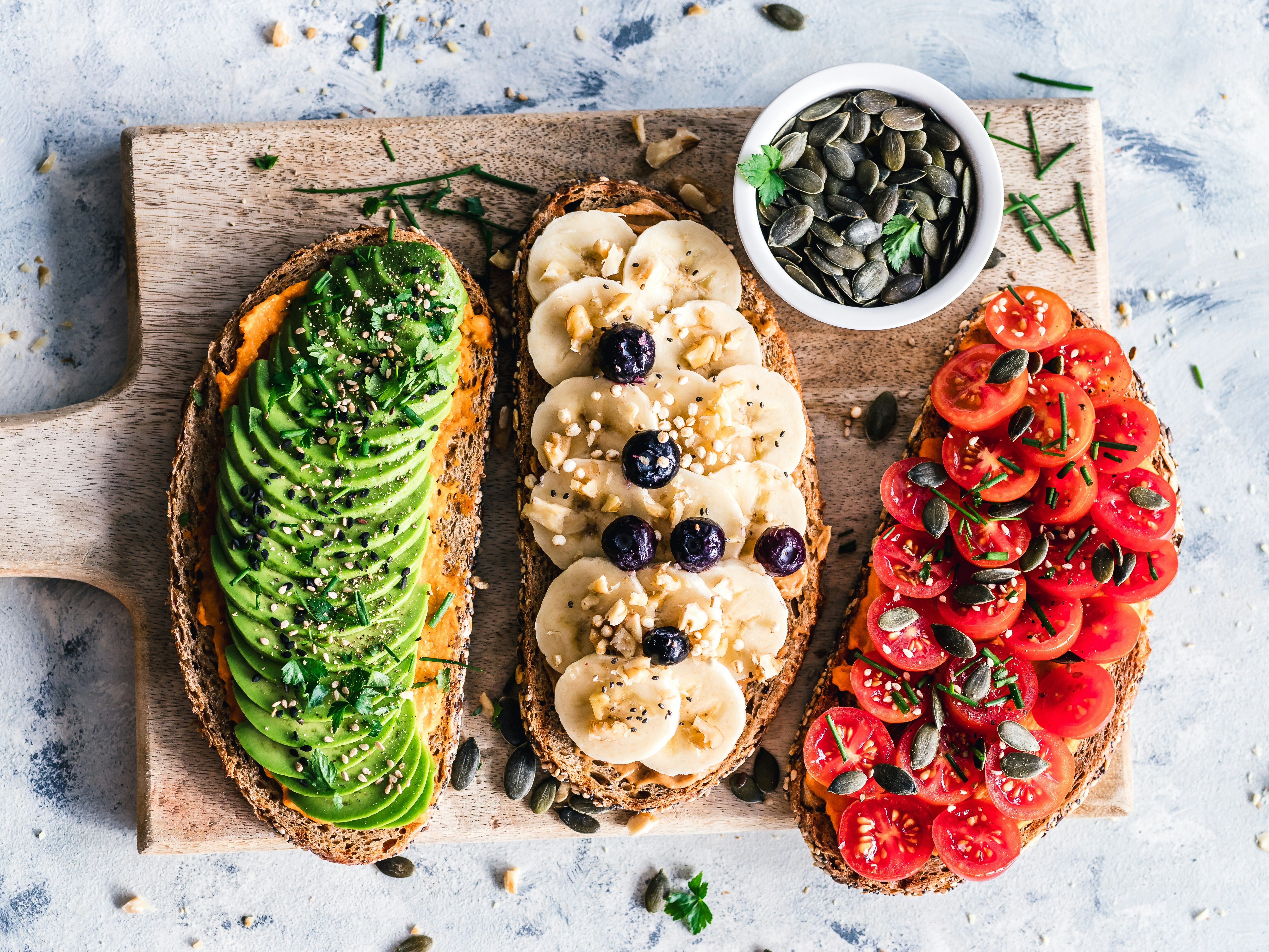
Instead of toast by itself, build a meal with eggs, sautéed vegetables, avocado and a piece of fruit or whole-grain toast.
Smoothie
Combine fruit with a complete protein source and chia or ground flax. Collagen may supply specific amino acids, but it should not be counted as the smoothie’s only complete protein.
Grain or Greens Bowl
Combine rice, quinoa or a starchy vegetable with fish, poultry, meat, tofu, tempeh or an appropriate serving of beans. Add vegetables and a simple olive-oil-based dressing.
Fruit Snack
Fruit may be eaten by itself. If it does not keep you satisfied, pair it with eggs, plain Greek yogurt, nuts or nut butter.
Crackers or Another Packaged Carbohydrate
Choose a minimally formulated option and add tuna, salmon, hummus, eggs or cheese when tolerated. Consider whether a more nourishing whole-food option would serve the same purpose.
What About Blood-Sugar Spikes?
Blood glucose is supposed to rise after eating carbohydrate. The goal is not to create a perfectly flat line after every meal.
The size and duration of the response may be affected by:
The amount and type of carbohydrate
Food structure and processing
Protein, fat and fiber
Meal sequence
Sleep
Stress
Recent activity
Time of day
Insulin sensitivity
Medication
A continuous glucose monitor can reveal patterns, but individual readings should not be interpreted without context. A nutritious meal can produce a glucose rise, while an artificially sweetened product may create a flat glucose line without providing meaningful nourishment.
Glucose is one marker—not a complete food-quality score.
Carbohydrates and Exercise
Active people often benefit from strategically placed carbohydrates before and after demanding training. Carbohydrate supports exercise intensity and glycogen restoration, while protein supports repair and adaptation.
Insufficient carbohydrate may appear as declining training performance, poor recovery, fatigue or difficulty sustaining higher-intensity work. More is not always necessary, but automatically restricting carbohydrate can work against performance goals.
Carbohydrates and Insulin Resistance
People with insulin resistance may benefit from adjusting carbohydrate quantity, quality and distribution. That may mean smaller portions at some meals, fewer refined carbohydrates, more fiber, increased protein, post-meal movement or placing more carbohydrate around activity.
It does not automatically require eliminating fruit, legumes or every grain.
The best plan is based on the person’s metabolic markers, symptoms, activity, preferences and response—not on fear of an entire macronutrient.
The Bottom Line
Carbohydrates can support energy, training, cognition and a nutrient-dense diet. The source, amount, preparation and surrounding meal all matter.
Choose whole-food carbohydrates most often. Build complete meals with meaningful protein, plants and naturally occurring fats. Use pairing when it improves fullness, nourishment or glucose regulation, but do not turn it into another rigid rule.
Carbohydrates do not need to be feared. They need to be selected and used with purpose.
Medical Disclaimer: This article is for general educational and informational purposes only and does not provide individualized medical or nutrition advice. It is not intended to diagnose, treat, cure, or prevent disease or replace care from a qualified healthcare professional. Do not change your medications, supplements, diet, fasting schedule, or healthcare plan based solely on this content. [Read the full Medical Disclaimer and Terms & Conditions.]
References
Hall KD, Ayuketah A, Brychta R, et al. Ultra-Processed Diets Cause Excess Calorie Intake and Weight Gain: An Inpatient Randomized Controlled Trial of Ad Libitum Food Intake. Cell Metab. 2019;30(1):67-77.e3. PMID: 31105044.
Wolever TMS, Zurbau A, Koecher K, Au-Yeung F. The Effect of Adding Protein to a Carbohydrate Meal on Postprandial Glucose and Insulin Responses: A Systematic Review and Meta-Analysis of Acute Controlled Feeding Trials. J Nutr. 2024;154(9):2640-2654. PMID: 39019167.
Aguilera JM. The Food Matrix: Implications in Processing, Nutrition and Health. Crit Rev Food Sci Nutr. 2019;59(22):3612-3629. PMID: 30040431.
Melse-Boonstra A. Bioavailability of Micronutrients From Nutrient-Dense Whole Foods: Zooming in on Dairy, Vegetables, and Fruits. Front Nutr. 2020;7:101. PMID: 32793622.