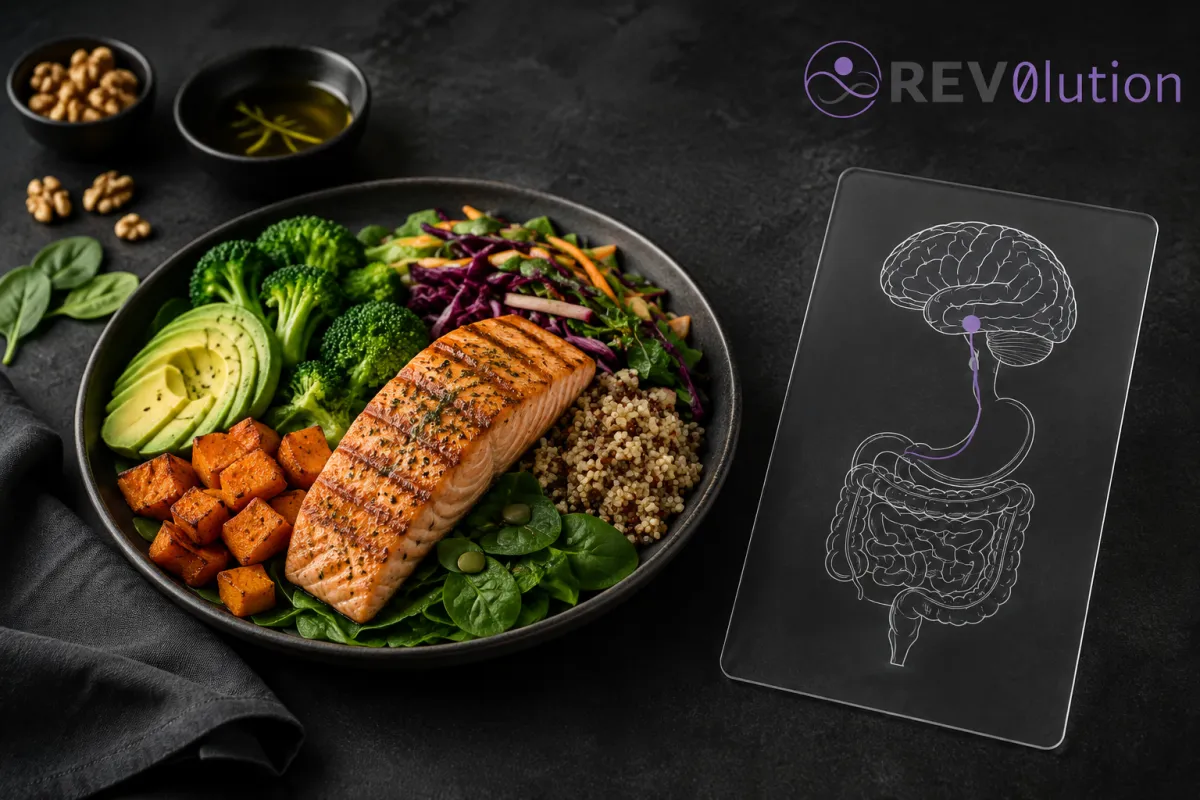
Can Gut–Brain Therapy Help Digestive Symptoms and Food Fear?
Can Gut–Brain Therapy Help Digestive Symptoms?
Written by Kerri Rachelle, PhD(c), RDN, CSSD, FMP-AC
Founder & CEO, REV0lution | Doctor of Integrative & Natural Medicine Candidate
Quick Answer
Gut–brain therapy may help reduce digestive sensitivity, food fear and symptom-related stress. It works best alongside nutrition care that addresses adequate nourishment, meal patterns, food tolerance and digestive function.
Key Takeaways
Digestive symptoms frequently change how much, how often and how confidently someone eats.
Nutrition care should evaluate dietary adequacy and food tolerance before adding restrictions.
The HPA axis and autonomic nervous system can influence motility, digestive sensitivity, appetite and eating behavior.
Gut–brain therapy may help when fear, hypervigilance or learned nervous-system responses begin reinforcing symptoms.
Behavioral care complements appropriate medical and nutrition treatment.
What Is the Gut–Brain Axis?
The gut–brain axis is the continuous, bidirectional communication system connecting the gastrointestinal tract and brain.
Information travels through the autonomic and enteric nervous systems, vagus nerve, spinal pathways, hypothalamic-pituitary-adrenal axis, hormones, immune signals and metabolites produced by intestinal microorganisms.
This communication influences digestive movement, secretion, appetite, fullness, pain perception and the body’s response to stress. The digestive tract also sends information back to the brain about nutrients, inflammation, stretching and the internal intestinal environment.
The gut–brain axis is therefore much larger than the vagus nerve or cortisol. Those are important components, but neither one controls digestion by itself.
You can read more about this relationship in What Is the Gut–Brain Axis?.
Why Should Gut–Brain Care Begin With Nutrition?
Digestive symptoms and nutrition cannot be separated. Bloating, pain, diarrhea, constipation, reflux, nausea and uncomfortable fullness affect what someone eats. Food intake, meal size, eating frequency and nutritional adequacy can also influence digestive function.
Before assuming that a patient needs a restrictive diet, supplement protocol or gut–brain therapy, we need to understand how she is currently nourishing herself.
Is she eating enough? Does she skip meals to avoid symptoms? Has she removed several food groups? Is she consuming enough protein, carbohydrate, fat and fiber to support energy, motility and recovery? Does she depend on protein bars, artificially sweetened shakes or other manufactured substitutes because ordinary meals no longer feel safe?
We also need to consider chewing, hydration, bowel regularity, meal size, digestive capacity, medication, sleep, activity and the amount of time available to eat.
A nervous system cannot function optimally when the body is chronically under-fueled. Inadequate nourishment and irregular eating may contribute to fatigue, poor recovery, heightened stress responses and greater preoccupation with food.
Nutrition is not an accessory to gut–brain care. It is part of the foundation.
How Can Digestive Symptoms Change the Way Someone Eats?
When eating repeatedly leads to pain, urgency or nausea, the brain begins associating food with discomfort.
A patient may skip breakfast before driving to work because she fears diarrhea. She may avoid lunch before a meeting because bloating feels embarrassing. Someone with reflux may stop eating after early afternoon, while a patient with nausea or uncomfortable fullness may unintentionally consume far less than her body needs.
Food restriction often begins with a reasonable observation. One food appears to trigger symptoms, so the patient removes it. She then eliminates another food, followed by gluten, dairy, grains, legumes, fruit, fermentable carbohydrates, nightshades or anything described online as inflammatory.
Eventually, the patient may have several lists of prohibited foods but no practical way to meet her nutritional needs.
A 2026 population-based study involving 4,002 adults found that positive screens for avoidant or restrictive food-intake symptoms were more common among people with disorders of gut–brain interaction. The study was observational and a positive screen is not the same as a diagnosis, but it reinforces the need to assess eating behavior alongside digestive symptoms. Read the PubMed record.
Short-term dietary modification can be useful when it answers a clinical question or improves symptoms. Long-term restriction without a clear indication, nutritional replacement or reintroduction plan may reduce food variety, compromise nutrient intake and intensify fear around eating.
Food lists are not nutrition care.
How Can the HPA Axis Affect Digestion?
The hypothalamic-pituitary-adrenal axis, or HPA axis, coordinates part of the body’s response to physical and psychological stress.
When a stressor is detected, the hypothalamus signals the pituitary gland, which then communicates with the adrenal glands. Cortisol is one of the hormones involved in this process, although the stress response also includes the sympathetic nervous system, catecholamines, immune signaling and changes in behavior.
Cortisol is not inherently harmful. It helps mobilize energy and allows the body to respond to changing demands. Problems may develop when stress becomes chronic and the body loses its normal flexibility and rhythm.
Chronic stress does not always produce continuously high cortisol. Cortisol may be elevated, flattened, mistimed or otherwise altered depending on the person, the stressor and the stage of the response. That is one reason the advice to simply “lower your cortisol” is inadequate.
Stress may affect intestinal movement, digestive secretion, appetite, pain perception and meal choices. Acute stress can increase urgency or diarrhea in some people, while other people notice constipation, reflux, nausea or a sensation that food is sitting heavily in the stomach.
A systematic review of stress responses in people with IBS found that psychological stress could increase symptoms and alter gastrointestinal motility. However, autonomic and HPA-axis findings were inconsistent, and the researchers could not reduce IBS to one universal abnormal stress response. Read the PubMed record.
Stress physiology is relevant, but it should not become another simplistic diagnosis.
Can Stress Change the Microbiome or Intestinal Barrier?
Stress may influence the gut microbiome, microbial metabolites, immune activity and intestinal-barrier function. Much of the detailed organism-specific evidence comes from animal studies or controlled experimental models, however.
It would be too definitive to claim that cortisol predictably eliminates particular beneficial bacteria and promotes specific harmful organisms in every person. Human microbiomes vary substantially, and they are influenced by diet, medication, illness, environment, sleep, intestinal transit and many other factors.
The intestinal lining is extremely thin—much of the absorptive surface is separated from the internal body by a single layer of epithelial cells. These cells are connected by structures that help regulate what crosses the barrier. That design allows nutrients to be absorbed while helping contain microbes and other intestinal contents.
Stress-related signaling may influence this barrier, but a patient’s symptoms cannot prove that increased intestinal permeability is present.
Commercial zonulin testing is also not a straightforward answer. Commonly used assays may not measure zonulin itself and do not reliably establish intestinal permeability. Routine stool or blood testing should not be used to declare that stress has caused “leaky gut” without understanding these limitations. Research on commercial zonulin assays.
What Is Gut–Brain Therapy?
Gut–brain therapy is a practical description for behavioral and psychological treatments designed for digestive symptoms and disorders of gut–brain interaction.
The specific approaches may include:
Cognitive behavioral therapy
Gut-directed hypnotherapy
Diaphragmatic breathing
Biofeedback
Exposure-based strategies
Acceptance and commitment therapy
Mindfulness-based practices
These therapies may help reduce visceral sensitivity, symptom-related anxiety, food fear, constant body monitoring and avoidance patterns that have developed around meals, travel, exercise or leaving home.
The symptoms remain physical. Gut–brain therapy works with the physiological communication between the gastrointestinal tract and nervous system.
Which Digestive Conditions May Benefit From Gut–Brain Therapy?
Gut–brain therapies have been studied most frequently in disorders of gut–brain interaction, including:
Irritable bowel syndrome
Functional dyspepsia
Functional constipation or diarrhea
Functional abdominal pain
Rumination syndrome
Supragastric belching
These conditions may involve altered gut motility, heightened sensitivity to normal intestinal stretching, changes in how digestive signals are processed and disrupted communication across the gut–brain axis.
They may coexist with GERD, celiac disease, inflammatory bowel disease, endometriosis, food intolerance, SIBO or another diagnosed condition. Recognizing a gut–brain component does not exclude medical, microbial, inflammatory, structural or nutritional contributors.
A patient can have altered motility, inadequate nourishment and a nervous system that has become increasingly reactive after months or years of symptoms. Care should reflect that full picture.
When Can Gut–Brain Therapy Strengthen Nutrition Care?
Gut–brain therapy becomes especially valuable when symptoms prevent the nutrition plan from moving forward.
A patient may have completed an appropriate medical evaluation and worked with a Registered Dietitian to identify nutritionally adequate meals. She understands what she needs to eat but remains afraid to reintroduce foods because every digestive sensation feels threatening.
Another patient may physically tolerate breakfast yet continue skipping it because she experienced urgency after breakfast several months ago. Someone else may be unable to eat outside the home despite having no consistent reaction to restaurant meals.
Additional nutrition education may not resolve a learned fear response. The patient may understand what to eat while still feeling unable to eat it.
Gut–brain therapy may help someone:
Reduce constant monitoring of digestive sensations
Rebuild confidence around meals
Challenge fear-based food rules
Increase flexibility when eating outside the home
Respond more calmly to ordinary digestive movement
Resume activities previously avoided because of symptoms
Participate more confidently in appropriate food reintroductions
The Registered Dietitian protects nutritional adequacy and guides the food plan. A licensed behavioral health clinician with relevant digestive-health experience addresses the fear, hypervigilance and avoidance interfering with that plan.
Can Cognitive Behavioral Therapy Help With Food Fear?
Cognitive behavioral therapy, or CBT, examines how physical sensations, thoughts and behaviors reinforce one another.
Someone who notices abdominal movement after eating may immediately think, “This food is harming me.” That thought may increase vigilance, altered breathing and muscular tension. She may cancel her plans, search symptoms online or remove another food from her diet.
Avoiding the situation produces temporary relief. That relief can reinforce the belief that avoidance was necessary, even when the food itself was not the underlying cause.
CBT may help the patient interpret sensations more accurately, recognize patterns and determine which protective behaviors remain useful.
This should never become pressure to ignore consistent food reactions. Celiac disease, food allergies, inflammatory disease, enzyme deficiencies, medication effects and other medical concerns must remain part of the evaluation.
Behavioral strategies should support safe nutritional expansion—not teach patients to override their bodies.
What Is Gut-Directed Hypnotherapy?
Gut-directed hypnotherapy uses focused attention, relaxation and guided imagery related to digestive movement, comfort and sensitivity.
The patient remains aware and in control. This is not stage hypnosis, and no one is being compelled to surrender judgment or behave against her wishes.
A 2025 systematic review and meta-analysis found that gut-directed hypnotherapy improved abdominal pain and overall symptoms in some people with IBS. Treatment formats and results varied among the included studies, so the findings should not be interpreted as proof that it works equally well for everyone. Read the PubMed record.
A larger 2025 network meta-analysis evaluated 67 randomized trials involving more than 7,400 participants. Several behavioral therapies—including cognitive behavioral therapy and gut-directed hypnotherapy—improved global IBS symptoms compared with control conditions. The certainty of the evidence was rated low or very low because of study limitations and possible publication bias. Read the PubMed record.
These results make gut-directed hypnotherapy a credible option. They do not place it above nutrition, medical evaluation or other necessary care.
How Can Breathing and Biofeedback Support Digestive Care?
Comfortable diaphragmatic breathing may help someone slow down before a meal, especially when she tends to eat rapidly, hold her breath or arrive at the table highly activated.
A few slow breaths may make it easier to sit, chew and notice the meal. Breathing should remain a supportive practice rather than another ritual the patient must perform perfectly before eating.
Diaphragmatic breathing also has specific clinical applications.
In rumination syndrome, it may help interrupt the abdominal pressure pattern that brings recently eaten food back into the mouth. For supragastric belching, behavioral therapy can help change a learned pattern in which air rapidly moves into and out of the esophagus.
A randomized study found that behavioral therapy incorporating diaphragmatic breathing reduced supragastric belching. This condition-specific application should not be expanded into claims that breathing exercises heal every digestive disorder. Read the PubMed record.
Does Gut–Brain Therapy Restore the Microbiome?
The nervous system, immune system, intestinal barrier and microbiome communicate with one another. Improvements in sleep, stress, food intake and daily behavior could influence that environment over time.
However, symptom improvement does not prove that therapy “rebalanced” the microbiome, corrected dysbiosis or healed intestinal permeability.
Someone can experience less pain, more predictable bowel movements and greater food tolerance even when the exact biological mechanism remains uncertain. Research should help us interpret these improvements without forcing every outcome into one popular explanation.
Gut–brain therapy also does not replace treatment for an infection, inflammatory disease, SIBO or another documented medical condition.
Should Someone Follow a Restrictive Diet While Completing Gut–Brain Therapy?
There is no universal gut-healing diet for people receiving gut–brain therapy.
A structured dietary intervention may sometimes help answer a specific question or reduce symptoms while other factors are addressed. It should be individualized, nutritionally adequate and followed by reintroduction whenever appropriate.
At REV0lution, the nutritional foundation centers on recognizable, minimally processed foods that provide meaningful nourishment. Meals generally include real-food protein, plants, individualized whole-food carbohydrates and naturally occurring fats according to the patient’s needs and tolerance.
Artificially sweetened shakes, protein bars and packaged substitutes should not become the foundation simply because they appear easier to label as gut-friendly.
A person experiencing severe bloating or impaired motility may not immediately tolerate every high-fiber or fermented food commonly promoted for gut health. Increasing fiber too quickly can worsen symptoms in some situations. Food quality matters, but tolerance, quantity, preparation and timing matter too.
A 2025 review of avoidant and restrictive eating in disorders of gut–brain interaction emphasized coordinated care among gastroenterologists, behavioral health clinicians and Registered Dietitian Nutritionists. Nutritional management, medical symptom care and gut–brain therapies may be used individually or together depending on the patient’s needs. Read the PubMed record.
What Should Be Evaluated Before Symptoms Are Attributed to the Gut–Brain Axis?
Persistent digestive symptoms deserve an appropriate assessment.
Depending on the presentation, clinicians may need to consider:
Celiac disease
Inflammatory bowel disease
GERD
Infection
SIBO
H. Pylori
Anemia or iron deficiency
Nutritional deficiencies
Thyroid dysfunction
Medication effects
Endometriosis
Pelvic-floor dysfunction
Altered stomach emptying
Impaired intestinal motility
Food allergy or intolerance
Inadequate energy intake
Excessive exercise or insufficient recovery
Further evaluation is particularly important when symptoms include blood in the stool, black stool, unexplained weight loss, anemia, persistent vomiting, fever, progressive difficulty swallowing, severe pain or symptoms that repeatedly wake someone from sleep.
Normal routine testing does not make symptoms imaginary. It also does not establish that nervous-system dysregulation explains everything.
Functional medicine laboratory testing may sometimes add useful context, but every test should answer a defined question and influence a meaningful decision.
What Does Coordinated Gut–Brain Care Look Like?
A nutrition-forward plan begins by understanding what the patient eats, what she tolerates and whether she receives enough nourishment.
Medical care evaluates disease, structural problems, medication needs and other potential causes. Nutrition care addresses adequacy, meal patterns, food tolerance and realistic implementation. Gut–brain therapy may help when sensitivity, fear or avoidance continues to interfere with eating and daily life.
Depending on the condition, care may also involve a gastroenterologist, pelvic-floor therapist, primary-care clinician or another appropriate specialist.
The plan should become more understandable and manageable as the patient improves. Success may include better energy, more predictable bowel movements, greater food variety, improved meal tolerance and less fear around ordinary activities.
REV0lution’s approach to nutrition counseling considers symptoms, physiology, food intake, lifestyle and readiness together. When appropriate, we also collaborate with trusted gut–brain therapy partners to provide coordinated, well-rounded care.
The Bottom Line
Digestive care should begin with the patient’s medical history, current symptoms and nutritional reality.
Gut–brain therapy can be valuable when nervous-system sensitivity, food fear, avoidance or symptom-related stress prevents someone from eating adequately or participating fully in life. It works most effectively as part of coordinated care—not as the explanation for every symptom.
Nourish the body, investigate persistent symptoms and use gut–brain support where it can make the nutrition plan more tolerable, flexible and sustainable.
Medical Disclaimer: This article is for general educational and informational purposes only and does not provide individualized medical or nutrition advice. It is not intended to diagnose, treat, cure, or prevent disease or replace care from a qualified healthcare professional. Do not change your medications, supplements, diet, fasting schedule, or healthcare plan based solely on this content. [Read the full Medical Disclaimer and Terms & Conditions.]
Frequently Asked Questions
Does gut–brain therapy suggest that my digestive symptoms are psychological?
No. Digestive symptoms may involve motility, sensitivity, immune activity, gastrointestinal disease, nutrition, medication and nervous-system signaling. Gut–brain therapy addresses one part of that physiology without denying the others.
Should I work with a Registered Dietitian or a behavioral health clinician first?
That depends on your needs. Inadequate intake, food intolerance, nutritional deficiency or significant restriction requires nutrition care. Severe food fear, avoidance or symptom-related distress may warrant behavioral support at the same time. Persistent or concerning symptoms also require medical evaluation.
Can gut–brain therapy help me reintroduce foods?
It may help when fear or hypervigilance is preventing a medically appropriate reintroduction. A Registered Dietitian should guide the food plan so genuine reactions, medical restrictions and nutritional needs remain part of the process.
Does gut-directed hypnotherapy work for IBS?
Research suggests it can improve abdominal pain and overall symptoms for some people with IBS. The studies have limitations, and hypnotherapy should be viewed as one option within a broader care plan.
Does stress cause IBS or SIBO?
Stress can influence motility, digestive sensitivity, eating patterns and symptom severity. It should not be presented as the sole established cause of IBS or SIBO. Both conditions involve multiple potential contributors and require appropriate evaluation.
Can breathing exercises replace nutrition changes?
No. Breathing may support nervous-system regulation or address specific behavioral patterns, but it cannot correct inadequate nourishment, nutritional deficiencies or a diet that does not meet the patient’s needs.
References
Thakur ER, Khasawneh M, Moayyedi P, Black CJ, Ford AC. Efficacy of behavioural therapies for irritable bowel syndrome: a systematic review and network meta-analysis. Lancet Gastroenterol Hepatol. 2025;10(12):1075–1088. PMID: 41077057.
Adler EC, et al. Gut-Directed Hypnotherapy for Irritable Bowel Syndrome: A Systematic Review and Meta-Analysis. Neurogastroenterol Motil. 2025;37(7):e70037. PMID: 40179285.
Law M, et al. Cognitive behavioural therapy-based interventions for gastroduodenal disorders of gut-brain interaction: A systematic review. J Psychosom Res. 2023;175:111516. PMID: 37832277.
Punkkinen J, et al. Behavioral therapy is superior to follow-up without intervention in patients with supragastric belching—a randomized study. Neurogastroenterol Motil. 2022;34:e14171. PMID: 33991432.
Schaper SJ, Stengel A. Emotional stress responsivity of patients with IBS—a systematic review. J Psychosom Res. 2022;153:110694. PMID: 34942583.
Flack R, Brownlow G, Burton-Murray H, Palsson O, Aziz I. The Prevalence and Burden of Avoidant/Restrictive Food Intake Disorder Symptoms in Adults With Disorders of Gut-Brain Interaction: A Population-Based Study. Gastroenterology. 2026;170(2):365–374. PMID: 40914329.
Berschback M, Abber S, Smith J, Staller K, Burton-Murray H, Atkins M. Avoidant/restrictive food intake disorder in disorders of gut-brain interaction. Best Pract Res Clin Gastroenterol. 2025;79:102078. PMID: 41423307.
Ajamian M, Steer D, Rosella G, Gibson PR. Serum zonulin as a marker of intestinal mucosal barrier function: May not be what it seems. PLoS One. 2019;14(1):e0210728. PMID: 30640940.