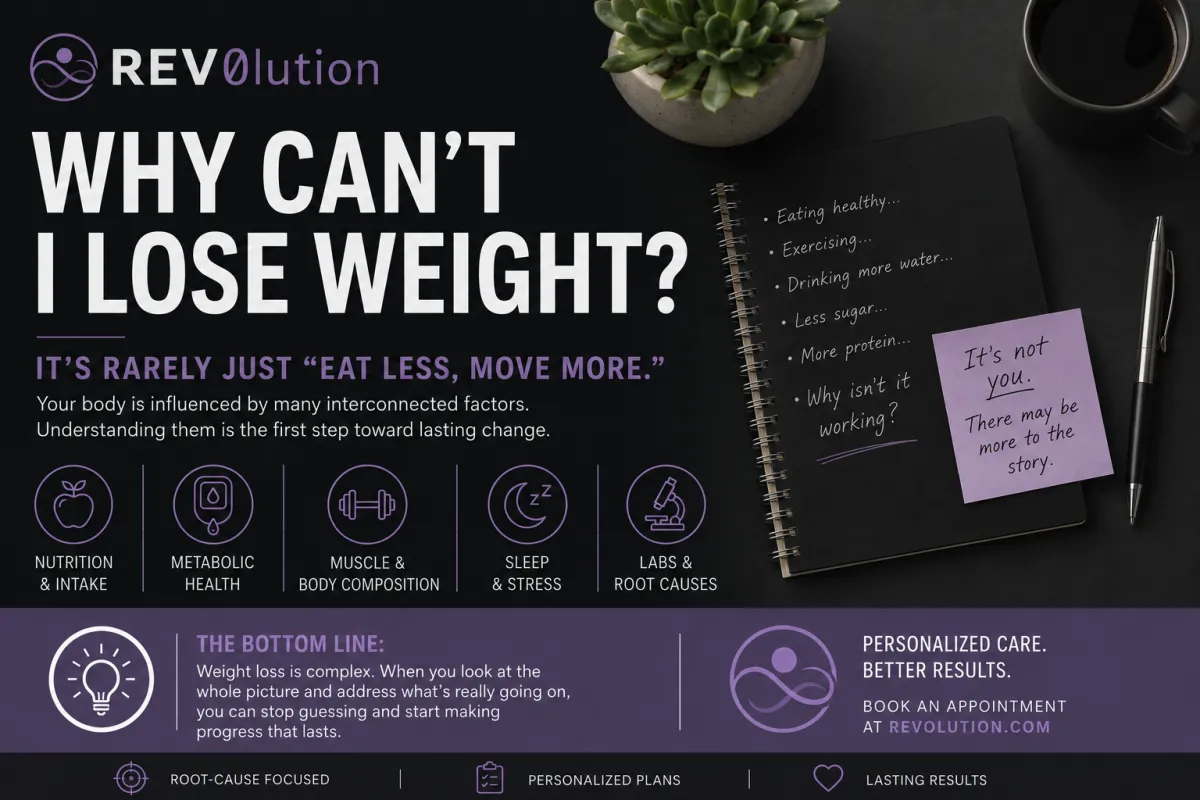
Why Can't I Lose Weight? It's More Than Calories In vs. Calories Out
Written by Kerri Rachelle, PhD c., RDN, CSSD, FMP-AC
Quick Answer
If you can't lose weight, it's rarely because of a lack of willpower. Weight loss is influenced by your metabolism, muscle mass, nutrition, sleep, stress, hormones, medications, movement, medical conditions, and overall health. Understanding the underlying reasons can help you create a more effective and sustainable plan.
Key Takeaways
Weight loss is more complex than calories alone.
Metabolic health influences how your body stores and uses energy.
Sleep, stress, muscle mass, medications, and hormones all matter.
There is no one-size-fits-all solution.
The best plan is personalized.
Why Is Weight Loss So Hard for Some People?
If you've ever felt like you're doing everything "right" but the scale refuses to move, you're not alone.
Weight loss is often presented as a simple equation: eat less, move more, and the weight will come off. While energy balance certainly matters, the reality is much more complex than that. If it were only about calories, everyone following the same diet would achieve the same results—and we know that's simply not true.
Your body isn't a calculator. It's a living, adapting system that is constantly responding to the environment around it. Your brain, hormones, muscle mass, sleep, stress, gut health, medications, daily movement, and even the foods available in your environment all influence how your body stores, burns, and regulates energy.
One of the biggest misconceptions is that people struggle with weight because they lack discipline. In reality, many people are trying to improve their health while living in an environment that makes healthy choices more difficult than ever before.
Our brains evolved during a time when calorie-dense food was scarce. Finding food required significant physical effort, and consuming enough calories was essential for survival. Today, we're surrounded by inexpensive, highly processed foods that are specifically designed to be difficult to stop eating. Food manufacturers invest enormous amounts of time and resources into creating products that keep us reaching for another bite. That's not a lack of willpower—it's an environment that often rewards overconsumption.
At the same time, many of us spend our days sitting at desks, sleeping less, managing chronic stress, eating on the go, and constantly responding to notifications, emails, and distractions. These aren't just lifestyle choices—they're environmental factors that influence our appetite, recovery, movement, and metabolism every single day.
Your body also doesn't simply count calories. It relies on an intricate network of hormones that help regulate hunger, fullness, and energy balance. When poor sleep, chronic stress, inflammation, highly processed foods, certain medications, or underlying medical conditions disrupt those signals, your body may begin defending its current weight—even when you're making healthy changes.
Emerging research also suggests that the trillions of microorganisms living in our gut may influence appetite, inflammation, insulin sensitivity, and even how efficiently we extract energy from food. While the gut microbiome is rarely the only reason someone struggles with weight, it's one more reminder that metabolism is influenced by far more than calories alone. We'll explore the gut microbiome in much greater detail in a future article.
Understanding these factors isn't about making excuses or removing personal responsibility. It's about recognizing that lasting weight loss begins with understanding why your body is responding the way it is. When you understand the biology behind your metabolism, you can stop blaming yourself and start building a plan that works with your body instead of constantly fighting against it.
Weight loss isn't just about eating less.
It's about understanding the biology that's influencing your appetite, metabolism, and energy balance every single day.
Is Weight Loss Really Just Calories In vs. Calories Out?
The short answer is yes—but also no.
I have always found the “calories in, calories out” conversation frustrating because it is technically true, but often taught in a way that feels incomplete. Years ago, I sat for the Adult Weight Management Certificate of Training through the Commission on Dietetic Registration. As part of that process, I read hundreds (902 to be exact) of required studies on weight management. What struck me then—and still strikes me now—is how often the conversation centered almost entirely on calories, while leaving out the biology, behavior, environment, hormones, stress, sleep, inflammation, and real-life context that influence whether weight loss is actually achievable and sustainable.
So when people ask whether weight loss is really just calories in versus calories out, my answer is nuanced.
Let's explain.
At its foundation, weight loss requires your body to use more energy than it takes in. This concept, known as energy balance, is well established in nutrition science. If you consistently consume more calories than your body needs, you'll generally gain weight. If you consistently consume fewer calories than you burn, you'll generally lose weight.
So yes—calories matter.
But here's where the conversation often stops, and where so many people become frustrated.
The biology that determines how your body uses those calories matters just as much.
Calories Matter. Biology Decides What Happens to Them.
Your body isn't a calculator. It's a living, adapting system designed to keep you alive.
It doesn't simply count calories. It constantly gathers information from your hormones, brain, muscles, digestive system, immune system, and environment before deciding how to regulate hunger, fullness, energy expenditure, and fat storage.
That's why hunger isn't random. Fullness isn't random. Energy levels aren't random. Even the number of calories your body burns each day isn't fixed. Your metabolism adapts.
Hormones like insulin and leptin help communicate when energy should be stored, when it's available to use, and when you've had enough to eat. Your brain receives these signals and coordinates everything from appetite to energy expenditure. Sleep, stress, inflammation, medications, muscle mass, illness, and highly processed foods can all influence how effectively these systems communicate.
This doesn't mean calories stop mattering. It means your biology influences how easy—or how difficult—it is to maintain the calorie balance needed for weight loss. That's why two people eating similar diets may experience very different results.
It's also why a strategy that worked for you ten years ago may not work the same way today.
Your Body May Be Protecting Its Current Weight
One of the most frustrating parts of weight loss is that your body doesn't always celebrate losing weight the way you do.
From an evolutionary perspective, losing body fat once meant food was becoming scarce. To help you survive, your body developed ways to conserve energy and protect its fuel reserves.
As you lose weight, your body may respond by increasing hunger, making food seem more rewarding, and slightly lowering the number of calories you burn throughout the day. This is sometimes referred to as a "set point" or defended weight range. It's one of the reasons weight loss can become more challenging over time—even when you're doing everything right.
That doesn't mean your body is broken or that lasting weight loss isn't possible. It means your body is doing exactly what it was designed to do: protect you during times of perceived food scarcity.
Understanding this can be incredibly empowering. Instead of blaming yourself for needing to adjust your nutrition, activity, or habits over time, you can recognize that weight management is a dynamic process. Building muscle, prioritizing sleep, managing stress, and improving metabolic health all help create an environment where your body becomes more willing to let go of excess energy stores.
Why Modern Life Makes Weight Loss More Difficult
If you've ever wondered why maintaining a healthy weight seems harder today than it did for previous generations, you're asking an important question. Human biology evolves over thousands of years. Our environment has changed dramatically in just a few decades. Our ancestors spent much of their day moving, preparing food, and searching for enough calories to survive
Today, many of us spend hours sitting at desks, have food delivered with a few taps on our phone, and are surrounded by highly processed foods engineered for convenience and taste. Add in chronic stress, poor sleep, and constant digital distractions, and it's easy to see why maintaining a healthy weight feels more challenging than it should.
The good news is that understanding these environmental influences gives us opportunities to change them.
Ultra-Processed Foods Are Designed to Keep You Eating
One of the biggest misconceptions about weight gain is that people simply lack willpower.
In reality, many of today's ultra-processed foods are intentionally designed to be highly rewarding. Food scientists spend years developing products with combinations of sugar, refined starches, unhealthy fats, salt, flavors, and textures that make them difficult to stop eating. These foods don't just taste good—they encourage us to keep reaching for another bite.
Our brains evolved during a time when calorie-dense foods were rare and valuable. Seeking them out helped our ancestors survive. Today, that same biology is exposed to foods that are available everywhere, every hour of the day, often at a lower cost than whole, nutrient-dense foods.
This isn't about removing personal responsibility. It's about recognizing that we're living in an environment that constantly encourages overconsumption. That's one reason we focus on replacing—not simply restricting—ultra-processed foods with nutrient-dense, minimally processed foods that naturally support satiety, metabolic health, and long-term well-being.
Food Is Everywhere
For most of human history, finding food required effort.
Today, food is available almost everywhere we go. Gas stations, airports, checkout lines, vending machines, coffee shops, sporting events, and even home delivery services make eating incredibly convenient.
Convenience itself isn't the problem.
The challenge is that we're constantly surrounded by opportunities to eat—even when we're not physically hungry. Our brains evolved to respond to food availability, but they weren't designed for an environment where highly palatable foods are available twenty-four hours a day.
Sometimes the healthiest decision isn't relying on more willpower. It's designing an environment that makes healthier choices easier, such as planning meals, keeping nutritious foods readily available, and limiting temptations that don't align with your goals.
We Sit More Than Ever Before
Exercise is important, but what you do during the other 23 hours of the day matters too.
Many people complete a 45-minute workout and then spend the remainder of the day sitting at a desk, commuting in a car, or relaxing on the couch. While dedicated exercise is incredibly valuable, it doesn't completely offset the effects of prolonged sitting.
Researchers often refer to this everyday movement as non-exercise activity thermogenesis (NEAT). It includes walking through the office, taking the stairs, standing while working, doing household chores, gardening, playing with your children, and all the small movements that add up throughout the day.
These seemingly minor activities contribute meaningfully to daily energy expenditure and overall metabolic health. That's why we often encourage patients to think beyond workouts and look for opportunities to move consistently throughout the day.
Stress Changes More Than Your Mood
Stress isn't just something you feel. It's something your body responds to.
When stress becomes chronic, it can influence sleep quality, appetite, food choices, recovery, inflammation, and the hormones involved in energy regulation. Many people notice stronger cravings for highly processed foods during stressful periods, less motivation to exercise, and poorer sleep—all of which can make healthy habits more difficult to maintain.
Managing stress isn't simply about feeling calmer. It's about creating an internal environment that supports better metabolic health. Sometimes that means improving sleep. Sometimes it means setting healthier boundaries. Sometimes it means taking a walk, practicing mindfulness, spending time outdoors, or reconnecting with the people who matter most.
Your Gut May Be Influencing Your Weight
Your digestive system does far more than digest food.
The trillions of microorganisms that make up your gut microbiome may also influence appetite regulation, inflammation, insulin sensitivity, and how efficiently your body extracts energy from food. Research in this area continues to grow, and while the microbiome is rarely the only reason someone struggles with weight, it reminds us that metabolism is influenced by many interconnected systems—not just calorie intake.
Why Can Two People Eat the Same Foods and Get Different Results?
If you've ever wondered why your friend lost weight eating the exact same foods that didn't work for you, you're not imagining things. Nutrition is rarely one-size-fits-all because metabolism isn't one-size-fits-all. Two people can eat the same meal and experience completely different responses. One person may feel satisfied for hours, while another is hungry again within an hour. One person's blood sugar may remain relatively stable, while another experiences a significant spike. Even weight loss results can differ despite following similar nutrition plans.
That's because your response to food is influenced by much more than the food itself.
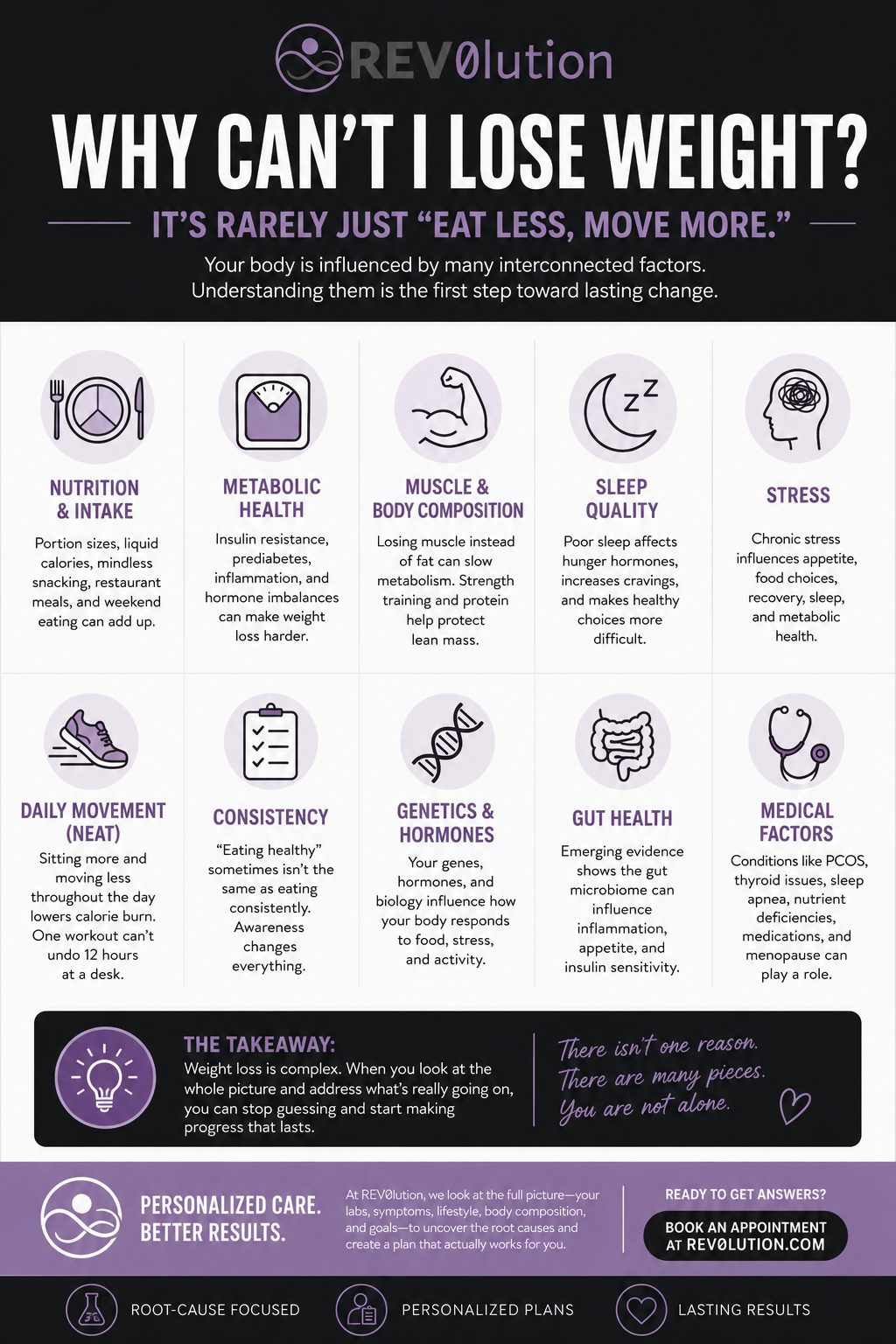
Sleep affects hunger hormones and appetite.
Muscle mass influences how efficiently your body uses glucose.
Stress changes food choices, recovery, and metabolic health.
Daily movement affects how many calories you burn and how your body responds to meals.
Hormones regulate hunger, fullness, and energy balance.
Your gut microbiome may influence inflammation, insulin sensitivity, and how efficiently your body extracts energy from food.
Genetics also play a role in how your body responds to different eating patterns.
Even body composition matters. Two people can weigh the same but have very different amounts of muscle, body fat, and metabolic activity.
This is one of the biggest reasons we believe personalized nutrition is so important. Rather than trying to fit everyone into the same diet, we look at the whole person—your lifestyle, laboratory values, body composition, symptoms, goals, and health history—to create recommendations that fit your biology.
The goal isn't to find the perfect diet. It's to find the right approach for you.
"I Eat Healthy" Isn't Always the Same as Eating Consistently
One of the most common things we hear from our patients is: "I eat pretty healthy."
And honestly, many people believe they do. Then we'll ask them to take pictures of everything they eat for three to seven days, or keep a simple food journal. Not because we want them counting calories forever, but because awareness changes everything. More often than not, what we discover isn't that they're eating "bad" foods.
It's that consistency isn't nearly where they thought it was. For instance:
Maybe breakfast and lunch are well balanced, but weekends look completely different.
Maybe restaurant portions are much larger than they realized.
Maybe coffee drinks, alcohol, liquid calories, or frequent snacking are quietly adding up.
Maybe healthy weekdays are followed by less intentional weekends, vacations, celebrations, or stressful evenings.
Sometimes people remember the meals they're most proud of and unintentionally forget the meals that happened out of convenience, stress, or habit. That's human nature. This isn't about guilt or judgment. It's about becoming aware of the patterns that shape your health.
Sometimes the most valuable thing you can do isn't start another diet. It's simply paying attention.
A few days of tracking your meals—or even snapping a quick photo before you eat—can reveal patterns that would have otherwise gone unnoticed. That awareness gives you something far more valuable than another meal plan. It gives you the opportunity to make intentional changes that actually fit your life.
Because lasting weight loss rarely comes from perfection. It comes from consistent habits repeated over time.
Common Reasons You May Not Be Losing Weight
Weight loss is rarely explained by a single factor. More often, it's the combination of several small things that add up over time. If you're feeling stuck, one or more of these may be contributing.
You're Underestimating How Much You're Eating
Most people aren't intentionally underreporting what they eat.
They're simply human.
Restaurant portions are often much larger than we realize. Liquid calories from coffee drinks, alcohol, smoothies, or specialty beverages can add up quickly. Weekend eating, mindless snacking, and a handful of bites while cooking may seem insignificant individually, but together they can meaningfully increase your calorie intake.
This isn't about perfection—it's about awareness.
Your Metabolic Health Needs Attention
Weight isn't just about calories.
Poor metabolic health can influence how your body stores and uses energy. Insulin resistance, prediabetes, inflammation, and other metabolic changes can make weight loss more challenging.
If you haven't already, read our articles on Metabolic Health, Insulin Resistance, and Prediabetes to better understand how these conditions may influence your weight.
You're Losing Muscle Instead of Building It
Muscle is one of the most metabolically active tissues in your body.
Building and maintaining muscle supports metabolic health, improves insulin sensitivity, and helps preserve your resting energy expenditure during weight loss.
This is one reason we emphasize adequate protein intake and resistance training—especially for individuals taking GLP-1 medications, where preserving lean muscle mass is essential.
We also encourage patients to look beyond the scale. Improving body composition is often a more meaningful measure of progress than body weight alone.
You're Not Sleeping Enough
Sleep is one of the most overlooked components of weight management.
Poor sleep can influence hunger hormones, increase cravings, reduce recovery, impair decision-making, and make it more difficult to maintain healthy habits throughout the day.
Sometimes improving sleep creates a ripple effect that makes nutrition and movement feel much easier.
Chronic Stress Is Working Against You
Stress affects far more than your mood.
It influences appetite, food choices, recovery, sleep, inflammation, and the hormones involved in energy regulation. Many people don't necessarily eat more because they're stressed—they simply make different decisions when they're stressed.
Managing stress isn't about eliminating it completely. It's about creating routines that help your body recover.
You're Moving Less Than You Think
A workout is important.
But it doesn't erase twelve hours of sitting.
The movement that happens throughout your day—walking, standing, taking the stairs, gardening, doing household chores, and simply getting up regularly—contributes significantly to your overall metabolic health. These everyday movements, often called non-exercise activity thermogenesis (NEAT), can have a meaningful impact on energy expenditure.
Think beyond your workout.
Think about your entire day.
You're Following Someone Else's Plan
One of the biggest mistakes we see is trying to force someone else's nutrition plan onto your own life.
Your metabolism is unique.
Your laboratory values are unique.
Your schedule, preferences, medications, goals, and health history are unique.
That's why personalized nutrition almost always outperforms generic advice.
The best nutrition plan isn't the one that's trending online.
It's the one you can consistently follow because it was designed for you.
An Underlying Medical Condition Could Be Contributing
Sometimes weight loss resistance has an underlying medical cause.
Conditions such as polycystic ovary syndrome (PCOS), hypothyroidism, iron deficiency, sleep apnea, menopause, chronic inflammation, and certain medications can all influence metabolism, appetite, energy levels, or body composition.
If weight loss has become unexpectedly difficult despite consistent effort, it's worth discussing these possibilities with your healthcare team.
Your Labs May Be "Normal"—But Not Optimal
Another common things we hear is: "My doctor said my labs were normal."
Sometimes they are. Sometimes they're simply normal enough that they don't meet the criteria for diagnosing disease. At REV0lution, we also look for opportunities to optimize health.
Patterns in fasting insulin, A1C, iron status, thyroid function, inflammation markers, lipid levels, and other laboratory values may provide important clues about why you're struggling to lose weight or why you don't feel your best. Numbers rarely tell the whole story on their own.
But when combined with your symptoms, health history, body composition, and lifestyle, they help us build a much clearer picture.
Sometimes the Missing Piece Is Hidden in Your Labs
If weight loss feels unusually difficult, laboratory testing can sometimes reveal pieces of the puzzle that symptoms alone cannot explain.
At REV0lution, we do not look at labs in isolation. We look for patterns. A single marker rarely tells the whole story, but when we combine your labs with your symptoms, health history, body composition, lifestyle, medications, and goals, the picture becomes much clearer.
Depending on your situation, helpful labs may include a CBC, CMP, thyroid markers such as TSH and Free T4, iron studies including iron and ferritin, vitamin D, hemoglobin A1c, fasting insulin, lipids, ApoB, hs-CRP, and sometimes leptin or uric acid. Functional testing may also be considered when clinically appropriate.
We may also use body composition, wearable data, heart rate trends, sleep data, and Continuous Glucose Monitors to better understand how your body is responding in real life.
The goal is not to order every test possible. The goal is to ask better questions, identify meaningful patterns, and build a plan that fits your biology instead of guessing.
What Should You Do If You Can't Lose Weight?
If you've made it this far, you might be thinking, "Where do I even begin?" The answer isn't to completely overhaul your life overnight. In fact, that's one of the biggest mistakes people make.
They start an extremely restrictive diet, spend hours in the gym, eliminate entire food groups, and expect themselves to maintain that pace forever. A few weeks later, life gets busy, the plan falls apart, and they feel like they've failed. Lasting change rarely works that way.
Instead, start with one habit. Choose something small enough that you're confident you can stick with it. That might mean adding a source of protein to breakfast, taking a 10-minute walk after dinner, strength training twice a week, going to bed 30 minutes earlier, or replacing one ultra-processed snack with a whole-food option.
Once that habit feels automatic, build another. Those small changes compound over time. If weight loss has been frustrating despite your best efforts, don't assume the answer is simply eating less. Ask better questions.
Could your metabolic health be improved?
Are you building and maintaining enough muscle?
Are you getting enough sleep?
Could stress be influencing your appetite and recovery?
Have your labs been thoroughly reviewed?
Are you following a plan that actually fits your body and your lifestyle?
Most importantly, don't chase perfection. Perfection isn't sustainable, and it isn't necessary. Consistency almost always beats intensity over the long term.
You also don't have to figure this out on your own.
Working with a Registered Dietitian Nutritionist can help you understand what's getting in your way, identify the factors that matter most for your health, and create a personalized plan that's realistic, evidence-based, and built to last.
Because the goal isn't just losing weight. The goal is improving your metabolic health, preserving muscle, building sustainable habits, and creating a healthier life that you can enjoy for years to come.
Can GLP-1 Medications Help with Weight Loss?
GLP-1 medications have changed the conversation around weight management, and for many people, they can be incredibly effective tools. But they're exactly that—a tool.
Not a magic wand.
Not a replacement for healthy habits.
Not a substitute for understanding your metabolism.
These medications work by helping regulate appetite, slowing stomach emptying, and improving blood sugar regulation. Some medications target the GLP-1 receptor alone, while newer medications also target additional pathways that may further support weight loss and metabolic health. The right choice, if medication is appropriate at all, depends on your individual health history and goals.
Like any treatment, GLP-1 medications work best when they're part of a comprehensive plan—not the entire plan.
One of the biggest concerns we have is that people often focus only on the number on the scale. Weight loss is important for many individuals, but what you're losing matters just as much as how much you're losing. Without adequate protein intake and regular resistance training, it's possible to lose lean muscle mass along with body fat. Muscle plays a critical role in metabolic health, strength, mobility, and healthy aging, so preserving it should always be a priority.
That's why we encourage patients to think beyond the medication itself.
Are you eating enough protein?
Are you strength training consistently?
Are you sleeping well?
Are you building habits you'll still have if the medication is reduced or discontinued?
Those questions are just as important as the prescription.
At REV0lution, we view GLP-1 medications as one potential tool within a personalized treatment plan. For some people, they can be life-changing. For others, lifestyle changes alone may be enough. Most importantly, the decision should be individualized and supported by a healthcare team that looks at the whole picture—not just the number on the scale.
Our goal isn't simply to help you lose weight. It's to help you improve your metabolic health, preserve muscle, build sustainable habits, and feel your best for years to come.
Bottom Line
If you've been struggling to lose weight, it doesn't automatically mean you're doing something wrong. More often, it means there's a part of the picture that hasn't been fully explored.
Your body is constantly responding to the environment it's living in. It responds to the food you eat, the quality of your sleep, your stress levels, your movement, your muscle mass, your relationships, your hormones, and countless other signals every single day.
Rather than fighting your body, the goal is to understand it.
When you understand the biology that's influencing your appetite, metabolism, and energy balance, you can stop chasing the next fad diet and start building a plan that's designed for your body.
And that's where lasting change happens.
Medical Disclaimer: This article is for general educational and informational purposes only and does not provide individualized medical or nutrition advice. It is not intended to diagnose, treat, cure, or prevent disease or replace care from a qualified healthcare professional. Do not change your medications, supplements, diet, fasting schedule, or healthcare plan based solely on this content. [Read the full Medical Disclaimer and Terms & Conditions.]
Frequently Asked Questions
Why can't I lose weight even though I eat healthy?
Eating healthy is important, but it's only one piece of the puzzle. Portion sizes, consistency, sleep, stress, muscle mass, metabolic health, hormones, medications, and daily movement all influence weight loss. Many people discover that their eating habits aren't as consistent as they thought, or that an underlying issue such as insulin resistance or poor sleep is making weight loss more challenging.
Can insulin resistance make it harder to lose weight?
Yes. Insulin resistance can make it more difficult for your body to regulate blood sugar and use stored fat efficiently. While weight loss is still possible, improving metabolic health through nutrition, movement, strength training, sleep, and personalized care often makes the process more successful. Learn more in our article, What Is Insulin Resistance?
Why am I gaining weight even though I exercise?
Exercise is incredibly important, but one workout doesn't offset the other 23 hours of your day. Daily movement, nutrition, sleep, stress, muscle mass, medications, and overall metabolic health all influence body weight. Building muscle and increasing movement throughout the day can be just as important as structured exercise.
Can poor sleep prevent weight loss?
Yes. Poor sleep can increase hunger, reduce fullness, increase cravings, impair recovery, and make healthy choices more difficult the following day. Consistently getting enough quality sleep is one of the most effective lifestyle habits for supporting metabolic health and sustainable weight loss.
Does stress cause weight gain?
Chronic stress doesn't automatically cause weight gain, but it can influence appetite, food choices, sleep, inflammation, recovery, and the hormones involved in energy regulation. Managing stress is an important part of any long-term weight management plan.
Why do two people lose weight differently on the same diet?
Every person has a unique metabolism. Genetics, muscle mass, hormones, sleep, stress, gut health, medications, physical activity, and body composition all influence how your body responds to food. That's why personalized nutrition often produces better long-term results than following someone else's diet.
Can medical conditions make it difficult to lose weight?
Yes. Conditions such as insulin resistance, prediabetes, PCOS, hypothyroidism, iron deficiency, sleep apnea, menopause, and certain medications can all contribute to weight loss resistance. A healthcare professional can help determine whether an underlying condition is affecting your progress.
What labs should I have checked if I can't lose weight?
Helpful laboratory tests may include fasting insulin, hemoglobin A1c, thyroid function (TSH and Free T4), iron studies, ferritin, vitamin D, lipid testing, ApoB, hs-CRP, leptin and other markers based on your symptoms and medical history. At REV0lution, we evaluate these labs alongside your symptoms, body composition, lifestyle, and goals to develop a personalized plan.
Should I use a GLP-1 medication for weight loss?
GLP-1 medications can be effective tools for some individuals, but they work best when combined with adequate protein intake, resistance training, healthy lifestyle habits, and ongoing guidance from a healthcare professional. The decision should be personalized based on your health history, goals, and risk factors.
Should I count calories to lose weight?
Calorie awareness can be helpful for some people, but long-term success usually depends on more than tracking numbers. Building muscle, improving metabolic health, getting enough sleep, managing stress, eating nutrient-dense foods, and creating sustainable habits are all important parts of healthy weight management.
Is metabolism really slowing down, or am I doing something wrong?
For many people, it's not one or the other. Metabolism naturally changes with age, particularly as muscle mass declines, but lifestyle factors such as sleep, stress, physical activity, nutrition, medications, and metabolic health also play important roles. Rather than assuming your metabolism is "broken," it's more helpful to understand the factors influencing it and develop a personalized plan.
Can a Registered Dietitian help if I've tried everything?
Yes. A Registered Dietitian Nutritionist can help identify barriers that may be preventing progress, review your laboratory results, evaluate your nutrition and lifestyle habits, and create a personalized plan based on your unique biology. At REV0lution, our functional medicine approach focuses on improving metabolic health—not simply helping you lose weight.
Suggested Reading
References
Hall KD, Kahan S. Maintenance of Lost Weight and Long-Term Management of Obesity. Medical Clinics of North America. 2018;102(1):183-197.
Blundell JE, Gibbons C, Caudwell P, Finlayson G, Hopkins M. Appetite Control and Energy Balance: Impact of Exercise. Obesity Reviews. 2015;16(Suppl 1):67-76.
Sumithran P, Proietto J. The Defence of Body Weight: A Physiological Basis for Weight Regain After Weight Loss. Clinical Science. 2013;124(4):231-241.
Speakman JR, Hall KD. Energy Compensation and Weight Regulation: Biological Mechanisms and Clinical Implications. International Journal of Obesity. 2021;45:1151-1161.
Ludwig DS, Aronne LJ, Astrup A, et al. The Carbohydrate-Insulin Model: A Physiological Perspective on the Obesity Pandemic. American Journal of Clinical Nutrition. 2021;114(6):1873-1885.
Hall KD, Ayuketah A, Brychta R, et al. Ultra-Processed Diets Cause Excess Calorie Intake and Weight Gain: An Inpatient Randomized Controlled Trial. Cell Metabolism. 2019;30(1):67-77.e3.
Monteiro CA, Cannon G, Levy RB, et al. Ultra-Processed Foods: What They Are and How to Identify Them. Public Health Nutrition. 2019;22(5):936-941.
Creasy SA, et al. Nonexercise Activity Thermogenesis (NEAT): Role in Weight Management and Health. Current Obesity Reports. 2022;11:55-64.
St-Onge MP, Tasali E, Brown D, et al. Sleep Duration and Quality: Impact on Lifestyle Behaviors and Cardiometabolic Health. Circulation. 2016;134:e367-e386.
Tomiyama AJ. Stress and Obesity. Annual Review of Psychology. 2019;70:703-718.
Fan Y, Pedersen O. Gut Microbiota in Human Metabolic Health and Disease. Nature Reviews Microbiology. 2021;19:55-71.
Knowler WC, Barrett-Connor E, Fowler SE, et al. Reduction in the Incidence of Type 2 Diabetes with Lifestyle Intervention or Metformin. New England Journal of Medicine. 2002;346:393-403.
Garvey WT, Mechanick JI, Brett EM, et al. American Association of Clinical Endocrinology Clinical Practice Guideline for Comprehensive Medical Care of Patients with Obesity. Endocrine Practice. 2022;28(5):528-562.
Jensen MD, Ryan DH, Apovian CM, et al. 2013 AHA/ACC/TOS Guideline for the Management of Overweight and Obesity in Adults. Circulation. 2014;129(25 Suppl 2):S102-S138.
Wilding JPH, Batterham RL, Calanna S, et al. Once-Weekly Semaglutide in Adults with Overweight or Obesity. New England Journal of Medicine. 2021;384:989-1002.
Jastreboff AM, Aronne LJ, Ahmad NN, et al. Tirzepatide Once Weekly for the Treatment of Obesity. New England Journal of Medicine. 2022;387:205-216.
American Diabetes Association Professional Practice Committee. Standards of Care in Diabetes—2025. Diabetes Care. 2025.
Wolfe RR. The Role of Dietary Protein in Optimizing Muscle Mass, Function, and Health Outcomes. American Journal of Clinical Nutrition. 2012;95(2):475-482.