
podcast
Beyond the biomarkers

want More?
Download the free 2-Week Energetic Reset Guide, created to help you put podcast insights into practice with actionable nutrition, lifestyle, and gut health strategies you can start today.
What to expect:
14-Day Nutrition Plan
Recipe Book
Gut Health Hacks
Nutrition Tips
Fitness Routines
Dedicated Community
Follow on:
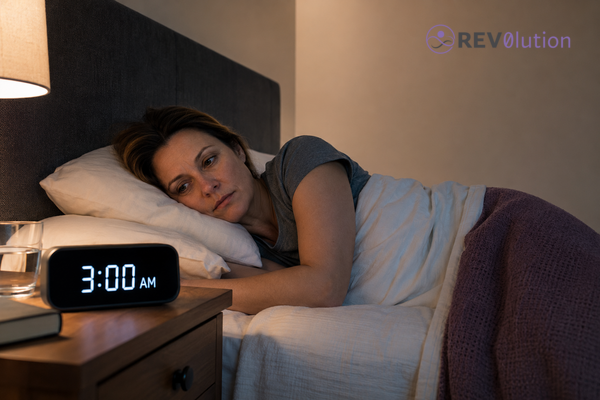
Perimenopause Insomnia: 3 A.M. Waking and What Helps
Why Can’t I Sleep During Perimenopause? Night Sweats, 3 A.M. Waking, and What May Help
Written by Kerri Rachelle, PhD(c), RDN, CSSD, FMP-AC
Founder & CEO, REV0lution | Doctor of Integrative & Natural Medicine Candidate
Quick Answer
Sleep problems during perimenopause can result from fluctuating estrogen and progesterone, hot flashes, night sweats, anxiety, urinary symptoms and changes in sleep regulation. Alcohol, caffeine, under-fueling, reflux, medications, iron deficiency, thyroid dysfunction and sleep apnea may make the problem worse—or cause similar symptoms independently.
Waking at 3 a.m. is not proof of a cortisol disorder or a blood-sugar crash. The pattern is a clue, not a diagnosis. Effective care begins by identifying what is actually interrupting sleep and addressing that factor directly.
Key Takeaways
Perimenopause can affect falling asleep, staying asleep and waking too early.
Hormones fluctuate unpredictably rather than simply declining in a straight line.
Hot flashes and night sweats are important causes of disrupted sleep, but not the only ones.
Alcohol may cause initial sedation while worsening sleep later in the night.
Waking at 3 a.m. does not automatically prove that cortisol or glucose caused it.
Under-eating and chaotic meal patterns can interfere with sleep for some women.
Sleep apnea is frequently overlooked in women because symptoms may not resemble the classic male presentation.
Cognitive behavioral therapy for insomnia is a well-supported treatment—not merely generic “sleep hygiene.”
Nutrition can support sleep, but food cannot correct every sleep disorder.
Persistent sleep disruption deserves evaluation rather than normalization.
Why Does Perimenopause Affect Sleep?
Perimenopause is marked by increasingly variable ovulation and unpredictable fluctuations in estrogen and progesterone. These hormones interact with systems involved in body temperature, mood, breathing, circadian rhythm and sleep.
Progesterone normally rises after ovulation. As ovulation becomes less consistent, progesterone exposure may become more variable. Estrogen can also rise and fall dramatically before becoming persistently lower after menopause.
Women may therefore experience very different sleep patterns from one month to the next. One cycle may bring few symptoms. Another may include anxiety, breast tenderness, heavy bleeding, headaches, night sweats and repeated waking.
Large longitudinal studies have consistently found that sleep complaints increase across the menopause transition. Frequent vasomotor symptoms—hot flashes and night sweats—are strongly associated with difficulty staying asleep and waking too early. Sleep disruption is especially common when vasomotor symptoms are more frequent.
Why Do I Keep Waking at 3 A.M.?
Three o’clock in the morning has become a popular internet diagnosis. It is blamed on cortisol, the liver, blood sugar, “adrenal fatigue” and several other explanations presented with more confidence than evidence.
There is no universal 3 a.m. hormone disorder.
A woman may wake at that time because:
A hot flash raises her body temperature.
Alcohol is fragmenting the second half of her night.
She needs to urinate.
Reflux or pain interrupts sleep.
Her bedroom is too warm.
Anxiety becomes noticeable when the environment is quiet.
She has sleep apnea or another breathing disturbance.
Her circadian rhythm has shifted earlier.
She went to bed earlier than her body’s current sleep requirement supports.
A medication affects sleep.
She is under-fueled or intensely hungry.
She has developed conditioned insomnia and now anticipates waking.
Cortisol normally begins increasing during the latter part of the night in preparation for waking. That normal rhythm does not prove that an abnormal “cortisol spike” caused the awakening.
The timing matters, but it must be interpreted with the rest of the pattern.
Hot Flashes and Night Sweats
Vasomotor symptoms arise partly from changes in temperature regulation. As the thermoneutral zone narrows, relatively small shifts in core temperature can trigger heat dissipation through sweating and changes in blood flow.
A woman may wake before she consciously recognizes the hot flash. She may notice a racing heart, sudden warmth, damp clothing or an inability to settle back to sleep.
Practical measures include:
Keeping the bedroom cool
Using breathable bedding and sleepwear
Layering blankets that can be removed easily
Using a fan or cooling system
Limiting known personal triggers
Discussing persistent vasomotor symptoms with a qualified healthcare provider
Lifestyle measures may reduce the burden, but women should not be made to believe that severe night sweats are their fault because they did not create a sufficiently perfect bedtime routine.
Hormonal and nonhormonal treatments are available. The appropriate choice depends on symptoms, health history, medications, risk factors and personal preference.
Alcohol Can Make the Second Half of the Night Worse
Alcohol may shorten the time required to fall asleep, which is why many women experience it as relaxing. But alcohol-induced sedation is not the same as normal sleep.
As alcohol is metabolized, sleep can become more fragmented. Women may wake earlier, feel hotter, urinate more frequently or struggle to return to sleep. Alcohol can also worsen snoring and sleep-disordered breathing.
A 2024 review of alcohol use in midlife women highlighted its potential connections with sleep disruption, mood, vasomotor symptoms and longer-term health risks. The relationship varies among women, but alcohol should not be treated as metabolically or neurologically invisible.
If sleep is a priority, a useful experiment is to remove alcohol completely for several weeks and observe the difference. One alcohol-free Tuesday is unlikely to reveal the full pattern when weekend drinking continues to disrupt recovery.
Caffeine May Last Longer Than You Think
Caffeine blocks adenosine receptors, reducing the perception of sleep pressure. Its half-life varies considerably according to genetics, pregnancy, medications, liver metabolism and habitual use.
Someone may fall asleep after an afternoon coffee and still experience lighter or more fragmented sleep. The ability to fall asleep does not prove that caffeine had no effect.
Women struggling with nighttime waking may benefit from moving caffeine earlier rather than continually increasing the dose to compensate for poor sleep. For some, a noon cutoff works. Others need an earlier cutoff or a lower total intake.
Caffeine should not become the treatment for exhaustion caused by inadequate sleep, iron deficiency, under-fueling or excessive training.
Could Blood Sugar Be Waking You?
Glucose regulation may affect sleep, but waking at night does not automatically establish nocturnal hypoglycemia.
True hypoglycemia is more concerning in people using insulin or medications that lower blood glucose. In someone without diabetes medication, nighttime hunger or waking may result from inadequate food, alcohol, intense evening exercise or a meal pattern that leaves too little nourishment across the day.
A continuous glucose monitor can provide data, but it also has limitations. Compression lows can occur when someone sleeps on the sensor, and an isolated reading should not be interpreted without symptoms and context.
A useful nutrition approach is to eat adequately throughout the day and build dinner around:
Meaningful protein
Vegetables or another fiber-rich plant
An individualized whole-food carbohydrate
Naturally occurring fat
The goal is not to engineer a perfectly flat overnight glucose line. It is to provide enough well-balanced nourishment without going to bed painfully hungry or uncomfortably full.
If a woman repeatedly wakes shaky, sweaty, confused or with other concerning symptoms—particularly while using glucose-lowering medication—she should discuss this with her healthcare provider.
Under-Fueling Can Interfere With Sleep
A woman may eat very little during the day, complete a demanding workout, choose a small dinner and then wonder why her body will not remain asleep.
The body needs sufficient energy to recover. Chronic under-fueling can contribute to hunger, poor temperature regulation, declining performance, menstrual disturbance, irritability and sleep disruption.
This does not mean everyone needs a bedtime snack. It means the entire day’s intake should be assessed before adding another supplement to the nightstand.
If hunger routinely appears at bedtime or overnight, ask whether breakfast, lunch, post-workout nutrition and dinner were actually adequate.
Hydration Should Happen Earlier
Dehydration may contribute to headache, dry mouth or discomfort, but drinking a large amount of water immediately before bed can increase nighttime urination.
Build hydration earlier in the day. Drink consistently after waking, with meals and around exercise. If nocturia is an issue, reduce large fluid boluses during the final hours before bed while still meeting overall needs.
Repeated nighttime urination is not always caused by drinking too much water. Menopause-related urinary changes, pelvic-floor dysfunction, sleep apnea, diabetes, medication and other conditions can contribute. A 2024 review identified menopause as a relevant part of the nocturia picture. Persistent nocturia deserves evaluation rather than endless fluid restriction.
Do Magnesium or Melatonin Fix Perimenopause Sleep?
Magnesium is involved in normal neurological and muscular function, and deficiency should be corrected. But magnesium is not a universal treatment for perimenopause insomnia.
Some women report benefit, particularly when intake was inadequate, but the evidence does not justify presenting one form or dose as the solution for every woman. Supplemental magnesium can also cause diarrhea and may be inappropriate with certain kidney conditions or medications.
Melatonin helps regulate circadian timing. It may be useful when the primary problem involves sleep timing, travel or delayed sleep onset. More is not always better, and morning grogginess, vivid dreams or interactions may occur.
A shelf of sleep supplements can create the illusion of treatment while hot flashes, alcohol, sleep apnea, anxiety or conditioned insomnia remain unaddressed.
Supplementation should have a reason.
Sleep Apnea Does Not Always Look Obvious in Women
Sleep apnea is frequently associated with loud snoring in a man with a larger body. Women may present differently.
Possible signs include:
Insomnia or repeated waking
Morning headache
Dry mouth
Fatigue
Mood changes
Difficulty concentrating
Nocturia
Snoring
Gasping or witnessed breathing pauses
Daytime sleepiness—or simply feeling unrefreshed
The prevalence of obstructive sleep apnea increases after menopause and may become more comparable to that seen in men. Women are still less likely to be recognized when they present with insomnia, fatigue or mood symptoms instead of classic sleepiness.
A woman can have sleep apnea without living in a larger body. Persistent symptoms warrant appropriate screening.
Iron, Thyroid and Other Overlapping Conditions
Iron deficiency may contribute to fatigue and restless legs, particularly in women experiencing heavy or prolonged menstrual bleeding. Restless legs can make it difficult to fall asleep or remain comfortable at night.
Thyroid dysfunction can contribute to anxiety, palpitations, temperature changes, fatigue and altered sleep. Reflux, chronic pain, depression, anxiety and several medications can also interrupt sleep.
This is why “it’s just perimenopause” is not a complete evaluation.
Learn more in Is It Perimenopause—or Something Else? and Why Am I Always Tired?.
What Actually Helps Perimenopause Sleep?
Keep a consistent wake time
A stable waking time helps anchor the circadian system. Sleeping much later after a difficult night may temporarily feel helpful but can make it harder to fall asleep the following night.
Get morning light
Outdoor light shortly after waking supports circadian timing and alertness. Morning light is substantially brighter than ordinary indoor lighting, even on many cloudy days.
Create enough daytime movement
Walking, cardiovascular activity and resistance training can support sleep. However, repeatedly completing maximal training while under-recovered may worsen the problem.
Make the bedroom support temperature regulation
Cool the room, use breathable materials and reduce unnecessary heat trapping.
Move caffeine earlier
Use caffeine intentionally rather than allowing it to expand as sleep deteriorates.
Conduct an honest alcohol experiment
Remove it long enough to observe the difference in sleep, temperature regulation, mood and energy.
Eat enough during the day
Build satisfying balanced meals based on whole foods and fuel demanding exercise. Do not expect a tiny dinner to repair an under-fueled day.
Treat the actual symptom driver
Hot flashes, sleep apnea, restless legs, reflux, pain, anxiety and urinary symptoms require different strategies. Generic sleep hygiene cannot replace diagnosis.
Cognitive Behavioral Therapy for Insomnia Is More Than Sleep Hygiene
Cognitive behavioral therapy for insomnia, or CBT-I, is a structured treatment that addresses behaviors and thought patterns that perpetuate insomnia. It may include stimulus control, sleep scheduling, cognitive strategies and techniques for reducing conditioned arousal around sleep.
Randomized trials in peri- and postmenopausal women have found meaningful improvements in insomnia and sleep quality, including among women experiencing hot flashes. CBT-I is supported as a first-line treatment for chronic insomnia.
This does not mean the problem is “all in your head.” It means the brain can learn an association between the bed, wakefulness and anxiety—and that association can be changed.
Where Hormone Therapy Fits
Menopause hormone therapy remains the most effective treatment for vasomotor symptoms and may improve sleep when hot flashes and night sweats are major drivers. It is not the correct option for every woman, and REV0lution does not prescribe it.
The formulation, route, dose, uterus status, timing and individual health history all matter. Women considering it should have an informed conversation with a qualified prescriber.
Read Menopause Hormone Therapy: Benefits, Risks, and Who May Be a Candidate.
Lifestyle support remains valuable whether or not a woman chooses hormone therapy. Receiving symptom treatment does not eliminate the need for nourishment, movement and sleep protection—and women do not need to earn treatment by first perfecting every lifestyle behavior.
When Should You Seek Help?
Discuss sleep with a qualified healthcare provider when:
Insomnia occurs at least several nights per week and persists.
Daytime function, driving or work is affected.
You snore, gasp or stop breathing during sleep.
You wake with headaches or a dry mouth.
Night sweats are severe or unexplained.
You experience chest pain, significant palpitations or shortness of breath.
Restless legs repeatedly prevent sleep.
Heavy bleeding may be contributing to iron deficiency.
Depression, anxiety or intrusive thoughts are worsening.
Sleep changed after starting or adjusting medication.
Sleep disruption may be common during perimenopause. Common does not mean it should be ignored.
How REV0lution Can Help
Nutrition counseling cannot treat every sleep disorder, but it can identify patterns that are making sleep harder.
Out dietitians can evaluate meal timing, adequacy of intake, caffeine, alcohol, hydration, exercise fueling, glucose regulation, iron intake and the relationship between digestive symptoms and sleep. When the pattern suggests sleep apnea, thyroid dysfunction, severe vasomotor symptoms or another condition requiring medical evaluation, coordinated care matters.
We will never just hand a woman a bedtime supplement list. We take time to understand why sleep is breaking down and address the modifiable contributors to create a plan that is personalized and works for YOU.
The Bottom Line
Perimenopause can disrupt sleep through hormone fluctuations, hot flashes, temperature dysregulation and changing reproductive patterns. But it is not the only possible explanation.
Waking at 3 a.m. is a symptom—not a diagnosis. Look at temperature, alcohol, caffeine, nourishment, urinary symptoms, breathing, iron, thyroid health, anxiety, medications and the overall sleep pattern.
Protecting sleep may require lifestyle changes, targeted nutrition support, CBT-I, medical treatment or a combination. Women deserve more than being told that exhaustion is simply part of getting older.
Medical Disclaimer: This article is for general educational and informational purposes only and does not provide individualized medical or nutrition advice. It is not intended to diagnose, treat, cure, or prevent disease or replace care from a qualified healthcare professional. Do not change your medications, supplements, diet, fasting schedule, or healthcare plan based solely on this content. [Read the full Medical Disclaimer and Terms & Conditions.]
Frequently Asked Questions
Why does perimenopause make it harder to sleep?
Hormone fluctuations can affect temperature regulation, mood and sleep continuity. Night sweats may wake you directly, while anxiety, pain, urinary symptoms and heightened nighttime alertness can make it difficult to return to sleep. However, poor sleep should not automatically be blamed on hormones. Sleep apnea, restless legs, thyroid dysfunction, iron deficiency, medication effects and alcohol may contribute or coexist. Learn more in Is It Perimenopause—or Something Else?.
Is waking at 3 a.m. a sign of perimenopause?
Middle-of-the-night waking is common during perimenopause, but 3 a.m. is not a unique hormonal event or a diagnosis. A hot flash, noise, alcohol, stress, an uncomfortable room, urinary urgency or a sleep disorder may cause the initial awakening. Once awake, worrying about the time or anticipating a difficult morning can increase alertness and make returning to sleep harder.
Are night sweats always caused by perimenopause?
No. Night sweats are a common vasomotor symptom of perimenopause, but they can also be associated with medications, alcohol, thyroid dysfunction, infection, sleep apnea and other conditions. Seek medical evaluation when sweating is new, drenching, persistent or accompanied by fever, unexplained weight loss, swollen lymph nodes, chest symptoms or other significant changes.
Can low blood sugar cause 3 a.m. waking?
True nocturnal hypoglycemia is an important concern for people who use insulin or certain glucose-lowering medications, but it should not be assumed in everyone who wakes during the night. A single episode of 3 a.m. waking does not prove that cortisol surged or blood sugar crashed. If waking is accompanied by sweating, trembling, intense hunger or glucose abnormalities, discuss appropriate evaluation with a qualified clinician. Read more about insulin resistance and glucose regulation.
What can help with perimenopause sleep problems?
Begin with a consistent wake time, morning light exposure, regular movement, a cool and dark bedroom, earlier caffeine timing and limited alcohol. Eat sufficiently during the day instead of under-fueling and then arriving at bedtime hungry or overeating late at night. If insomnia has become persistent, cognitive behavioral therapy for insomnia, or CBT-I, has substantially stronger evidence than sleep hygiene alone.
Should I take magnesium, melatonin or a sleep supplement?
A supplement should address a reason—not become a nightly collection of sedating ingredients. Magnesium may be appropriate when intake is inadequate or deficiency is present, but it is not a universal cure for perimenopause insomnia. Melatonin is primarily involved in circadian timing and more is not necessarily better.
REV0lution does not recommend building a sleep routine around artificially sweetened gummies, artificial colors or proprietary blends containing numerous ingredients at undisclosed doses. Review supplements for interactions and discuss ongoing insomnia with a clinician rather than continually adding products.
Can menopause hormone therapy improve sleep?
Menopause hormone therapy may improve sleep when hot flashes and night sweats are major drivers, and some women report meaningful benefits. It is not a universal insomnia treatment, and the decision depends on symptoms, medical history, uterus status, formulation, route, dose and individual risks. Learn more in Menopause Hormone Therapy: Benefits, Risks, and Who May Be a Candidate.
When should I ask about a sleep study?
Talk with a healthcare professional if you snore loudly, wake gasping or choking, experience morning headaches, have difficult-to-control blood pressure or remain excessively sleepy despite allowing enough time for sleep. Women with sleep apnea do not always present with the stereotypical symptoms. Fatigue, insomnia, mood changes and frequent waking may be more prominent. If daytime exhaustion is the primary concern, also read Why Am I Always Tired?.
References
Baker FC, de Zambotti M, Colrain IM, Bei B. Sleep problems during the menopausal transition: Prevalence, impact, and management challenges. Nat Sci Sleep. 2018;10:73–95. doi:10.2147/NSS.S125807. PMID: 29445307.
Kravitz HM, Zhao X, Bromberger JT, et al. Sleep disturbance during the menopausal transition in a multi-ethnic community sample of women. Sleep. 2008;31(7):979–990. doi:10.5665/sleep/31.7.979. PMID: 18652093.
Kravitz HM, Janssen I, Bromberger JT, et al. Sleep trajectories before and after the final menstrual period in the Study of Women’s Health Across the Nation. Curr Sleep Med Rep. 2017;3(3):235–250. doi:10.1007/s40675-017-0084-1. PMID: 28944165.
McCurry SM, Guthrie KA, Morin CM, et al. Telephone-based cognitive behavioral therapy for insomnia in perimenopausal and postmenopausal women with vasomotor symptoms: A MsFLASH randomized clinical trial. JAMA Intern Med. 2016;176(7):913–920. doi:10.1001/jamainternmed.2016.1795. PMID: 27213646.
Guthrie KA, Larson JC, Ensrud KE, et al. Effects of pharmacologic and nonpharmacologic interventions on insomnia symptoms and self-reported sleep quality in women with hot flashes: A pooled analysis of individual participant data from four MsFLASH trials. Sleep. 2018;41(1):zsx190. doi:10.1093/sleep/zsx190. PMID: 29165623.
Proserpio P, Marra S, Campana C, et al. Insomnia and menopause: A narrative review on mechanisms and treatments. Climacteric. 2020;23(6):539–549. doi:10.1080/13697137.2020.1799973. PMID: 32880197.
Avis NE, Crawford SL, Greendale G, et al. Duration of menopausal vasomotor symptoms over the menopause transition. JAMA Intern Med. 2015;175(4):531–539. doi:10.1001/jamainternmed.2014.8063. PMID: 25686030.
Gao CC, Kapoor E, Lipford MC, et al. Association of vasomotor symptoms and sleep apnea risk in midlife women. Menopause. 2018;25(4):391–398. doi:10.1097/GME.0000000000001020. PMID: 29088020.
Ntikoudi A, Tzavara C, Stathopoulou A, et al. The effectiveness of cognitive behavioral therapy on sleep outcomes in menopausal women: A systematic review. Healthcare. 2024;12. PMID: 39598203.