
podcast
Beyond the biomarkers

want More?
Download the free 2-Week Energetic Reset Guide, created to help you put podcast insights into practice with actionable nutrition, lifestyle, and gut health strategies you can start today.
What to expect:
14-Day Nutrition Plan
Recipe Book
Gut Health Hacks
Nutrition Tips
Fitness Routines
Dedicated Community
Follow on:
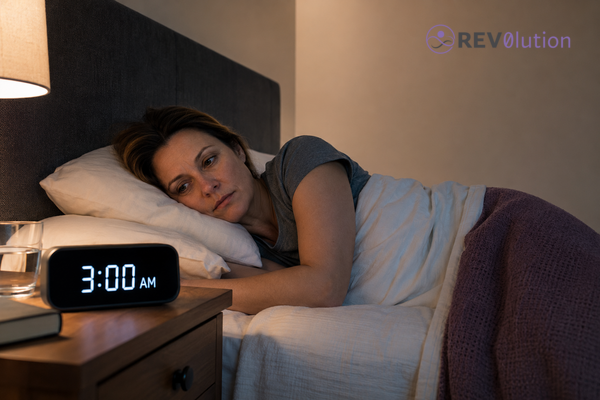
Is It Perimenopause—or Something Else? Thyroid, Iron, Insulin and Other Overlapping Symptoms
Is It Perimenopause—or Something Else? Thyroid, Iron, Insulin and Other Overlapping Symptoms
Written by Kerri Rachelle, PhD(c), RDN, CSSD, FMP-AC
Founder & CEO, REV0lution | Doctor of Integrative & Natural Medicine Candidate
Quick Answer
Fatigue, hair loss, anxiety, disrupted sleep, changing periods, brain fog, and difficulty regulating weight can occur during perimenopause—but perimenopause is not the only possible explanation. Thyroid dysfunction, iron deficiency, insulin resistance, inadequate nourishment, medication effects, and sleep disorders can produce remarkably similar symptoms. More than one condition may also be present at the same time.
Perimenopause is usually recognized through age, menstrual patterns, symptoms, and medical history—not one definitive hormone test. Laboratory testing is most useful when it is selected to investigate competing or contributing causes rather than ordered as an indiscriminate “hormone panel.”
Key Takeaways
Perimenopause should not become a catch-all diagnosis for every symptom that appears in midlife.
Thyroid dysfunction can overlap with perimenopause, but a broad collection of thyroid markers is not necessary for every woman.
Iron deficiency can cause symptoms before hemoglobin falls low enough to meet the definition of anemia.
Insulin resistance may contribute to fatigue, hunger, glucose fluctuations, and weight-regulation difficulty, but body weight alone cannot diagnose it.
Poor sleep may be caused by night sweats, insomnia, restless legs, sleep apnea, or several of these factors together.
Under-eating and overly restrictive diets can worsen fatigue, sleep, hair shedding, cravings, and muscle loss.
DUTCH testing measures urinary hormones and hormone metabolites, but it is not a validated stand-alone test for diagnosing perimenopause.
Testing should answer a clinical question. More testing is not automatically better care.
Why Perimenopause Symptoms Can Be Difficult to Interpret
Perimenopause is a period of changing ovarian function that occurs before the final menstrual period. Estrogen does not simply decline in a predictable, straight line. Hormone levels may rise, fall, and vary considerably from one cycle to the next, while ovulation becomes less consistent and progesterone exposure often changes.
These shifts can affect menstrual cycles, temperature regulation, sleep, mood, cognition, vaginal and urinary health, and body composition. The difficulty is that many of these symptoms are not exclusive to perimenopause.
Fatigue, for example, may reflect disrupted sleep caused by night sweats. It may also be associated with iron deficiency, hypothyroidism, insulin resistance, medication effects, depression, under-fueling, or sleep apnea. Hair loss can accompany hormonal change, but it can also occur with low iron stores, thyroid dysfunction, inadequate protein or energy intake, recent illness, significant stress, or androgen-related hair loss.
This is why symptom recognition and differential diagnosis must happen together.
Women should not be dismissed because one hormone result is “normal,” but they also should not be sold indiscriminate hormone panels, expensive functional testing, or automatic supplement protocols. Symptoms deserve a thoughtful evaluation—not dismissal on one extreme or overtesting on the other.
Could It Be Thyroid Dysfunction?
Thyroid dysfunction and perimenopause can look surprisingly similar. Both may be associated with fatigue, mood changes, changes in menstrual bleeding, difficulty concentrating, hair changes, sleep disruption, temperature intolerance, altered bowel habits, and changes in weight.
That does not mean every woman with perimenopausal symptoms needs an enormous “full thyroid panel.” Thyroid-stimulating hormone, or TSH, is generally the initial laboratory test used to evaluate suspected primary thyroid dysfunction. Free T4 may be added or interpreted alongside TSH depending on the result, symptoms, medical history, medication use, and clinical context.
Thyroid antibodies can be useful when autoimmune thyroid disease is suspected, but they are not automatically necessary for every woman. Similarly, ordering free T3 or reverse T3 for everyone is not supported as a routine approach to diagnosing common primary hypothyroidism.
A normal TSH does not mean a woman’s symptoms are imaginary or that nothing is wrong. It does, however, make common primary thyroid dysfunction less likely. The next step should be to investigate other reasonable explanations—not to keep ordering thyroid markers until one falls outside an “optimal” range created for marketing purposes.
Could Low Iron Be Causing the Fatigue?
Iron deficiency deserves particular attention in women experiencing heavier, longer, or more frequent periods. Iron stores can decline before hemoglobin becomes low enough to produce anemia. That means a woman may have a normal hemoglobin level while experiencing fatigue associated with depleted iron stores.
A complete blood count evaluates hemoglobin and other blood-cell characteristics. Ferritin provides information about stored iron, while additional iron studies may help interpret the full picture. Ferritin is also an acute-phase reactant, meaning it can increase during inflammation, infection, or certain chronic conditions. It should not be interpreted in isolation.
Controlled research suggests iron treatment may reduce subjective fatigue in some non-anemic women with low or borderline ferritin, but iron is not an appropriate supplement to take blindly. Excess iron can be harmful, and low iron is a finding that requires an explanation.
If heavy menstrual bleeding is driving iron loss, repeatedly replacing iron without evaluating the bleeding leaves the underlying problem unaddressed. Fibroids, adenomyosis, polyps, ovulatory changes, bleeding disorders, medication effects, and other gynecologic conditions may contribute.
Women who are exhausted, lightheaded, short of breath, experiencing heart palpitations, or bleeding heavily should not be told that this is merely a normal part of getting older. For a deeper discussion of overlapping causes, see Why Am I Always Tired?.
Could Insulin Resistance Be Part of the Picture?
Hormonal changes, aging, sleep disruption, stress, reduced muscle mass, genetics, activity level, and body-fat distribution can all influence glucose regulation during midlife. Some women notice increased hunger, stronger cravings, energy crashes, changes in waist circumference, or greater difficulty regulating weight.
These symptoms may raise questions about insulin resistance, but they cannot diagnose it. Neither can body size. A woman can have insulin resistance in a smaller body, while another woman in a larger body may have relatively normal glucose regulation.
Depending on the individual, an evaluation may include fasting glucose, hemoglobin A1c, lipids, and sometimes an oral glucose-tolerance test. Fasting insulin can provide additional metabolic context, but there is no universally accepted fasting-insulin cutoff that independently diagnoses insulin resistance.
It is also important to distinguish a fasting result from what happens after eating. Some women maintain normal fasting glucose while experiencing an exaggerated glucose response after a meal or glucose challenge. Testing should be selected according to the question being asked rather than ordered as a generic bundle.
If insulin resistance is present, the answer is not to survive on protein bars, artificially sweetened shakes, and packaged “keto” substitutes. REV0lution recommends meals constructed from meaningful real-food protein, fiber-rich vegetables and other whole plants, naturally occurring fats, and an individualized amount of whole-food carbohydrate. Nutrition should support muscle, energy, glucose regulation, and hormonal health—not simply produce the lowest possible glucose reading.
Learn more in What Is Insulin Resistance? and What Is Prediabetes?.
Could You Be Under-Fueling?
Women who become frustrated by midlife weight changes may respond by eating less, skipping more meals, eliminating multiple food groups, increasing fasting, and exercising harder. That approach can create a second problem: inadequate energy and nutrient intake.
Under-fueling can occur at any body size. It may contribute to fatigue, poor exercise recovery, loss of muscle, persistent hunger, cravings, irritability, sleep disruption, constipation, hair shedding, feeling cold, and changes in reproductive function. These symptoms can then be blamed entirely on hormones, even when the eating pattern is making them worse.
Protein matters, but it should not come exclusively from manufactured shakes and bars. Adequate energy, whole-food protein, micronutrients, fiber-rich plants, and appropriate carbohydrates work together. A woman cannot indefinitely compensate for insufficient nourishment with caffeine, supplements, or willpower.
This is also why increasingly restrictive fasting is not automatically a solution for perimenopausal weight gain. If you are ravenously hungry in the morning, sleeping poorly, losing strength, or obsessing about making it through the fasting window, eating a real breakfast may be the healthier choice.
A registered dietitian can help determine whether a woman is genuinely eating in a way that supports her needs rather than relying on assumptions about calorie intake. Learn more about individualized nutrition care in What Is a Functional Medicine Registered Dietitian?.
Could a Sleep Disorder Be Hiding Behind “Hormonal Fatigue”?
Perimenopause can directly disrupt sleep through night sweats, temperature changes, anxiety, and changing sleep architecture. But not every sleep problem is caused solely by fluctuating reproductive hormones.
Obstructive sleep apnea becomes more common as women move through reproductive aging. Women do not always present with the stereotypical picture of loud snoring and obvious daytime sleepiness. Insomnia, fatigue, morning headaches, mood changes, difficulty concentrating, and unrefreshing sleep may be the more noticeable complaints.
Restless legs syndrome can also interfere with sleep and may be associated with low iron stores in some individuals. Reflux, alcohol, pain, medications, and nighttime glucose fluctuations can further fragment sleep.
If sleep remains unrefreshing despite adequate time in bed—or there is snoring, gasping, morning headache, severe daytime sleepiness, or difficult-to-control blood pressure—a sleep evaluation may be more informative than another hormone panel.
Could a Medication or Supplement Be Contributing?
Medication effects should be included in a comprehensive symptom review. Certain medications may contribute to fatigue, sleep changes, appetite changes, dizziness, altered bleeding, sexual symptoms, or changes in weight. Supplements can also cause adverse effects, interact with medications, or contain doses far beyond what a person needs.
This is not a reason to disparage prescribed medication or stop it independently. A medication may be essential even if it has a side effect that needs to be managed. The appropriate response is to review the timing, dose, indication, interactions, and alternatives with the prescribing clinician.
Bring a complete list of medications and supplements to the appointment—including over-the-counter sleep products, antihistamines, herbal blends, hormone products, and compounds marketed for “adrenal” or thyroid support. The label “natural” does not guarantee that a product is necessary, accurately dosed, or risk-free.
What Blood Tests May Be Helpful During Perimenopause?
There is no universal perimenopause blood panel that every woman needs. Testing should be based on symptoms, menstrual history, medical history, diet, medication use, and risk factors.
Depending on the situation, a clinician might consider:
A complete blood count
Ferritin and selected iron studies
TSH, with free T4 when indicated
A pregnancy test when pregnancy is possible
Fasting glucose and hemoglobin A1c
A lipid panel
Vitamin B12, folate, or vitamin D when clinically relevant
Additional evaluation for abnormal uterine bleeding
FSH and estradiol may be useful in selected situations, particularly when symptoms begin unusually early, menstrual history is unclear, or primary ovarian insufficiency is being considered. However, one normal FSH or estradiol result does not rule out perimenopause. Hormone levels can vary substantially from one day or cycle to another.
The right question is not, “What is every test I can order?” It is, “Which test could reasonably change what we do next?” For more on choosing tests responsibly, see Functional Medicine Lab Testing: What It Is, What It Isn’t, and When It’s Helpful.
What About DUTCH Testing for Perimenopause?
DUTCH testing uses dried urine samples to measure reproductive hormones, adrenal hormones, and selected hormone metabolites. Research has demonstrated that dried urine methods can measure certain hormones and metabolites with analytical reliability. That tells us the laboratory can consistently measure what is present in the sample.
Analytical reliability is not the same as proving that a test can diagnose perimenopause, identify the cause of nonspecific symptoms, or determine the ideal treatment.
DUTCH testing is not a validated stand-alone diagnostic test for perimenopause. It is also not the first test a woman needs when the primary concerns are heavy bleeding, fatigue, possible iron deficiency, suspected thyroid dysfunction, or sleep apnea. Those questions require more direct evaluation.
In selected cases, urinary hormone-metabolite information may provide supplemental context for a qualified clinician who understands the test’s limitations. It should not override the woman’s clinical history, menstrual pattern, appropriate conventional testing, or established diagnostic criteria. It should also not become the automatic gateway to a long list of supplements.
What Else Can Resemble Perimenopause?
Several other conditions can overlap with or resemble perimenopausal symptoms:
Pregnancy
Depression, anxiety, or significant chronic stress
Fibroids, adenomyosis, uterine polyps, or other causes of abnormal bleeding
Vitamin B12, folate, or other nutrient deficiencies
Androgen-related hair loss or dermatologic conditions
Chronic infections or inflammatory conditions
Medication or substance effects
Sleep apnea, restless legs syndrome, or chronic insomnia
Significant calorie restriction or inadequate protein and micronutrient intake
This does not mean every woman needs to be tested for every possibility. It means that age alone should not determine the diagnosis.
Perimenopause and another condition can also coexist. A woman may be experiencing hormonal fluctuations while simultaneously developing iron deficiency from heavier periods or worsening insulin resistance after months of disrupted sleep.
When Should You Seek Medical Evaluation Promptly?
Schedule an evaluation rather than assuming symptoms are “just perimenopause” if you experience:
Very heavy or prolonged bleeding
Bleeding after sex
Bleeding after 12 consecutive months without a period
Fainting, chest pain, shortness of breath, or severe palpitations
Rapid or unexplained weight change
New neurologic symptoms
Severe daytime sleepiness, especially while driving
Persistent symptoms that interfere with work, sleep, relationships, or daily life
Severe depression, thoughts of self-harm, or another mental-health crisis
Perimenopause is common. Suffering without appropriate evaluation should not be treated as an unavoidable rite of passage.
The Bottom Line
Perimenopause can explain many changes that begin in a woman’s 40s—and sometimes earlier—but it should not become a diagnostic dumping ground. Fatigue, hair loss, anxiety, disrupted sleep, changing periods, and weight-regulation difficulty may also reflect thyroid dysfunction, iron deficiency, insulin resistance, inadequate nourishment, medication effects, or an untreated sleep disorder.
The goal is not to prove that every symptom is hormonal or to order every laboratory test available. The goal is to listen carefully, identify the most likely contributors, and select tests that can meaningfully guide care.
Believe the woman. Investigate intelligently. Treat the actual drivers rather than assigning every midlife symptom to age.
Medical Disclaimer: This article is for general educational and informational purposes only and does not provide individualized medical or nutrition advice. It is not intended to diagnose, treat, cure, or prevent disease or replace care from a qualified healthcare professional. Do not change your medications, supplements, diet, fasting schedule, or healthcare plan based solely on this content. [Read the full Medical Disclaimer and Terms & Conditions.]
Frequently Asked Questions
Can thyroid problems be mistaken for perimenopause?
Yes. Thyroid dysfunction and perimenopause can both cause fatigue, menstrual changes, mood symptoms, hair changes, altered temperature tolerance, sleep disruption, and changes in weight. TSH is generally the initial thyroid test, with free T4 and other testing added when clinically indicated.
How can I tell whether my symptoms are thyroid-related or perimenopause?
Symptoms alone may not distinguish them because there is substantial overlap. Age, menstrual history, hot flashes, and vaginal symptoms can support perimenopause, while a thyroid evaluation helps identify or exclude common primary thyroid dysfunction. Both conditions can occur together.
What blood tests should I request for perimenopause fatigue?
There is no single test list for everyone. Depending on your history, reasonable testing may include a complete blood count, ferritin and iron studies, TSH, glucose or hemoglobin A1c, and selected nutrient testing. Pregnancy testing, bleeding evaluation, or sleep assessment may also be appropriate.
Can I have iron deficiency without anemia?
Yes. Iron stores can become depleted before hemoglobin falls into the anemic range. Ferritin and other iron markers may identify iron deficiency that a hemoglobin result alone does not reveal. Ferritin must still be interpreted in clinical context because inflammation can raise it.
Should I take iron if my ferritin is low?
Do not begin high-dose iron solely from an online recommendation. Treatment depends on the ferritin result, other iron markers, symptoms, medical history, and cause of the deficiency. Heavy bleeding, gastrointestinal loss, dietary insufficiency, and absorption problems may require different evaluation.
Does perimenopause cause insulin resistance?
The menopause transition may be accompanied by changes in body composition, sleep, activity, and glucose regulation, but perimenopause does not automatically mean a woman has insulin resistance. Insulin resistance should be evaluated using clinical history and appropriate metabolic testing rather than inferred from age or weight.
Can a woman have insulin resistance without being overweight?
Yes. Body size does not diagnose metabolic health. Genetics, muscle mass, sleep, medication use, fat distribution, reproductive conditions, and other factors can affect insulin sensitivity independently of body weight.
Can under-eating make perimenopause symptoms worse?
Inadequate energy, protein, carbohydrate, or micronutrient intake may worsen fatigue, poor recovery, sleep disruption, cravings, muscle loss, and hair shedding. Restrictive diets can therefore create or intensify symptoms that are then blamed entirely on perimenopause.
Is FSH testing accurate for diagnosing perimenopause?
FSH can provide useful information in selected cases, but one result cannot reliably confirm or exclude perimenopause because levels fluctuate. Perimenopause is usually identified through age, menstrual changes, symptoms, and medical history.
Does a DUTCH test diagnose perimenopause?
No. DUTCH testing measures urinary hormones and hormone metabolites, but it is not a validated stand-alone diagnostic test for perimenopause. It may offer supplemental information in selected cases, but it should not replace clinical history or targeted evaluation for thyroid dysfunction, iron deficiency, abnormal bleeding, or sleep disorders.
Could sleep apnea be mistaken for perimenopause fatigue?
Yes. Sleep apnea in women may present as insomnia, unrefreshing sleep, headaches, mood changes, cognitive difficulty, or daytime fatigue rather than only obvious snoring. Persistent sleep symptoms deserve evaluation, particularly when there is gasping, severe sleepiness, or difficult-to-control blood pressure.
Can prescribed medications affect perimenopause symptoms?
Some medications can affect sleep, appetite, energy, bleeding, mood, or weight. Do not stop a prescribed medication to test that possibility. Review the symptoms, timing, dose, and alternatives with the prescribing clinician.
References
Harlow SD, Gass M, Hall JE, et al. Executive summary of the Stages of Reproductive Aging Workshop +10: addressing the unfinished agenda of staging reproductive aging. Menopause. 2012;19(4):387–395. PMID: 22343510.
Santoro N, Roeca C, Peters BA, Neal-Perry G. The menopause transition: signs, symptoms, and management options. Journal of Clinical Endocrinology & Metabolism. 2021;106(1):1–15. PMID: 33095879.
Delamater L, Santoro N. Management of the perimenopause. Clinical Obstetrics and Gynecology. 2018;61(3):419–432. PMID: 29952797.
Santoro N. Perimenopause: from research to practice. Journal of Women’s Health. 2016;25(4):332–339. PMID: 26939038.
Verdon F, Burnand B, Stubi CLF, et al. Iron supplementation for unexplained fatigue in non-anaemic women: double blind randomised placebo controlled trial. BMJ. 2003;326(7399):1124. PMID: 12763985.
Houston BL, Hurrie D, Graham J, et al. Efficacy of iron supplementation on fatigue and physical capacity in non-anaemic iron-deficient adults: a systematic review of randomised controlled trials. BMJ Open. 2018;8(4):e019240. PMID: 29626044.
Kravitz HM, Zhao X, Bromberger JT, et al. Sleep disturbance during the menopausal transition in a multi-ethnic community sample of women. Sleep. 2008;31(7):979–990. PMID: 18652093.
Mountjoy M, Ackerman KE, Bailey DM, et al. 2023 International Olympic Committee’s consensus statement on Relative Energy Deficiency in Sport. British Journal of Sports Medicine. 2023;57(17):1073–1097. PMID: 37752011.
Newman M, Pratt SM, Curran DA, Stanczyk FZ. Reliability of a dried urine test for comprehensive assessment of urine hormones and metabolites. BMC Chemistry. 2021;15(1):18. PMID: 33722278.
Sowers M, Zheng H, Tomey K, et al. Changes in body composition in women over six years at midlife: ovarian and chronological aging. Journal of Clinical Endocrinology & Metabolism. 2007;92(3):895–901. PMID: 17192296.
El Khoudary SR, Aggarwal B, Beckie TM, et al. Menopause transition and cardiovascular disease risk: implications for timing of early prevention. Circulation. 2020;142(25):e506–e532. PMID: 33251828.