
podcast
Beyond the biomarkers

want More?
Download the free 2-Week Energetic Reset Guide, created to help you put podcast insights into practice with actionable nutrition, lifestyle, and gut health strategies you can start today.
What to expect:
14-Day Nutrition Plan
Recipe Book
Gut Health Hacks
Nutrition Tips
Fitness Routines
Dedicated Community
Follow on:
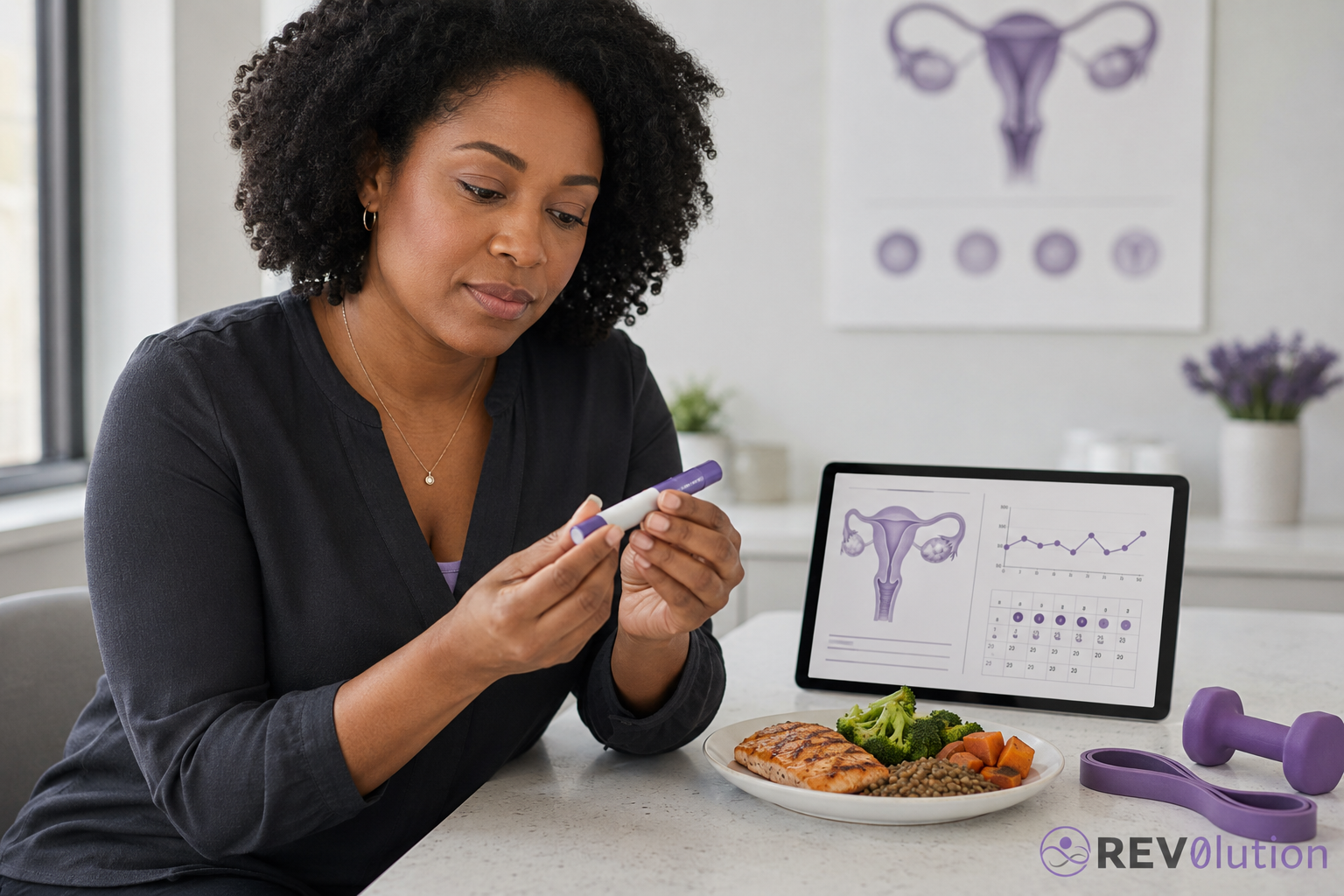
Do GLP-1 Medications Help PMOS? Benefits, Fertility, Risks, and What Women Need to Know
GLP-1 Medications for PMOS: Benefits, Limitations, Fertility, and What Women Need to Know
Written by Kerri Rachelle, PhD(c), RDN, CSSD, FMP-AC
Founder & CEO, REV0lution | Doctor of Integrative & Natural Medicine Candidate
Quick Answer
GLP-1 medications may help some women with polyendocrine metabolic ovarian syndrome (PMOS), formerly called PCOS, manage appetite, body weight, glucose regulation and insulin resistance. Those improvements may indirectly support more regular ovulation or menstrual cycles in certain women.
But GLP-1 medications are not fertility drugs, and they do not cure PMOS. Research specifically involving women with PMOS remains limited, particularly for reproductive outcomes and long-term use. These medications also require careful pregnancy planning, adequate nutrition, resistance training and a realistic strategy for maintaining progress if treatment ends.
Key Takeaways
GLP-1 medications are not currently approved specifically to treat PMOS.
They may be prescribed for an approved indication such as obesity or type 2 diabetes in a woman who also has PMOS.
The clearest PMOS-specific evidence supports modest short-term weight reduction in women with overweight or obesity.
Improvements in insulin resistance, menstrual regularity or androgen-related markers are possible, but the evidence is less certain.
GLP-1 medications are not recommended during pregnancy.
Improved ovulation may increase the possibility of an unplanned pregnancy.
Tirzepatide may temporarily reduce the effectiveness of oral hormonal contraceptives.
Eating too little protein and discontinuing resistance training can increase the risk of losing muscle along with body fat.
These medications should support a whole-food plan—not replace it.
What Are GLP-1 Medications?
GLP-1 stands for glucagon-like peptide-1, a hormone involved in glucose regulation, insulin release, appetite and digestion. GLP-1 receptor agonists imitate some of the effects of this naturally occurring hormone.
Semaglutide and liraglutide are GLP-1 receptor agonists. Tirzepatide acts on both GLP-1 and glucose-dependent insulinotropic polypeptide, or GIP, receptors. Although tirzepatide is technically a dual GIP/GLP-1 medication, it is frequently discussed alongside GLP-1 medications because of its overlapping metabolic and appetite-related effects.
Depending on the medication and product, approved uses may include type 2 diabetes, chronic weight management or the reduction of certain cardiovascular risks. Having PMOS by itself does not automatically qualify someone for a prescription.
Why Are GLP-1 Medications Being Considered for PMOS?
PMOS is not simply an ovarian or fertility disorder. It is a complex endocrine and metabolic condition that may involve androgen excess, disrupted ovulation, appetite dysregulation, insulin resistance and an increased risk of impaired glucose regulation.
Insulin resistance is not present in every woman with PMOS, but it is common—even in women who are not living in larger bodies. When the body does not respond effectively to insulin, the pancreas may produce more of it. Higher insulin levels can influence ovarian androgen production and contribute to a cycle of metabolic and reproductive symptoms.
GLP-1 medications are therefore being studied because they can improve glucose-dependent insulin signaling, decrease appetite, slow gastric emptying and support weight reduction in appropriate patients. If you need a deeper explanation of this metabolic pathway, start with What Is Insulin Resistance?.
Before Starting a GLP-1, Has Foundational Nutrition Care Been Tried?
Before using medication solely for weight management, REV0lution recommends working with a registered dietitian who can evaluate food quality, protein intake, meal structure, insulin resistance, sleep, activity, medications and the other factors that may make weight regulation difficult.
This is not another demand that a woman “try harder.” It is an opportunity to determine whether she has received an individualized, clinically appropriate nutrition plan rather than generic advice to eat less. Many women have spent years dieting without ever receiving comprehensive nutrition care.
Medication may still be appropriate, and some women should not be required to postpone necessary treatment while completing an arbitrary number of diet attempts. Significant obesity-related complications, type 2 diabetes or other clinical concerns may justify beginning medication sooner. Ideally, however, GLP-1 treatment should be paired with a registered dietitian from the beginning—not prescribed in isolation.
The medication can decrease appetite, but it cannot determine whether the smaller amount of food being eaten contains enough protein, fiber, micronutrients and energy to preserve health.
Do GLP-1 Medications Treat PMOS?
They may help address selected features of PMOS, but they do not treat every part of the condition.
A 2026 systematic review found that GLP-1 receptor agonists were associated with modest short-term weight loss in women with PMOS and overweight or obesity. However, evidence for metabolic, reproductive and psychological outcomes remained uncertain because the available studies were generally small, short and of limited quality.
Other reviews have reported possible improvements in waist circumference, insulin-related markers, menstrual regularity, androgen levels or natural pregnancy rates. Those findings are encouraging, but they should not be interpreted as proof that GLP-1 medications restore normal ovarian function in every woman.
A medication can help improve one driver without eliminating the entire condition. Genetics, androgen signaling, ovarian function, sleep, stress, nutrition, activity, medications and other endocrine factors may continue to influence symptoms.
Can GLP-1 Medications Help With PMOS Weight Loss?
They may help eligible women lose weight by reducing appetite, increasing fullness and making it easier to eat smaller portions. This can be meaningful for someone who has struggled with persistent hunger or weight regulation despite substantial effort.
But the medication does not prove that the woman previously lacked discipline. PMOS can make weight regulation more difficult through insulin resistance, altered appetite signaling, poor sleep, medication effects and hormonal symptoms. These factors deserve evaluation—not another instruction to “just eat less.”
For some women carrying excess body fat, weight reduction may improve glucose regulation, mobility, sleep, menstrual regularity and other metabolic markers. It is still not a cure, and it is not the only way to improve health. Lean women with PMOS should not be placed on weight-loss medication merely because of the diagnosis.
For a fuller discussion of the many factors that influence weight, see Why Can’t I Lose Weight?.
Does Weight Loss Automatically Mean PMOS Is Improving?
No. A lower number on the scale does not tell us how much muscle was lost, whether protein needs were met, whether menstrual cycles improved or whether the woman can maintain the changes.
Someone can lose weight while becoming undernourished, constipated, weak or overly restrictive. She can also improve insulin sensitivity, strength, energy and eating patterns without producing dramatic weight loss.
Appropriate monitoring may include symptoms, menstrual patterns, blood pressure, waist measurements, glucose markers, lipids, nutrient intake, strength and body composition—not weight alone.
GLP-1 Weight Loss Can Include Lean Mass
GLP-1 medications can produce substantial weight loss, but not all weight lost is body fat. Body-composition studies have documented reductions in lean mass during treatment.
In a 2025 DXA substudy of the SURMOUNT-1 trial, approximately 75% of the weight lost with tirzepatide came from fat mass and approximately 25% came from lean mass. Other reviews have reported considerable variation among studies, with some estimating that lean tissue accounts for a larger percentage of total weight loss.
These findings require careful interpretation. Lean mass includes skeletal muscle, water, connective tissue and other nonfat tissue, so a decline in lean mass cannot automatically be described as pure muscle loss. At the same time, losing substantial lean tissue—particularly when rapid weight loss is combined with inadequate protein and little resistance training—is not a trivial concern.
A smaller body that is also weaker, undernourished and metabolically less resilient is not the outcome REV0lution is seeking.
A Muscle-Preservation Plan Should Begin With the Medication
REV0lution recommends having a specific strength and resistance-training plan in place when GLP-1 treatment begins. “Exercise more” is not a sufficient prescription.
The plan should generally include two to three progressive, full-body resistance-training sessions each week, adjusted for the person’s current fitness, medical history, joint health and physical limitations. Training should address the major movement patterns and muscle groups while gradually increasing resistance, repetitions or training quality.
Protein should be intentionally distributed throughout the eating window using meaningful real-food sources such as eggs, fish, seafood, poultry, meat or other appropriate minimally processed foods. Individual protein needs depend on body size, age, activity, kidney function, total energy intake and medical history.
When possible, baseline and follow-up measures of strength, physical function and body composition can provide more useful information than body weight alone. Warning signs such as increasing weakness, declining exercise performance, difficulty completing normal activities or an inability to eat enough should trigger reassessment of the nutrition plan, training plan and medication dose.
Artificially sweetened protein drinks and bars should not become the default solution. A carefully selected supplement may occasionally be useful when food intake is genuinely limited, but manufactured substitutes should not replace a well-constructed real-food plan.
What Should You Eat While Taking a GLP-1 Medication?
REV0lution recommends building meals around meaningful real-food protein, fiber-rich vegetables and other whole plants, naturally occurring fats and an individualized amount of whole-food carbohydrate.
Because appetite and meal capacity may decrease, nutrition must become more intentional—not less important. Begin with protein rather than filling up on coffee or low-nutrient snack foods. Include vegetables and other fiber-containing plants as tolerated. Select whole-food carbohydrates according to insulin sensitivity, activity, reproductive goals and digestive tolerance.
Sugary drinks, refined snack foods and heavily manufactured “diet” products can still displace nutrition even when total calories are lower. “Zero sugar” does not automatically mean healthy, and a packaged product does not become beneficial simply because it is marketed for weight loss.
Women experiencing persistent nausea, constipation or early fullness may need adjustments to meal size, fat and fiber distribution, hydration, medication dose or dose-escalation pace. The solution should be individualized rather than reduced to “eat even less.”
Do GLP-1 Medications Replace Nutrition and Exercise?
No. Nutrition and movement are not punishments someone must complete before earning medication. They are also not optional details once medication begins.
The medication may create enough appetite relief for a woman to implement changes that previously felt nearly impossible. That opportunity should be used to establish nourishing meals, improve food quality, build strength, address sleep and create routines that can continue over time.
A functional medicine registered dietitian can help identify whether the woman is meeting protein, fiber, micronutrient and energy needs while coordinating nutrition with her broader treatment plan.
Can GLP-1 Medications Improve Insulin Resistance?
They may improve insulin-related measures, especially when weight reduction and improved glucose regulation occur. However, PMOS-specific trials remain less conclusive than the larger body of GLP-1 research conducted in people with obesity or type 2 diabetes.
A woman should not assume that a normal fasting glucose rules out insulin resistance or that medication is the only possible intervention. The appropriate evaluation depends on symptoms, history, medications and clinical context.
Some women may benefit from glucose monitoring, although a continuous glucose monitor is a tool—not a diagnosis and not a scorecard for moralizing individual foods.
Are GLP-1 Medications Fertility Drugs?
No. GLP-1 medications are not fertility medications.
However, improved insulin regulation or weight reduction may support more regular ovulation in some women with PMOS. This means fertility can change even when the medication was prescribed for a metabolic reason.
A woman who previously had irregular periods should not assume she cannot become pregnant. If pregnancy is not desired, contraception should be discussed before treatment begins.
When pregnancy is desired, the medication should be incorporated into a preconception plan with the prescribing clinician and reproductive healthcare professional. It should not be started or stopped based on social-media advice.
Can You Take a GLP-1 Medication During Pregnancy?
GLP-1 medications are not recommended for weight loss during pregnancy, and current product labeling advises discontinuation when pregnancy is recognized.
Semaglutide labeling recommends stopping the medication at least two months before a planned pregnancy because of its long elimination period. Recommendations differ among medications, so preconception timing should be determined using the current prescribing information and the patient’s clinical circumstances.
Human pregnancy data remain limited. If an unplanned pregnancy occurs, contact the prescribing clinician promptly. Do not panic, but do not continue treatment without medical guidance.
Can GLP-1 Medications Affect Birth Control?
Tirzepatide delays gastric emptying and can reduce the effectiveness of oral hormonal contraceptives, particularly when treatment begins and after dose increases.
Current FDA labeling advises patients using oral hormonal contraception to switch to a non-oral method or add a barrier method for four weeks after starting tirzepatide and for four weeks after each dose escalation.
This warning is specific to tirzepatide and oral hormonal contraception; it should not be automatically applied to every GLP-1 medication or every contraceptive method. Women should review their specific medication and contraception plan with a qualified clinician.
What Are the Common Side Effects of GLP-1s?
The most common adverse effects are gastrointestinal and may include:
Nausea
Vomiting
Diarrhea
Constipation
Abdominal discomfort
Reflux
Reduced appetite
Feeling full unusually quickly
These effects are often more noticeable during treatment initiation or dose escalation. Increasing the dose faster is not necessarily better. Tolerability, nutritional intake and clinical response matter more than rushing toward the highest available dose.
More serious concerns can include gallbladder disease, pancreatitis, dehydration-related kidney problems and severe gastrointestinal reactions. Anyone experiencing persistent vomiting, severe abdominal pain, an inability to maintain hydration or other significant symptoms should contact a healthcare professional promptly.
These medications are not appropriate for everyone. Product labeling includes contraindications and warnings that must be reviewed before prescribing.
Side Effects Extend Beyond Nausea and Constipation
Gastrointestinal symptoms receive the most attention, but they are not the only possible changes. Depending on the specific medication, recognized adverse effects and warnings may include:
Headache, fatigue or dizziness
Injection-site or hypersensitivity reactions
Hair loss during substantial or rapid weight loss
Dehydration and related kidney problems
Gallstones or gallbladder inflammation
Pancreatitis
Hypoglycemia, particularly when combined with insulin or a sulfonylurea
Worsening diabetic retinopathy in certain people with diabetes
Severe or persistent gastrointestinal dysfunction
Increased heart rate
Delayed gastric emptying that may affect oral medications and anesthesia safety
This list is meant to inform. Most people will not experience every adverse effect, and tolerability varies substantially. But a person should pay attention to every significant physical, cognitive, digestive or emotional change that begins after treatment or a dose increase.
What If a GLP-1 Medication Causes Extreme Fatigue or Sleepiness?
Fatigue and dizziness are recognized adverse effects of some GLP-1 medications. Severe sleepiness—such as falling asleep while driving—is not something to dismiss as a normal inconvenience.
Profound fatigue could be related to the medication itself, eating too little, dehydration, low blood pressure, hypoglycemia, an interaction with another medication, disrupted sleep or an unrelated medical condition. The cause cannot be determined from the symptom alone.
Someone who feels unusually sleepy, weak, confused, light-headed or unsafe to drive should stop driving or operating machinery and contact the prescribing clinician promptly. Emergency care may be necessary when symptoms are severe, sudden or accompanied by confusion, fainting, chest symptoms, neurologic changes or signs of severe hypoglycemia.
The medication should not be stopped or adjusted independently unless emergency instructions require it. But the symptom should not be ignored merely because it does not appear on a social-media list of “normal” GLP-1 effects.
What About the GLP-1 Thyroid Cancer Warning?
Some GLP-1 medications carry a boxed warning because thyroid C-cell tumors occurred in rodent studies. It is not known whether these medications cause thyroid C-cell tumors in humans.
Certain products are contraindicated in people with a personal or family history of medullary thyroid carcinoma or multiple endocrine neoplasia syndrome type 2. This warning should be taken seriously, but it should also be described accurately. Rodent findings are not proof that every person taking a GLP-1 medication will develop thyroid cancer.
When Should Someone Stop a GLP-1 Medication?
There is no universal number of months, goal weight or laboratory result at which every person should stop.
These medications are generally viewed as long-term treatments when prescribed for chronic weight management or diabetes and when they continue to provide meaningful benefit without unacceptable adverse effects. They may need to be discontinued because of pregnancy planning, pregnancy, serious adverse effects, contraindications, inadequate response, inability to maintain nutrition, cost, loss of coverage or a shared decision that the burdens exceed the benefits.
The decision should be based on the specific medication, indication, treatment response, side effects, nutritional status, reproductive plans and patient preferences.
Do You Need to Wean Off a GLP-1 Medication?
There is currently no universally accepted, evidence-based tapering protocol for GLP-1 medications. Product labeling does not establish one standard method for gradually weaning every patient, and the medications’ long half-lives already cause their effects to decline over time after the final dose.
Some clinicians may reduce the dose or lengthen the interval between doses in selected patients, but this is an individualized clinical strategy—not a validated universal protocol. Patients should not improvise dose spacing, split doses or use leftover medication without guidance from the prescriber.
If the medication is being used for diabetes, stopping it may raise glucose levels and require changes to other medications. That makes clinician-directed discontinuation especially important.
What Happens After GLP-1 Treatment Stops?
This is one of the most important unresolved parts of treatment planning.
In the STEP 1 trial extension, participants regained approximately two-thirds of the weight they had lost within one year after semaglutide was withdrawn. In SURMOUNT-4, withdrawing tirzepatide also resulted in substantial weight regain, while continued treatment better maintained and extended weight loss.
These results do not prove that every person will regain the same amount. They do show that stopping the medication while expecting appetite regulation and weight to remain unchanged is not a realistic default assumption.
Before treatment begins, the clinician and patient should discuss:
Whether treatment is expected to be long-term
How success will be defined beyond weight
How protein intake and muscle will be protected
What would justify lowering or stopping the medication
What happens if pregnancy is desired
How glucose and other medications will be managed
What support will be available if insurance coverage ends
How hunger, food intake and weight will be monitored afterward
Whether a dose-reduction strategy is clinically appropriate
Nutrition counseling, resistance training, sleep and behavioral support remain important, but they cannot guarantee that weight regain will not occur. The physiology driving appetite may return as the medication’s effects fade.
Who May Be a Reasonable Candidate for a GLP-1?
A GLP-1 medication may be worth discussing when a woman with PMOS also meets an approved indication, has clinically significant metabolic risk and has reviewed the benefits, limitations, cost and reproductive considerations with her healthcare team.
It may be less appropriate when someone is pregnant, actively trying to conceive, unable to meet basic nutritional needs, experiencing a contraindication or seeking medication solely to force a smaller body despite already being adequately nourished.
PMOS treatment must be based on the individual—not on an assumption that every woman with the diagnosis needs to lose weight.
The Bottom Line
GLP-1 medications can be valuable for appropriately selected women with PMOS, but they should not be used as a stand-alone appetite suppressant or handed out without a long-term plan.
REV0lution recommends receiving individualized nutrition care from a registered dietitian before or alongside treatment, establishing a progressive resistance-training program from the beginning and monitoring protein intake, strength, symptoms and nutritional adequacy—not merely weight.
Meaningful lean mass can be lost during rapid weight reduction. Fatigue and dizziness are recognized adverse effects, and profound sleepiness or any symptom that makes driving unsafe requires prompt attention. Every significant change after beginning treatment or increasing the dose deserves evaluation.
We also do not yet have one established stopping point or universal tapering protocol. For many people, these are long-term medications, and substantial weight regain can occur after discontinuation. That does not make GLP-1 treatment inappropriate. It means the decision to begin should include an honest conversation about how the medication will be used, monitored and eventually continued or discontinued—not simply how quickly it may lower the number on the scale.
Medical Disclaimer: This article is for general educational and informational purposes only and does not provide individualized medical or nutrition advice. It is not intended to diagnose, treat, cure, or prevent disease or replace care from a qualified healthcare professional. Do not change your medications, supplements, diet, fasting schedule, or healthcare plan based solely on this content. [Read the full Medical Disclaimer and Terms & Conditions.
Frequently Asked Questions
Are GLP-1 medications approved to treat PMOS?
No. GLP-1 medications are not currently FDA-approved specifically for PMOS, formerly known as PCOS. A medication may still be prescribed when a woman with PMOS meets an approved indication, such as type 2 diabetes or chronic weight management.
Using a medication for an approved metabolic condition in someone who also has PMOS is different from claiming the medication cures PMOS.
Which GLP-1 medication is best for PMOS?
Research has not established one GLP-1 medication as the best choice for PMOS. Semaglutide and liraglutide are GLP-1 receptor agonists, while tirzepatide acts on both GIP and GLP-1 receptors.
The appropriate choice depends on the approved indication, medical history, pregnancy plans, contraception, side effects, cost, insurance coverage and the clinician’s judgment.
Do GLP-1 medications help with PMOS weight loss?
They may support weight reduction in eligible women with PMOS who have overweight or obesity. Current PMOS-specific evidence most consistently supports modest short-term weight reduction, although results vary among medications and studies.
These medications should not be prescribed to every woman with PMOS automatically. Lean women can have significant metabolic, reproductive and androgen-related symptoms without needing weight-loss treatment.
Can Ozempic or Wegovy improve insulin resistance in PMOS?
Semaglutide may improve glucose regulation and insulin-related markers, particularly when it also produces weight reduction. However, research specifically involving women with PMOS is still limited.
Ozempic and Wegovy contain semaglutide but are approved for different indications. Brand names should not be used interchangeably, and neither product is currently approved specifically to treat PMOS.
Can Mounjaro or Zepbound be used for PMOS?
Mounjaro and Zepbound contain tirzepatide, a dual GIP/GLP-1 receptor agonist. They may be considered when a woman with PMOS meets the approved criteria for the particular product, but tirzepatide is not approved specifically for PMOS.
Treatment should account for pregnancy plans and contraception because tirzepatide may temporarily reduce the effectiveness of oral hormonal contraceptives.
Can GLP-1 medications regulate periods?
Some studies have reported improvements in menstrual regularity, possibly through changes in insulin regulation, body weight and ovulation. However, the reproductive evidence remains less certain than the evidence for weight reduction.
A more regular cycle does not mean PMOS has been cured, and menstrual changes should still be evaluated in the context of the woman’s complete hormonal and metabolic health.
Can GLP-1 medications improve fertility in women with PMOS?
They are not fertility drugs. Some women may begin ovulating more regularly as metabolic health improves, which could increase the possibility of natural conception.
This also means pregnancy may occur unexpectedly. Women should not assume that irregular periods equal infertility, and contraception should be discussed before treatment when pregnancy is not desired.
Can I take a GLP-1 medication while trying to become pregnant?
GLP-1 medications are generally not recommended while actively trying to conceive. The medication should be incorporated into a coordinated preconception plan rather than discontinued without guidance at the last minute.
Current semaglutide labeling advises stopping at least two months before a planned pregnancy. Discontinuation timing differs among medications, so follow the current prescribing information and the guidance of your healthcare team.
Are GLP-1 medications safe during pregnancy?
GLP-1 medications are not recommended for weight loss during pregnancy, and human pregnancy safety data remain limited. Current labeling generally advises discontinuing treatment when pregnancy is recognized.
If pregnancy occurs during treatment, contact the prescribing clinician promptly. An accidental exposure is a reason for individualized medical guidance—not panic or independent medication decisions.
Do GLP-1 medications interfere with birth control?
Tirzepatide may reduce the effectiveness of oral hormonal contraceptives because it delays gastric emptying. Current FDA labeling advises switching to a non-oral contraceptive method or adding a barrier method for four weeks after beginning tirzepatide and for four weeks after every dose increase.
This warning should not automatically be applied to every medication in the GLP-1 category. Review the prescribing information for the specific medication being used.
What should I eat while taking a GLP-1 medication?
Prioritize meaningful real-food protein, fiber-rich vegetables and other whole plants, naturally occurring fats and an individualized amount of whole-food carbohydrate. Because appetite and meal capacity may decrease, each meal should provide meaningful nutrition.
Artificially sweetened shakes, protein bars and packaged diet foods should not become the foundation of the plan. A lower calorie intake does not compensate for inadequate protein, micronutrients, fiber or overall food quality.
How can I prevent muscle loss while taking a GLP-1 medication?
Adequate protein, progressive resistance training and sufficient overall nourishment are essential. Appetite suppression can make it easy to eat too little, increasing the likelihood that weight loss will include lean tissue.
Protein needs should be individualized according to body size, age, activity, kidney function and medical history. The goal is not simply to lose the greatest possible amount of weight—it is to improve metabolic health while maintaining strength and function.
What happens when you stop taking a GLP-1 medication?
Appetite may increase, and weight regain is common after discontinuation. This is not evidence that the person failed; it reflects the loss of the medication’s ongoing physiological effects.
Before treatment begins, there should be a realistic plan for nutrition, physical activity, muscle preservation, pregnancy planning, medication access and long-term maintenance.
What are the most common GLP-1 side effects?
Common side effects include nausea, vomiting, diarrhea, constipation, reflux, abdominal discomfort and early fullness. More serious concerns can include gallbladder disease, pancreatitis, dehydration-related kidney problems and severe gastrointestinal reactions.
Persistent vomiting, severe abdominal pain, inability to maintain hydration or other significant symptoms require prompt medical attention.
References
Forslund M, et al. GLP-1 receptor agonist treatment in women with polycystic ovary syndrome: a systematic review and meta-analysis. 2026. PMID: 41701618.
Voros C, et al. A systematic review on GLP-1 receptor agonists in women with polycystic ovary syndrome. 2026. PMID: 41596408.
Buragohain S, et al. Effectiveness of GLP-1 receptor agonists in patients with polycystic ovary syndrome: a systematic review and meta-analysis. 2026. PMID: 42116999.
Zhou L, Qu H, Yang L, Shou L. Effects of GLP1RAs on pregnancy rate and menstrual cyclicity in women with polycystic ovary syndrome: a meta-analysis and systematic review. BMC Endocrine Disorders. 2023;23:245. PMID: 37940910.
De Hollanda BAA, et al. The efficacy and safety of GLP-1 agonists in women with PCOS living with obesity in promoting weight loss and hormonal regulation: a meta-analysis of randomized controlled trials. 2024. PMID: 39178623.
Almubaddil K, et al. Effects of GLP-1 receptor agonists versus metformin in women with polycystic ovary syndrome: a systematic review and meta-analysis. 2026. PMID: 41873309.
Drummond RF, Reece EA, Seif KE. Glucagon-like peptide-1 receptor agonist use in pregnancy: a review. American Journal of Obstetrics and Gynecology. 2025;232:17–25. PMID: 39181497.
Varughese MS, O’Mahony F, Varadhan L. GLP-1 receptor agonist therapy and pregnancy: evolving and emerging evidence. Clinical Medicine. 2025;25:100298. PMID: 39993530.
Teede HJ, Tay CT, Laven JJE, et al. Recommendations From the 2023 International Evidence-based Guideline for the Assessment and Management of Polycystic Ovary Syndrome. Fertility and Sterility. 2023;120(4):767–793. PMID: 37580314.