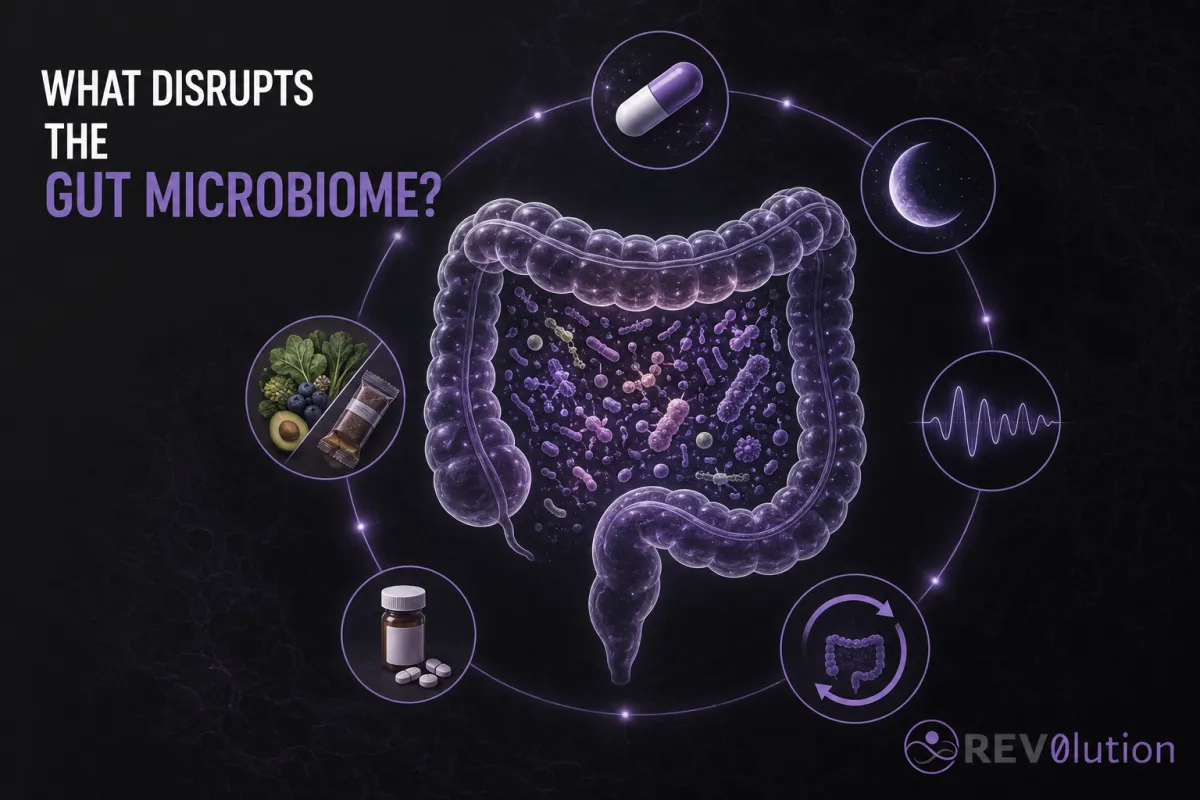
What Disrupts the Gut Microbiome? Antibiotics, Illness, Stress, Sleep, Diet, and More
What Disrupts the Gut Microbiome? Antibiotics, Illness, Stress, Sleep, Diet, and More
Written by Kerri Rachelle, PhD(c), RDN, CSSD, FMP-AC
Founder & CEO, REV0lution | Doctor of Integrative & Natural Medicine Candidate
Quick Answer
Antibiotics, illness, medications, diet, stress, inadequate sleep, inflammation and altered intestinal movement can all influence the gut microbiome. The extent and clinical importance of those changes vary substantially among individuals.
Key Takeaways
The microbiome changes naturally; change does not always mean damage.
Diet, medication, sleep, stress, immune activity and intestinal movement shape the environment in which microbes live.
Antibiotics can substantially alter microbial communities but remain essential when medically appropriate.
Digestive symptoms cannot prove dysbiosis, Candida, low stomach acid or toxin exposure.
Microbiome recovery begins with nourishment and normal digestive function—not an automatic supplement protocol.
What Does It Mean to “Disrupt” the Gut Microbiome?
A microbiome disruption is a change in the organisms, microbial genes, interactions or metabolic activity within an ecosystem.
That change may be temporary, adaptive, clinically meaningful or almost unnoticeable. The term does not tell us whether the result is harmful.
The intestinal microbiome changes in response to food, bowel transit, travel, illness, medication, hormones, aging and environmental exposure. Even the time of day can affect what is measured. A microbiome that changes is not necessarily a damaged microbiome.
More concern is warranted when a disturbance reduces important microbial functions, allows a specific pathogen to expand, contributes to antibiotic-associated diarrhea or persists alongside symptoms or disease. Those conclusions require more than finding that two stool samples look different.
Is Dysbiosis a Medical Diagnosis?
“Dysbiosis” is commonly used to describe a microbial community that differs from one associated with health. It may refer to the loss of potentially useful organisms or functions, expansion of opportunistic organisms, reduced resilience or altered microbial activity.
The problem is that there is no single microbial composition that defines a healthy intestine for every person. Healthy people can have markedly different microbial communities, and a pattern associated with disease in one population may not have the same meaning in another.
Dysbiosis is therefore a description—not a complete diagnosis. It does not identify why the microbiome changed, whether the change is causing symptoms or which intervention would correct it. A proprietary “dysbiosis score” should not automatically become the basis for antimicrobials, probiotics, restrictive diets or supplement protocols.
The more useful clinical questions are:
What symptoms or diagnosed condition are present?
What changed before those symptoms began?
Is intestinal movement unusually slow or rapid?
Has food intake become inadequate or highly restrictive?
Were antibiotics or other medications recently introduced?
Is there evidence of infection, inflammation or malabsorption?
What clinical decision would a test result change?
The 2026 ISAPP consensus emphasizes that gut health includes normal gastrointestinal function without active disease or symptoms that meaningfully impair quality of life. It cannot be reduced to a single microbiome score. You can read more about what the gut microbiome is and what gut dysbiosis actually means.
How Do Antibiotics Affect the Gut Microbiome?
Antibiotics are designed to inhibit or kill susceptible bacteria. They may affect organisms beyond the infection being treated, including bacteria living in the digestive tract.
Studies in healthy adults have documented decreases in microbial richness, shifts in community structure and changes in microbial genes after antibiotic exposure. Some components begin recovering within weeks, while others may remain altered for months.
Responses differ according to the antibiotic, dose, duration, previous exposure and the person’s baseline microbial community. Two people taking the same medication may not experience the same degree of change.
Repeated or unnecessary antibiotic exposure creates particular concern because it may increase antibiotic resistance and repeatedly disturb the ecosystem before it has had an opportunity to recover.
Are Antibiotics Bad for Gut Health?
Antibiotics are essential medical treatments. They can stop infections that might otherwise cause serious complications or death.
Their effects on the microbiome are one reason antibiotics should be prescribed appropriately—not a reason to avoid them when they are medically necessary. Untreated infection can also disrupt the microbiome, damage tissue and create significant health consequences.
Do not delay, shorten or discontinue an antibiotic course to protect the microbiome unless the prescribing clinician changes the plan. Antibiotic stewardship means using the right medication for the right infection—not treating antibiotics as inherently harmful.
Does the Microbiome Return to Normal After Antibiotics?
The microbiome often demonstrates substantial resilience, but “normal” is difficult to define.
In one study, the gut microbiota of healthy adults moved toward baseline over several months after broad-spectrum antibiotics, although several species remained undetectable at the end of follow-up. Other research has shown highly individualized and sometimes incomplete recovery after repeated exposure.
A sample that does not return to its exact original composition is not necessarily dysfunctional. Other organisms may perform overlapping jobs, and the original microbiome was not automatically ideal merely because it came first.
Recovery also involves more than microbial names. Taxonomic composition, metabolic activity, short-chain fatty acids and antibiotic-resistance genes may recover at different rates.
Should Everyone Take a Probiotic After Antibiotics?
No universal post-antibiotic probiotic protocol has been established.
Results depend on the antibiotic, probiotic strain or formulation, individual microbiome and outcome being studied. A product that reduces the risk of one type of antibiotic-associated diarrhea cannot be assumed to restore the entire microbial ecosystem.
Some studies suggest selected formulations may help with particular outcomes, while others have found no benefit or delayed recovery of the person’s resident microorganisms. “Take a probiotic” is therefore too broad to be a complete clinical plan.
Recovery should not be judged solely by whether a supplement was added. Adequate nourishment, hydration, bowel function, sleep and appropriate medical follow-up remain important.
Can Non-Antibiotic Medications Change the Microbiome?
Yes. Acid-reducing medications, metformin, laxatives, corticosteroids, nonsteroidal anti-inflammatory medications and many other drugs have been associated with microbiome differences.
Several explanations are possible. A medication may act directly on microorganisms, change stomach acidity, alter intestinal movement or modify the nutrients reaching the colon. The condition being treated may also influence the microbiome, making it difficult to separate the drug’s effect from the disease itself.
A measurable microbiome change does not prove that a medication is harming the patient. Metformin, for example, may influence intestinal microorganisms while providing important benefits for glucose regulation. Acid-reducing medication may alter microbial exposure while appropriately treating an ulcer, Barrett’s esophagus or erosive esophagitis.
Prescribed medication should remain separate from REV0lution’s stance on artificial food ingredients. Medication serves a clinical purpose and should never be stopped to meet a clean-eating or microbiome ideal.
Can Low Stomach Acid Affect the Gut Microbiome?
Stomach acid helps digest food, release certain nutrients and limit the number of swallowed microorganisms that survive passage into the intestine. Reduced acidity can therefore change which oral and environmental organisms reach more distal parts of the digestive tract.
Low stomach acid, or hypochlorhydria, may occur with autoimmune gastritis, changes in the stomach lining, gastric surgery, certain infections or acid-suppressing medication. However, reflux, belching, bloating and fullness cannot diagnose it.
It is also inaccurate to say that low stomach acid simply causes H. pylori. The relationship is more complex. H. pylori infection can alter acid production depending on the pattern and location of gastritis, while changes in stomach acidity can affect microbial survival.
Randomized research has found greater oral-to-gut microbial transmission during proton-pump inhibitor use. That finding is clinically interesting, but it does not mean PPIs are never appropriate or should always be limited to two weeks. Some conditions require longer treatment, and the indication, dose and duration should be reviewed with the prescribing clinician.
Supplemental hydrochloric acid should not be used as a home diagnostic test. It may aggravate ulcers, gastritis or esophageal irritation and does not establish why symptoms occurred.
Can Illness or Infection Alter the Gut Microbiome?
Yes. Gastrointestinal infections can change the intestinal environment through inflammation, diarrhea, vomiting, altered food intake and increased intestinal movement.
Illness outside the digestive system may also change eating, activity, sleep, medication use and immune signaling. Hospitalization can add further influences, including major dietary changes, procedures and new medications.
The microbiome measured during acute illness may not represent the person’s usual state. Testing in that moment can capture disruption without explaining which changes caused the illness and which resulted from it.
Some people experience persistent digestive symptoms after an infection. Post-infectious disorders of gut-brain interaction are real and deserve evaluation rather than being reduced to “bad bacteria.”
How Are Immune Activity and Inflammation Connected to the Microbiome?
The intestinal immune system, epithelial barrier and microbiome communicate continuously. Immune activity influences which microorganisms can remain near the intestinal lining, while microbial products help educate and regulate immune responses.
During active inflammatory bowel disease, infection or another inflammatory condition, the intestinal environment changes. Oxygen availability, mucus, nutrient flow, motility and medication exposure can all shift microbial composition.
This relationship is bidirectional. Microbial changes may contribute to an inflammatory environment, but inflammation can also create the microbial pattern later labeled dysbiosis. A stool report cannot determine the direction of causality by itself.
Increased intestinal permeability may accompany certain infections, inflammatory diseases, medication exposures and other physiological stressors. It should not be used as a universal explanation for every symptom or autoimmune disease. Learn more about intestinal permeability and the connection between gut health and immune function.
How Does Diet Shape the Gut Microbiome?
Food supplies the nutrients available to both the body and its microorganisms. Changing dietary intake can alter microbial composition and metabolism, sometimes within days.
Different fibers and resistant starches provide substrates for microbial fermentation. Protein, fat, polyphenols and food structure can also influence the intestinal environment. Microbial fermentation produces compounds such as short-chain fatty acids, which help microorganisms and human tissues communicate.
A nutritionally complete diet does not require maximizing microbial diversity at every meal. It should provide adequate nourishment and a range of tolerated whole foods over time.
Vegetables, fruits, nuts, seeds, legumes, tubers and minimally processed grains provide different fermentable substrates. The appropriate combination depends on glucose regulation, activity, digestive tolerance, allergies and other clinical needs.
Do Sugar and Refined Carbohydrates Feed Harmful Bacteria or Candida?
A diet dominated by added sugar and refined carbohydrates can reduce nutritional quality, displace fiber-rich foods and change the substrates available to intestinal microorganisms. It may also contribute to glucose dysregulation and repeated cravings in susceptible individuals.
That does not mean sugar cravings, bloating, fatigue or a white coating on the tongue diagnose intestinal Candida overgrowth. Candida species can be present in the digestive tract without causing disease, and detection in stool does not automatically prove that Candida is producing someone’s symptoms.
Invasive or clinically significant fungal infections are different conditions and are of greatest concern in people with specific medical risks, including substantial immune suppression.
REV0lution still does not recommend building nutrition around added sugar and refined products. The reason does not need to depend on assigning every symptom to yeast.
Do Ultra-Processed Foods Affect the Microbiome?
Diets dominated by ultra-processed foods often contain less intact fiber and fewer diverse whole plants while supplying refined starches, added sugars and manufactured flavor systems.
These patterns can influence the microbiome indirectly by changing what reaches the colon. Certain additives, including some emulsifiers and artificial sweeteners, are also being studied for possible direct effects.
A small controlled-feeding trial found that carboxymethylcellulose changed microbial composition and reduced diversity in some healthy participants. A larger exploratory trial published in 2026 found lower stool short-chain fatty-acid concentrations with several emulsifiers, although it did not find corresponding changes in most inflammatory or cardiometabolic markers. Human responses to artificial sweeteners have also varied by sweetener and individual microbiome.
The evidence does not prove that every additive causes the same measurable harm in every person. REV0lution still does not recommend building health on artificially sweetened drinks, protein bars, packaged keto desserts, artificial colors, unnecessary preservatives, emulsifiers or manufactured flavor systems.
Recognizable, minimally processed foods remain the better foundation.
Can Food Sensitivities or Restrictive Diets Alter the Microbiome?
Food allergies, celiac disease, lactose intolerance and carbohydrate malabsorption are real, but they are not interchangeable.
Symptoms after eating a food do not automatically prove immune inflammation. The amount consumed, meal composition, fermentation, constipation, enzyme activity and visceral sensitivity may influence the response.
Short-term dietary modification can be useful when it answers a defined question. Removing gluten before appropriate celiac testing, however, can make diagnosis more difficult. Eliminating numerous foods indefinitely can reduce energy, fiber, micronutrients and microbial substrates.
A therapeutic diet should have a reason, an adequate nutritional replacement plan and—when medically appropriate—a strategy for reassessment or reintroduction. A continually shrinking food list is not evidence that the root cause is being resolved.
Does Alcohol Affect the Gut Microbiome?
Alcohol may influence microbial composition, intestinal permeability, liver function, motility and inflammation. Its effects vary according to the amount, frequency, beverage, diet and health of the individual.
Heavy or repeated intake creates greater concern than one isolated exposure. Alcohol can also worsen reflux, diarrhea, sleep disruption and glucose regulation independently of the microbiome.
Calling a beverage fermented does not make its alcohol content beneficial to the intestine.
Can Stress Disrupt the Gut Microbiome?
Stress can influence the intestinal environment through autonomic signaling, HPA-axis activity, motility, immune communication, food intake and sleep.
Much of the detailed mechanistic research comes from animal models. Human studies support relationships among stress, digestive symptoms and microbial patterns, but they do not establish one universal “stress microbiome.”
Stress does not sterilize the intestine or immediately destroy beneficial bacteria. It may become one meaningful contributor when it is chronic, severe or accompanied by major changes in nourishment, sleep and bowel function.
Stress should never be used to dismiss physical symptoms. The digestive and nervous systems interact continuously, and symptoms can be biologically real even when stress influences their intensity. Read more about the gut-brain axis and how stress can affect digestion.
Does Sleep Affect the Gut Microbiome?
Sleep duration, sleep quality and circadian timing may influence microbial composition and function. Feeding time, light exposure and activity also help organize daily microbial rhythms.
Human findings remain mixed. Some studies identify microbial differences with sleep loss or shift work, while others find small or inconsistent effects.
Poor sleep may still influence digestion through appetite, glucose regulation, pain perception, immune signaling and motility even when a measurable microbiome change cannot be demonstrated. Sleep is a relevant foundation without becoming the entire explanation for every symptom.
Learn more about the connection between sleep and gut health.
Can Too Much Exercise Disrupt Gut Health?
Regular movement generally supports intestinal motility, glucose regulation and overall metabolic health. Exercise becomes a different physiological stressor when training volume or intensity repeatedly exceeds the body’s ability to fuel and recover.
During prolonged or demanding exercise, blood is redirected toward working muscles and—particularly in hot conditions—toward the skin for cooling. This can temporarily reduce blood flow to the digestive tract. Gastric emptying, nutrient absorption, intestinal movement and the integrity of the intestinal lining may be affected.
These changes may contribute to:
Nausea or vomiting
Reflux or uncomfortable fullness
Abdominal cramping
Urgency or diarrhea
Constipation between training sessions
Difficulty tolerating fuel during exercise
Loss of appetite after training
The effect is most apparent during prolonged endurance exercise, higher-intensity training, running and exercise performed in heat. Research has documented temporary increases in markers of intestinal-cell injury and permeability after strenuous exercise, with heat creating additional stress. These findings do not mean every difficult workout permanently damages the gut. In many healthy athletes, the changes are temporary and resolve with recovery.
Concern increases when strenuous exercise is combined with inadequate carbohydrate or total energy intake, dehydration, repeated heat exposure, insufficient sleep, frequent use of NSAIDs, back-to-back demanding sessions or a lack of recovery days. In that situation, the problem may not be exercise alone. It may be the cumulative mismatch among training, fueling, hydration and recovery.
Low energy availability deserves particular attention. When an athlete consistently consumes less energy than is required to support training and basic physiology, digestion may become less predictable. Constipation, bloating, early fullness and altered appetite can occur alongside hormonal, bone, immune and performance consequences.
A functional assessment should ask:
Is the athlete eating enough to support the training load?
Are carbohydrates being restricted despite high-intensity or endurance demands?
Are fluids and meaningful sweat losses being replaced?
Do symptoms occur primarily during exercise, afterward or throughout the day?
Is the athlete training in heat?
Are NSAIDs or other medications contributing?
Is adequate recovery built into the week?
Has performance declined alongside digestive symptoms?
The solution is not automatically to stop exercising or begin a gut-supplement protocol. Adjusting training load, improving pre-exercise and during-exercise fueling, replacing fluid losses, protecting sleep and gradually training the gut to tolerate fuel may be more relevant.
Persistent vomiting, bloody stool, severe abdominal pain, unexplained weight loss or an inability to meet nutrition needs should not be attributed to ordinary training stress. Those symptoms deserve medical evaluation.
Do Hormones and Metabolic Health Affect the Microbiome?
Sex hormones and intestinal microorganisms interact, but the relationship should not be reduced to “high estrogen causes dysbiosis.”
Microbial patterns may change across the menstrual cycle, pregnancy, perimenopause and menopause. The available human evidence largely demonstrates associations, and factors such as age, medication, diet and metabolic health can be difficult to separate from the effects of hormones themselves.
Insulin resistance, chronically elevated glucose and diabetes can also influence the intestinal environment through immune signaling, medication, food intake and motility. Diabetes-related autonomic neuropathy may alter stomach emptying or intestinal transit.
Hormones and metabolic health belong in the larger assessment, but a microbiome report cannot diagnose a hormone imbalance.
How Do Motility and Transit Affect the Microbiome?
Microorganisms live within a moving ecosystem. Transit time determines how long they interact with food residue, mucus and one another.
Slow transit can lengthen fermentation time and allow microbial metabolites to accumulate. Rapid transit may reduce fermentation time, change stool-water content and wash organisms through before the usual interactions occur.
The relationship moves in both directions. Microbial metabolites can influence intestinal movement, while movement shapes which microorganisms thrive and what appears in a stool sample.
Constipation must therefore be considered before interpreting an apparent overgrowth of commensal organisms. You can learn more about the migrating motor complex, transit and elimination in What Is Gut Motility?.
Can Stomach Acid, Enzymes and Bile Affect the Microbiome?
Food is changed substantially before it reaches the colon. Stomach acid, pancreatic enzymes, bile and absorption in the small intestine determine which nutrients remain available to microorganisms farther downstream.
Reduced pancreatic output can allow more incompletely digested material to reach the intestine. Bile acids help digest fat, but they also have antimicrobial and signaling effects. Intestinal organisms then transform primary bile acids into additional compounds that can influence metabolism, motility and immune activity.
This is a two-way relationship. Bile acids help shape microbial communities, and microorganisms change the bile-acid pool.
Symptoms cannot reveal which digestive secretion is inadequate. Bloating does not prove low acid, enzyme insufficiency or “sluggish bile,” and empirically adding acid, enzymes and bile products can obscure the actual problem. Review how digestion works before reducing digestion to one supplement.
Can Anatomy or Previous Surgery Change the Microbiome?
The physical structure of the digestive tract influences movement and microbial location.
Diverticula, strictures, blind loops, surgically altered anatomy and certain adhesions may create areas of slower movement or impaired clearance. Previous gastric, intestinal or gallbladder surgery can also change acidity, bile delivery, nutrient absorption or transit.
These situations may increase the risk of bacterial overgrowth or malabsorption in selected patients, but they require appropriate medical evaluation. “Ileocecal valve dysfunction” should not be assigned broadly to someone with bloating without evidence of a meaningful structural or motility problem.
The microbiome cannot be treated effectively while ignoring the anatomy and movement of the environment in which it lives.
Can Undereating or Nutrient Deficiencies Affect the Gut?
The intestinal lining, immune system, digestive muscles and microorganisms all require adequate nourishment.
Chronic undereating and highly restrictive diets may reduce energy, protein, essential fatty acids, fermentable carbohydrates and micronutrients. They can also reduce the variety of substrates reaching the colon.
Vitamin D, zinc, magnesium, B vitamins and essential fatty acids participate in immune, neurological and epithelial function. However, one low nutrient level should not be presented as the sole cause of dysbiosis, and a long supplement list does not replace adequate food.
Deficiencies may be both a contributor and a consequence. Inflammation, malabsorption, pancreatic insufficiency, celiac disease and restrictive eating can all lower nutrient status. The useful question is why the deficiency developed and whether digestive function or food intake must also be addressed.
Does Oral Health Affect the Gut Microbiome?
The mouth is the beginning of the digestive tract, and oral microorganisms are swallowed continually.
Stomach acid and other defenses prevent many oral organisms from establishing themselves farther down. Acid suppression, impaired immune defenses and periodontal disease may change that relationship.
Research supports an association between periodontitis and altered intestinal microbial patterns, although much of the evidence remains observational. A recent multi-omics study found coordinated oral and stool changes following periodontal treatment, supporting a biological connection without proving that oral care alone treats intestinal disease.
Oral hygiene, regular dental care and treatment of gum disease are reasonable components of whole-person health. Oral thrush, however, does not automatically establish intestinal Candida overgrowth.
Can Environmental Exposures Affect the Microbiome?
Heavy metals, pesticides, air pollution, mycotoxins and other environmental exposures can affect microbial communities and intestinal-barrier signaling in experimental research. Human studies also report associations between certain pollutants and gastrointestinal or microbial outcomes.
Exposure level, duration, route and individual susceptibility matter. Evidence involving a high-dose animal exposure cannot be assumed to predict the effect of ordinary human exposure.
Digestive symptoms alone do not prove mold illness, heavy-metal toxicity or pesticide injury. Testing should be based on a credible exposure history and a method capable of answering a defined clinical question.
Reducing avoidable exposure is sensible. Automatically placing every patient on a “detox” protocol is not.
Do Birth Method, Breastfeeding and Genetics Determine Adult Gut Health?
Genetics and early-life exposures help shape the developing microbiome, particularly during infancy.
Birth method, gestational age, human-milk exposure, formula feeding, household environment, infection and antibiotic exposure can all influence early microbial assembly. Updated 2026 evidence continues to find differences associated with cesarean delivery and perinatal antibiotics, but the certainty of the evidence is low and long-term consequences remain incompletely understood.
These findings should never be used to blame a parent or portray a medically necessary cesarean delivery or formula feeding as permanent microbiome damage. Early-life patterns continue changing with food, household exposure, illness, medication and development.
Birth history provides context. It does not determine an adult’s microbial destiny or automatically justify a corrective protocol.
Does Travel Change the Gut Microbiome?
Travel may change food, water, sleep, activity, stress, time zones and environmental exposures. Any of these factors can influence the microbiome or bowel habits.
Traveler’s diarrhea and foodborne illness create more substantial disturbances. Routine travel-related changes are often temporary and should not automatically trigger microbiome testing or a recovery protocol.
Persistent diarrhea, fever, bleeding or unexplained weight loss after travel deserves medical evaluation.
Can GI-MAP Show Whether the Microbiome Has Been Disrupted?
The GI-MAP uses quantitative PCR to measure selected microbial DNA in one stool sample. It may identify certain pathogens, H. pylori, commensal and opportunistic organisms and markers related to inflammation, mucosal immune activity and pancreatic output.
Those findings can be useful when they answer a defined clinical question. The test cannot create a complete inventory of the microbiome, measure the activity of every organism or determine whether every detected organism is causing symptoms.
GI-MAP also cannot diagnose SIBO because stool primarily represents what reaches the colon. It cannot independently diagnose intestinal permeability, food intolerance, toxin illness or a universal state of dysbiosis.
Transit matters. Constipation may increase the concentration of certain organisms and metabolites, while diarrhea can dilute some stool markers. One “high” commensal organism does not automatically need to be eradicated, and one “low” organism does not automatically require replacement.
The 2025 international consensus on microbiome testing concluded that evidence supporting the routine clinical use of many commercial microbiome tests remains limited. Functional medicine lab testing should improve a clinical decision—not generate a supplement for every flagged result.
What Supports Microbiome Resilience?
A resilient intestinal environment is supported by adequate nourishment, sufficient sleep, physical activity, appropriate hydration and regular bowel function.
Choose a variety of tolerated, minimally processed foods rather than forcing maximum fiber during active digestive symptoms. Include meaningful protein, plants, naturally occurring fats and an individualized amount of whole-food carbohydrate.
Use antibiotics and other medications for valid clinical reasons. Review medications with the prescribing clinician when symptoms, side effects or the continued indication require discussion.
Address constipation, diarrhea, oral disease and persistent digestive symptoms rather than focusing exclusively on microbial names. Reduce unnecessary exposure to alcohol, artificial sweeteners, emulsifier-heavy products and other manufactured substitutes.
Avoid treating one exposure, trip or imperfect meal as a microbiome emergency. The intestinal ecosystem often changes and adapts without requiring an aggressive cleanse, antimicrobial protocol or supplement stack.
When Should Digestive Symptoms Be Evaluated?
Contact a healthcare professional for:
Severe or persistent diarrhea
Blood in the stool or black stool
Fever with abdominal pain
Signs of dehydration
Persistent vomiting
Unexplained weight loss
Progressive weakness or inability to eat
Difficulty swallowing
Significant anemia or nutrient deficiency
Diarrhea beginning during or after antibiotic treatment that does not resolve
Significant diarrhea after antibiotics may require evaluation for Clostridioides difficile. It should not be managed solely with an over-the-counter probiotic.
What Is the Bottom Line?
The gut microbiome may be influenced by antibiotics, other medications, illness, inflammation, diet, alcohol, stress, sleep, hormones, intestinal movement, digestive secretions, anatomy, nutrient status, oral health, environmental exposures and the balance among exercise, fueling and recovery.
These factors do not act independently. Stress can change sleep and motility. Medication can change acidity or transit. Inflammation can change nutrient absorption. Constipation can change a stool report. Restrictive eating can reduce the substrates available to microorganisms.
Functional thinking should connect those layers without claiming that every symptom results from dysbiosis, Candida, low stomach acid, leaky gut or toxin exposure.
Supporting the microbiome begins with the environment in which it lives: adequate food, normal digestive function, regular movement, sleep, appropriate medical care and a treatment plan the patient can realistically follow.
Medical Disclaimer: This article is for general educational and informational purposes only and does not provide individualized medical or nutrition advice. It is not intended to diagnose, treat, cure, or prevent disease or replace care from a qualified healthcare professional. Do not change your medications, supplements, diet, fasting schedule, or healthcare plan based solely on this content. [Read the full Medical Disclaimer and Terms & Conditions.]
Frequently Asked Questions
What damages the gut microbiome the most?
There is no universal ranking. Broad-spectrum antibiotics, severe illness, repeated dietary disruption, inflammation and major changes in intestinal transit can all have substantial effects, but individual responses vary.
Do antibiotics permanently damage the microbiome?
Not necessarily. Many microbial features recover, while some changes may persist. Recovery varies according to the antibiotic, number of exposures and individual microbial ecosystem.
Should I avoid antibiotics to protect my gut?
No. Antibiotics should be used when medically appropriate. Avoiding necessary treatment can create much greater risk than the microbiome disruption being feared.
Do proton-pump inhibitors affect gut bacteria?
Acid suppression can change which microorganisms survive passage through the stomach and may alter oral-to-gut microbial transmission. That does not mean a prescribed PPI should be stopped without medical guidance.
Does sugar cause Candida overgrowth?
A high-sugar dietary pattern may change the intestinal environment and displace more nourishing foods. Sugar intake, cravings or bloating cannot diagnose intestinal Candida overgrowth.
Can stress kill beneficial gut bacteria?
Stress can alter the intestinal environment and has been associated with microbiome differences, but it does not simply kill all beneficial bacteria.
Can one unhealthy meal ruin the microbiome?
No. One meal may temporarily change microbial activity, glucose or digestive symptoms, but the overall pattern has greater importance.
Does the microbiome recover on its own?
It often demonstrates meaningful recovery after a disturbance. The degree and timing vary, and significant symptoms may require medical assessment.
Do I need a stool test after antibiotics?
Not routinely. Testing should be driven by symptoms and a defined clinical question rather than performed automatically after every antibiotic course.
Is dysbiosis a medical diagnosis?
Not by itself. Dysbiosis describes a potentially altered microbial ecosystem, but there is no universal healthy microbiome or standardized threshold that establishes one treatment plan.
References
Marco ML, et al. The International Scientific Association for Probiotics and Prebiotics Consensus Statement on the Definition and Scope of Gut Health. Nat Rev Gastroenterol Hepatol. 2026;23(5):432–448. PMID: 41709019.
Palleja A, Mikkelsen KH, Forslund SK, et al. Recovery of Gut Microbiota of Healthy Adults Following Antibiotic Exposure. Nat Microbiol. 2018;3(11):1255–1265. PMID: 30349083.
Dethlefsen L, Relman DA. Incomplete Recovery and Individualized Responses of the Human Distal Gut Microbiota to Repeated Antibiotic Perturbation. Proc Natl Acad Sci USA. 2011;108 Suppl 1:4554–4561. PMID: 20847294.
Maier L, Pruteanu M, Kuhn M, et al. Extensive Impact of Non-Antibiotic Drugs on Human Gut Bacteria. Nature. 2018;555(7698):623–628. PMID: 29555994.
Zhu J, Sun C, Li M, et al. Compared to Histamine-2 Receptor Antagonist, Proton Pump Inhibitor Induces Stronger Oral-to-Gut Microbial Transmission and Gut Microbiome Alterations: A Randomised Controlled Trial. Gut. 2024;73(7):1087–1097. PMID: 38050061.
Porcari S, Mullish BH, Asnicar F, et al. International Consensus Statement on Microbiome Testing in Clinical Practice. Lancet Gastroenterol Hepatol. 2025;10(2):154–167. PMID: 39647502.
Fan Y, Pedersen O. Gut Microbiota in Human Metabolic Health and Disease. Nat Rev Microbiol. 2021;19(1):55–71. PMID: 32887946.
Chassaing B, Compher C, Bonhomme B, et al. Randomized Controlled-Feeding Study of Dietary Emulsifier Carboxymethylcellulose Reveals Detrimental Impacts on the Gut Microbiota and Metabolome. Gastroenterology. 2022;162(3):743–756. PMID: 34774538.
Suez J, Cohen Y, Valdés-Mas R, et al. Personalized Microbiome-Driven Effects of Non-Nutritive Sweeteners on Human Glucose Tolerance. Cell. 2022;185(18):3307–3328.e19. PMID: 35987213.
Tang J, et al. The Role of Gut Microbial Metabolism of Sterols and Bile Acids in Human Health. Biochimie. 2025;230:43–54. PMID: 39542125.
Kitamoto S, et al. Oral-Gut Axis as a Novel Biological Mechanism Linking Periodontal Disease and Systemic Diseases. 2023. PMID: 37674899.
Association Between Sex Hormone Levels and Gut Microbiota Composition and Diversity: A Systematic Review. 2022. PMID: 35283442.
Impact of Mode of Birth and Perinatal Antibiotics on Infant Gut Microbiota and Health: A Systematic Review and Meta-Analysis. 2026. PMID: 42398974
Costa RJS, Snipe RMJ, Kitic CM, Gibson PR. Systematic Review: Exercise-Induced Gastrointestinal Syndrome—Implications for Health and Intestinal Disease. Aliment Pharmacol Ther. 2017;46(3):246–265. PMID: 28589631.
Chantler S, Griffiths A, Matu J, et al. The Effects of Exercise on Indirect Markers of Gut Damage and Permeability: A Systematic Review and Meta-Analysis. Sports Med. 2021;51(1):113–124. PMID: 33201454.
Aitkenhead R, Waldron M, Conway GE, Horner K, Heffernan SM. The Influence of Dietary Supplements on Exercise-Induced Gut Damage and Gastrointestinal Symptoms: A Systematic Review and Meta-Analysis. Nutrients. 2025;17(3):443. PMID: 39940302.